Epidemiology Program, School of Public Health, Louisiana State University Health Sciences Center New Orleans, New Orleans, LA, United States of America.
Biostatistics Program, School of Public Health, Louisiana State University Health Sciences Center New Orleans, New Orleans, LA, United States of America.
PLoS One. 2020 Dec 3;15(12):e0243028. doi: 10.1371/journal.pone.0243028. eCollection 2020.
Louisiana in the summer of 2020 had the highest per capita case count for COVID-19 in the United States and COVID-19 deaths disproportionately affects the African American population. Neighborhood deprivation has been observed to be associated with poorer health outcomes. The purpose of this study was to examine the relationship between neighborhood deprivation and COVID-19 in Louisiana.
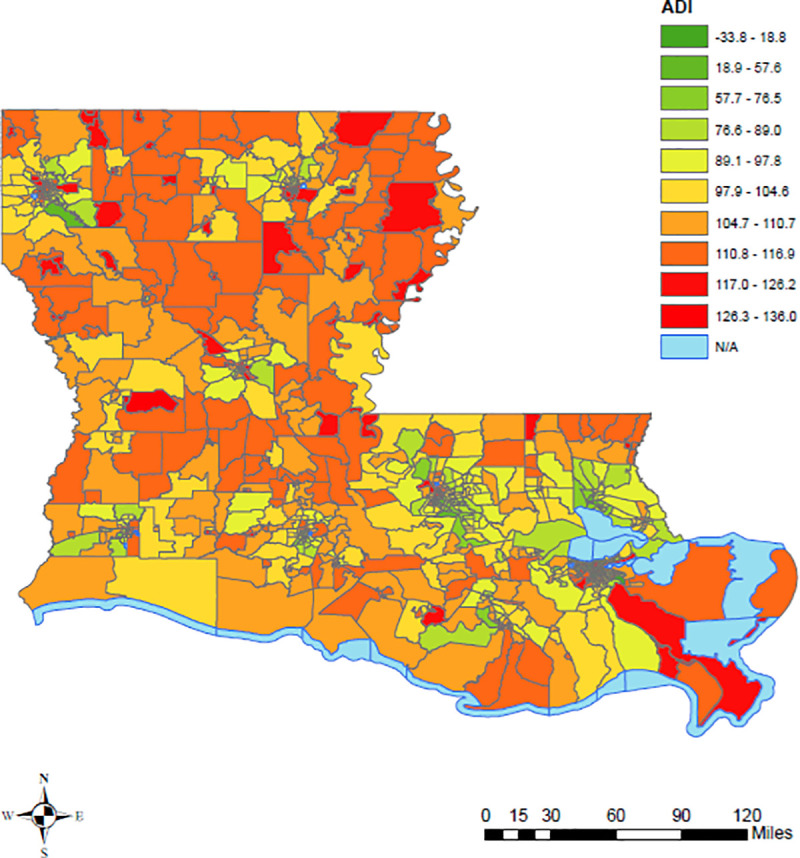
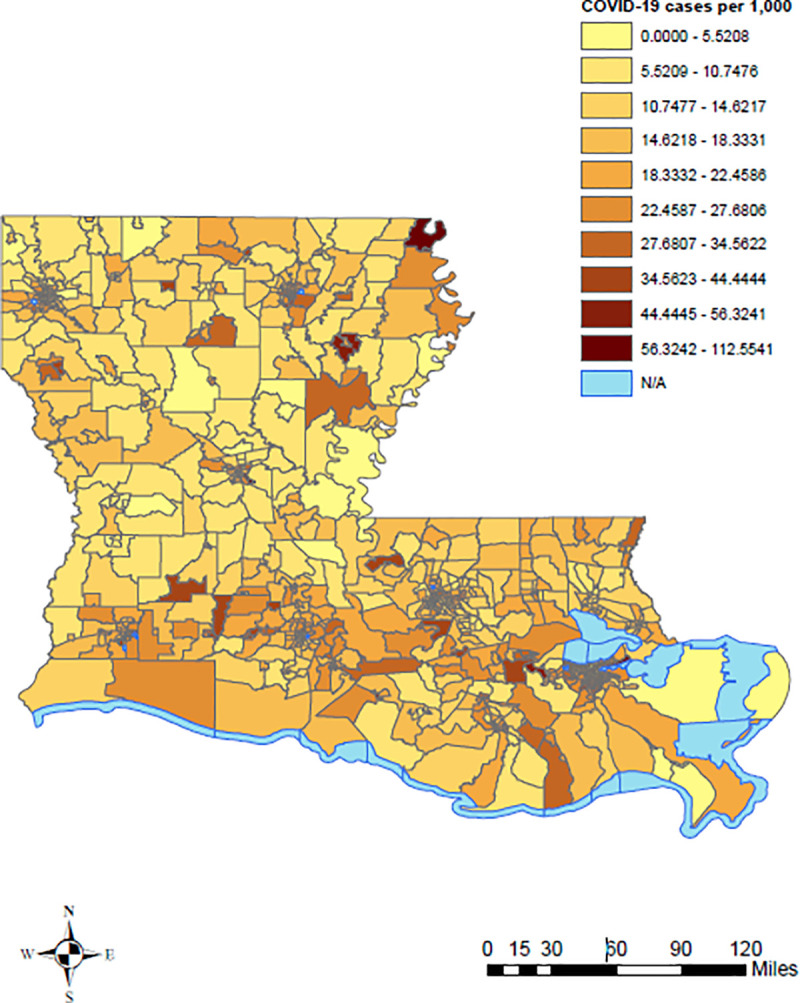
The Area Deprivation Index (ADI) was calculated and used to classify neighborhood deprivation at the census tract level. A total of 17 US census variables were used to calculate the ADI for each of the 1148 census tracts in Louisiana. The data were extracted from the American Community Survey (ACS) 2018. The neighborhoods were categorized into quintiles as well as low and high deprivation. The publicly available COVID-19 cumulative case counts by census tract were obtained from the Louisiana Department of Health website on July 31, 2020. Descriptive and Poisson regression analyses were performed.
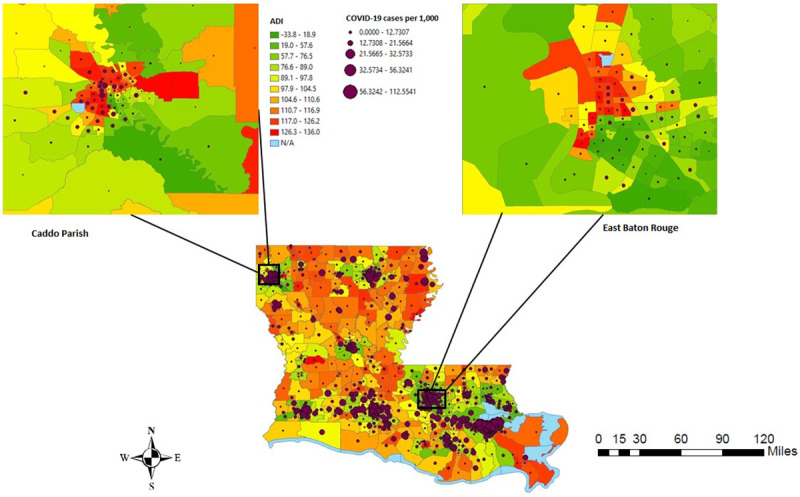
Neighborhoods in Louisiana were substantially different with respect to deprivation. The ADI ranged from 136.00 for the most deprived neighborhood and -33.87 in the least deprived neighborhood. We observed that individuals residing in the most deprived neighborhoods had almost a 40% higher risk of COVID-19 compared to those residing in the least deprived neighborhoods.
While the majority of previous studies were focused on very limited socio-environmental factors such as crowding and income, this study used a composite area-based deprivation index to examine the role of neighborhood environment on COVID-19. We observed a positive relationship between neighborhood deprivation and COVID-19 risk in Louisiana. The study findings can be utilized to promote public health preventions measures besides social distancing, wearing a mask while in public and frequent handwashing in vulnerable neighborhoods with greater deprivation.
2020 年夏天,路易斯安那州的人均 COVID-19 病例数居美国之首,且 COVID-19 死亡人数不成比例地影响非裔美国人。人们观察到,邻里贫困与较差的健康结果有关。本研究旨在检验路易斯安那州邻里贫困与 COVID-19 之间的关系。
计算了区域贫困指数(ADI),并用于在普查区层面上对邻里贫困进行分类。总共使用了 17 个美国人口普查变量来计算路易斯安那州 1148 个普查区的 ADI。数据取自美国社区调查(ACS)2018 年的数据。将这些社区分为五等份,以及低和高贫困两类。从路易斯安那州卫生部网站上获取了 2020 年 7 月 31 日之前每个普查区的 COVID-19 累计病例数,这些数据是公开的。进行了描述性和泊松回归分析。
路易斯安那州的社区在贫困程度上存在很大差异。AD 从最贫困社区的 136.00 到最不贫困社区的-33.87 不等。我们观察到,居住在最贫困社区的人感染 COVID-19 的风险比居住在最不贫困社区的人高近 40%。
虽然大多数先前的研究都集中在非常有限的社会环境因素上,如拥挤和收入,但本研究使用了一种综合的基于区域的贫困指数来研究邻里环境对 COVID-19 的作用。我们观察到,路易斯安那州的邻里贫困与 COVID-19 风险之间存在正相关关系。研究结果可用于促进公共卫生预防措施,除了保持社交距离、在公共场所戴口罩和经常在贫困程度较高的弱势社区洗手之外。