Department of Surgery and Oncology, Graduate School of Medical Sciences, Kyushu University, Fukuoka, Japan.
Department of Surgery and Science, Graduate School of Medical Sciences, Kyushu University, Fukuoka, Japan.
Cancer Med. 2021 Jan;10(2):529-539. doi: 10.1002/cam4.3619. Epub 2020 Dec 4.
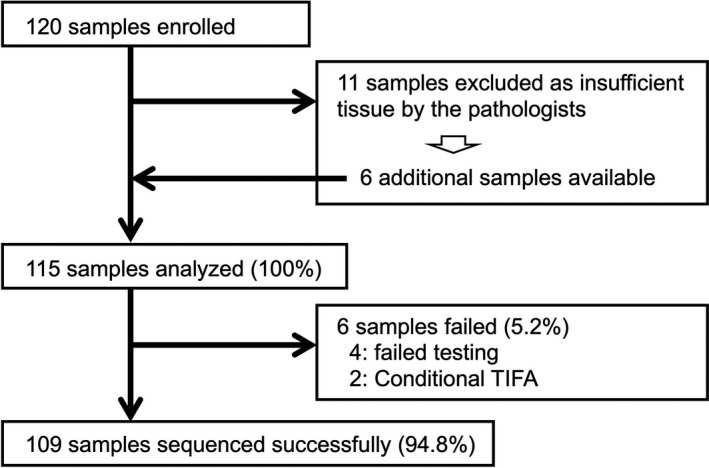
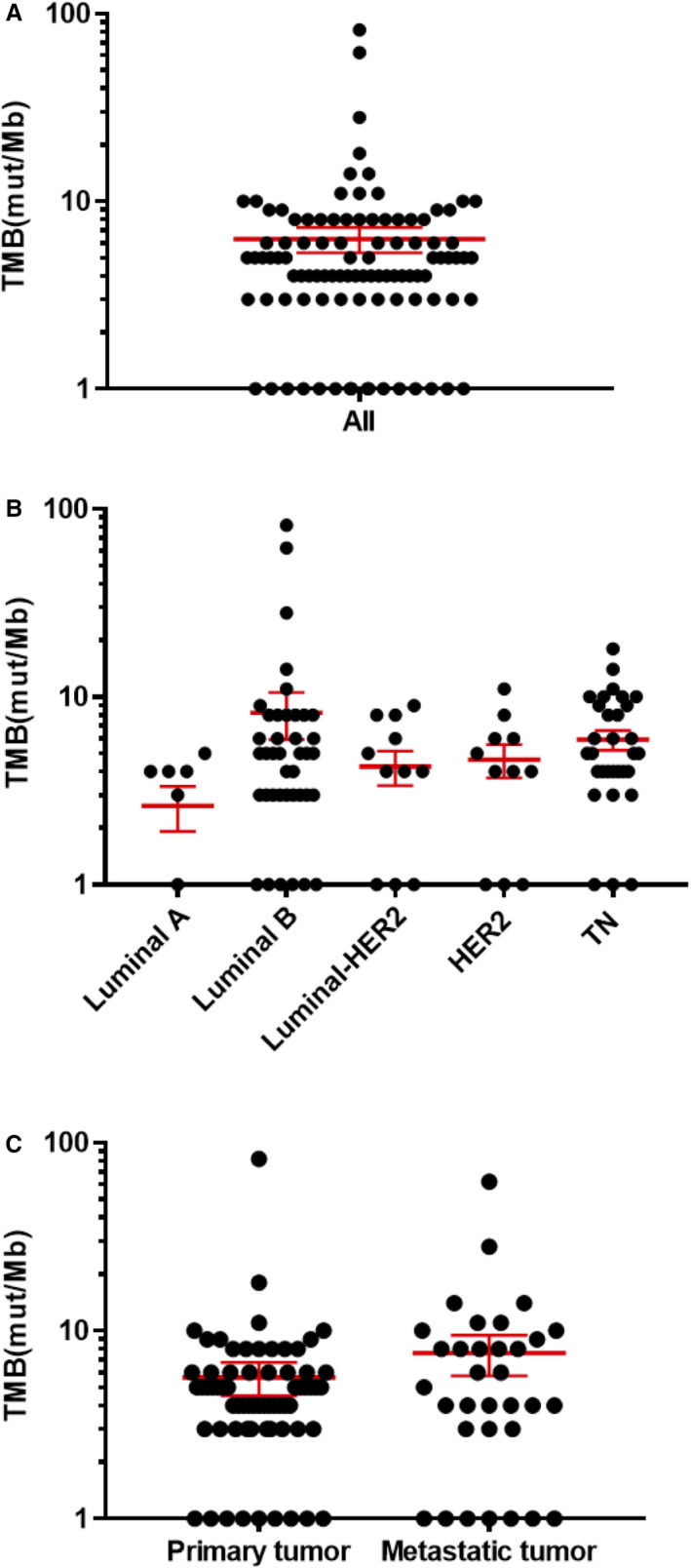
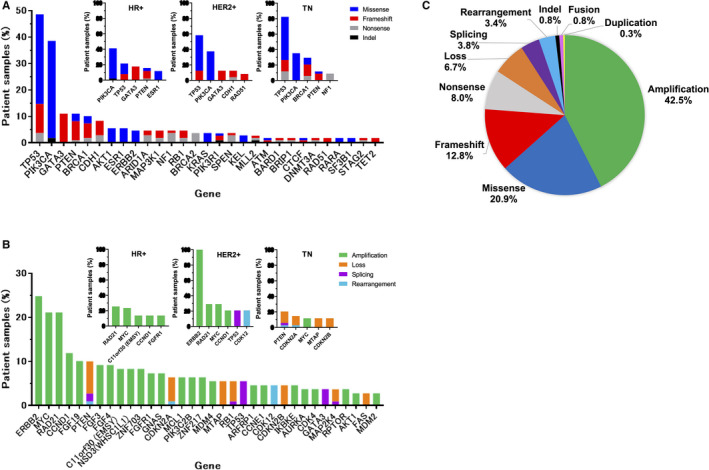
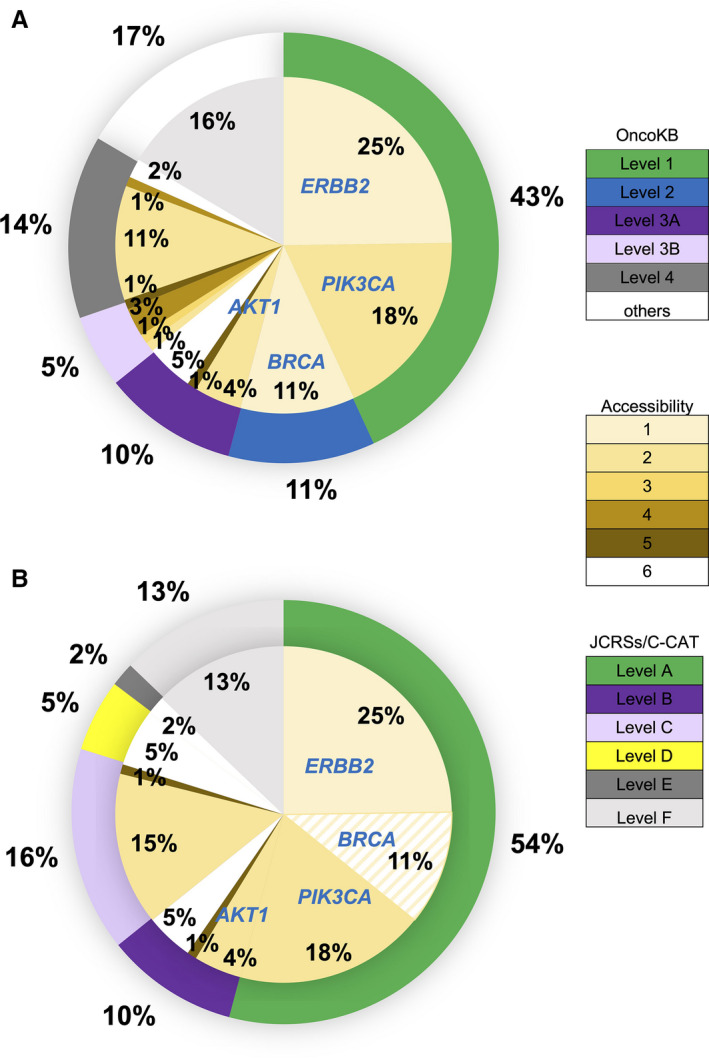
Precision oncology with next generation sequencing (NGS) using tumor tissue with or without blood has begun in Japan. Tumor molecular profiling tests are available, including the OncoGuide™ NCC Oncopanel System and FoundationOne CDx (F1CDx). Our purpose was to identify potentially actionable genetic alterations in breast cancer with this comprehensive tumor profiling test. We enrolled 115 patients with pathologically diagnosed advanced or metastatic breast cancer. Comprehensive tumor genomic profiling, microsatellite instability, and tumor mutational burden (TMB) were determined using F1CDx. Testing was successful in 109/115 cases (94.8%). Clinically actionable alterations were identified in 76% of advanced breast cancer patients. The most frequent short variants were in TP53 (48.6%), PIK3CA (38.5%), GATA3 (11.0%), PTEN (11.0%), and BRCA1 (10.1%), and structural variants were in ERBB2 (24.8%), MYC (21.1%), RAD21 (21.1%), CCND1 (11.9%), FGF19 (10.1%), and PTEN (10.1%). Regarding human epidermal growth factor receptor (HER)2 status, 106/109 samples (97.2%) were concordant between F1CDx and HER2 testing with immunohistochemistry/fluorescence in situ hybridization. However, ERBB2 amplification was newly detected in four samples and ERBB2 mutations were detected in five HER2-negative breast cancer samples. Oncogenic BRCA mutations were found in three samples with F1CDx among 27 germline testing-negative samples. The mean TMB in all samples was 6.28 mut/Mb and tended to be higher in luminal B and triple-negative breast cancer (mean = 8.1 and 5.9 mut/Mb, respectively) compared with other subtypes. In conclusion, we established a system for precision oncology and obtained preliminary data with NGS as the first step. The information in this clinical sequencing panel will help guide the development of new treatments for breast cancer patients.
在日本,已经开始使用下一代测序(NGS)技术对肿瘤组织(有或无血液)进行精准肿瘤学研究。目前已有肿瘤分子谱测试可用,包括 OncoGuide™ NCC Oncopanel 系统和 FoundationOne CDx(F1CDx)。我们的目的是使用这种全面的肿瘤分析测试来鉴定乳腺癌中潜在的可治疗遗传改变。我们招募了 115 名经病理诊断为晚期或转移性乳腺癌的患者。使用 F1CDx 确定了全面的肿瘤基因组分析、微卫星不稳定性和肿瘤突变负担(TMB)。在 115 例病例中,有 109 例(94.8%)检测成功。在 76%的晚期乳腺癌患者中发现了具有临床意义的改变。最常见的短变异存在于 TP53(48.6%)、PIK3CA(38.5%)、GATA3(11.0%)、PTEN(11.0%)和 BRCA1(10.1%),结构变异存在于 ERBB2(24.8%)、MYC(21.1%)、RAD21(21.1%)、CCND1(11.9%)、FGF19(10.1%)和 PTEN(10.1%)。关于人表皮生长因子受体(HER)2 状态,在 F1CDx 和免疫组化/荧光原位杂交检测 HER2 中,106/109 个样本(97.2%)是一致的。然而,在 4 个样本中检测到新的 ERBB2 扩增,在 5 个 HER2 阴性乳腺癌样本中检测到 ERBB2 突变。在 27 个种系检测阴性样本中,F1CDx 检测到 3 个样本存在致癌性 BRCA 突变。所有样本的平均 TMB 为 6.28 mut/Mb,与其他亚型相比,管腔 B 和三阴性乳腺癌的 TMB 较高(平均值分别为 8.1 和 5.9 mut/Mb)。总之,我们建立了一个精准肿瘤学系统,并通过 NGS 作为第一步获得了初步数据。该临床测序面板中的信息将有助于指导乳腺癌患者新治疗方法的开发。