Shin Tae-Hoon, Ahn Ji-Su, Oh Su-Jeong, Shin Ye Young, Yang Ji Won, Kang Min-Jung, Kim Ji Min, Lee Byung-Joo, Seo Yoojin, Kim Hyung-Sik
Translational Stem Cell Biology Branch, National Heart, Lung, and Blood Institute, National Institutes of Health, Bethesda, MD 20892, USA.
Dental and Life Science Institute, Pusan National University, Yangsan 50612, Korea.
Biomedicines. 2020 Dec 2;8(12):561. doi: 10.3390/biomedicines8120561.
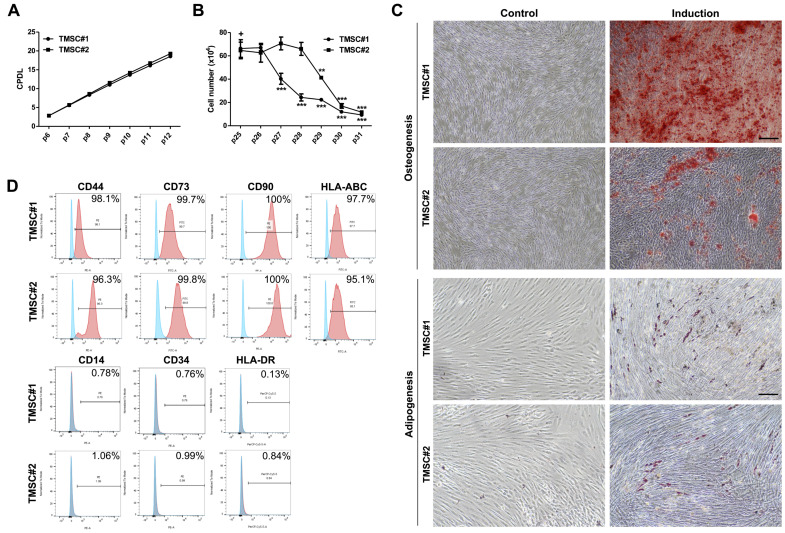
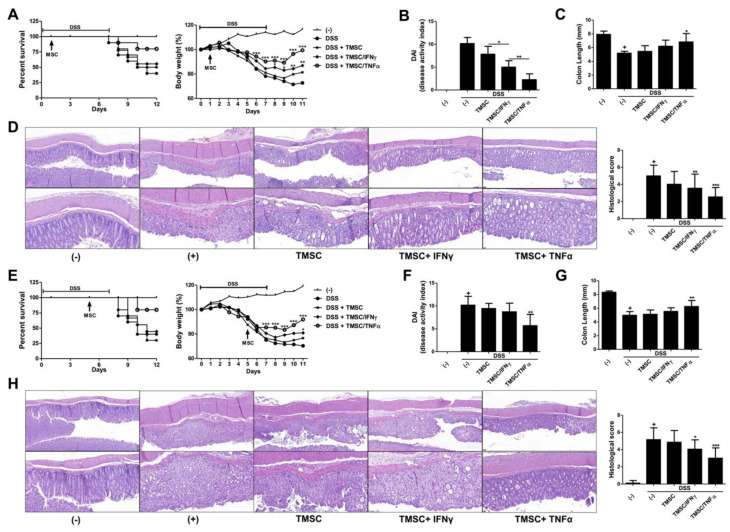
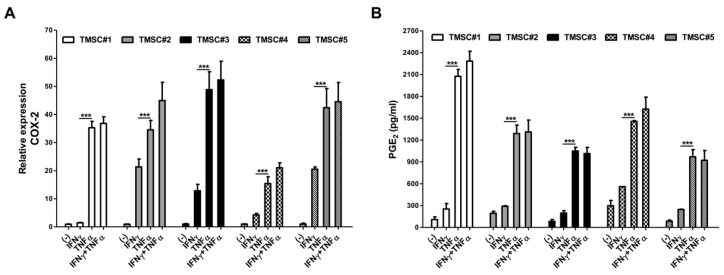
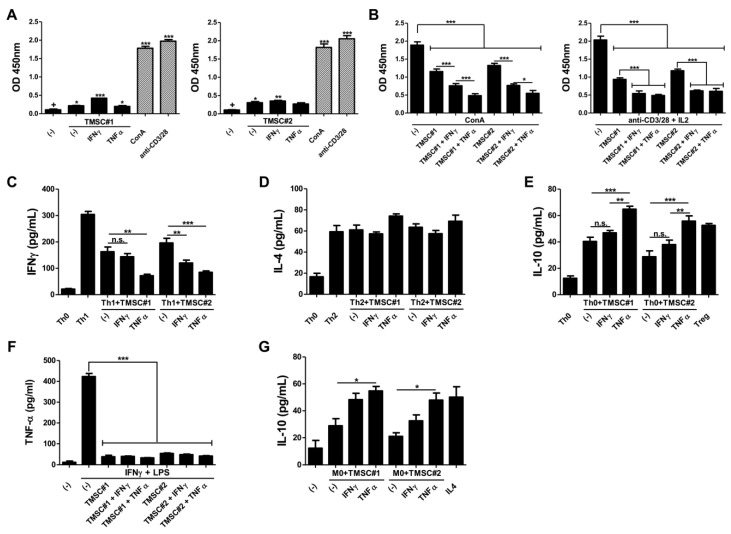
Mesenchymal stem cells (MSCs) have been spotlighted in the field of cell therapies as a promising tool for the treatment of intractable inflammatory diseases. However, their therapeutic potency still shows a gap between preclinical and clinical settings, and distinctive characteristics of specific tissue-derived MSCs and definitive ways to maximize their beneficial functions have not been fully elucidated yet. We previously identified the unique MSCs population from human palatine tonsil (TMSCs) and revealed their superior properties in proliferation and ROS regulation. Based on these findings, we explored further characteristics of TMSCs particularly focused on immunomodulatory function. We found the merit of TMSCs as a therapeutic agent that retains favorable MSCs properties until relatively late passages and revealed that pre-treatment of TNF-α can enhance the immunomodulatory abilities of TMSCs through the upregulation of the PTGS2/PGE axis. TMSCs primed with TNF-α effectively restrained the proliferation and differentiation of T lymphocytes and macrophages in vitro, and more interestingly, these TNF-α-licensed TMSCs exhibited significant prophylactic and therapeutic efficacy in a murine model of autoimmune-mediated acute colitis via clinical and histopathological assessment compared to unprimed naïve TMSCs. These findings provide novel insight into the optimization and standardization of MSCs-based anti-inflammatory therapies, especially targeting inflammatory bowel disease (IBD).
间充质干细胞(MSCs)作为治疗难治性炎症性疾病的一种有前景的工具,在细胞治疗领域备受关注。然而,它们的治疗效力在临床前和临床环境之间仍存在差距,特定组织来源的间充质干细胞的独特特征以及最大化其有益功能的明确方法尚未完全阐明。我们之前从人腭扁桃体中鉴定出独特的间充质干细胞群体(TMSCs),并揭示了它们在增殖和ROS调节方面的优越特性。基于这些发现,我们进一步探索了TMSCs的特征,特别关注其免疫调节功能。我们发现TMSCs作为一种治疗剂的优点是,在相对较晚的传代时仍保留良好的间充质干细胞特性,并揭示肿瘤坏死因子-α(TNF-α)预处理可以通过上调PTGS2/PGE轴来增强TMSCs的免疫调节能力。用TNF-α预处理的TMSCs在体外有效抑制T淋巴细胞和巨噬细胞的增殖和分化,更有趣的是,与未预处理的幼稚TMSCs相比,通过临床和组织病理学评估,这些经TNF-α预处理的TMSCs在自身免疫介导的急性结肠炎小鼠模型中表现出显著的预防和治疗效果。这些发现为基于间充质干细胞的抗炎治疗的优化和标准化提供了新的见解,特别是针对炎症性肠病(IBD)。