Department of Microbiology, School of Biological Sciences, College of Natural Sciences, Chungbuk National University, Cheongju, 28644, Republic of Korea.
Department of Molecular Medicine, College of Medicine, Ewha Womans University, Seoul, 07804, Republic of Korea.
Stem Cell Res Ther. 2020 Aug 17;11(1):359. doi: 10.1186/s13287-020-01860-y.
Mesenchymal stem cells (MSCs) have been widely used for stem cell therapy, and serial passage of stem cells is often required to obtain sufficient cell numbers for practical applications in regenerative medicine. A long-term serial cell expansion can potentially induce replicative senescence, which leads to a progressive decline in stem cell function and stemness, losing multipotent characteristics. To improve the therapeutic efficiency of stem cell therapy, it would be important to identify specific biomarkers for senescent cells.
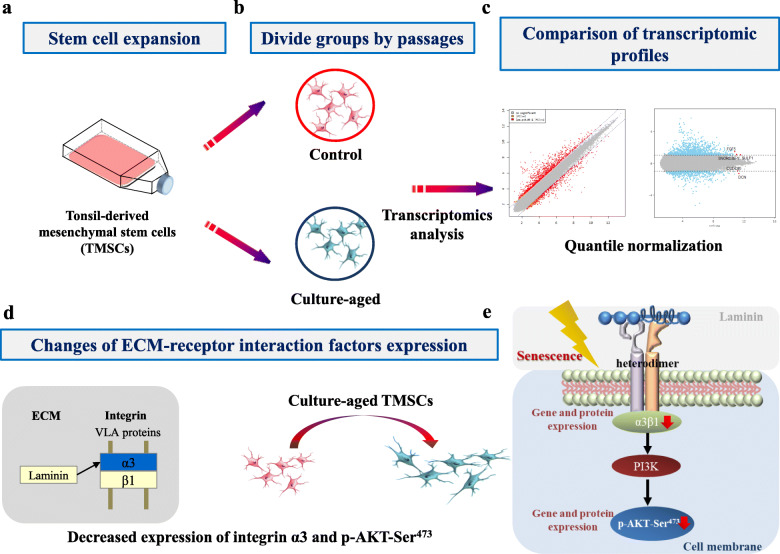
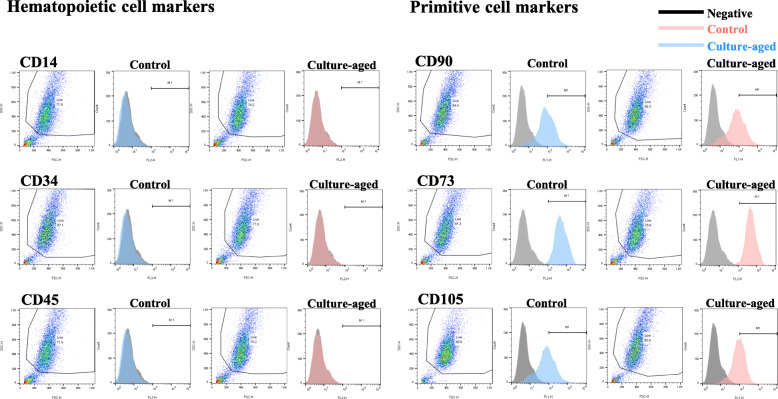
Tonsil-derived mesenchymal stem cells (TMSCs) with 20-25 passages were designated as culture-aged TMSCs, and their mesodermal differentiation potentials as well as markers of senescence and stemness were compared with the control TMSCs passaged up to 8 times at the most (designated as young). A whole-genome analysis was used to identify novel regulatory factors that distinguish between the culture-aged and control TMSCs. The identified markers of replicative senescence were validated using Western blot analyses.
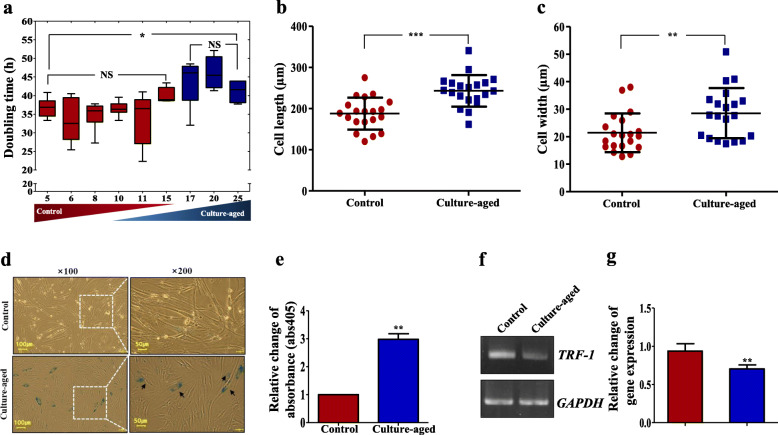
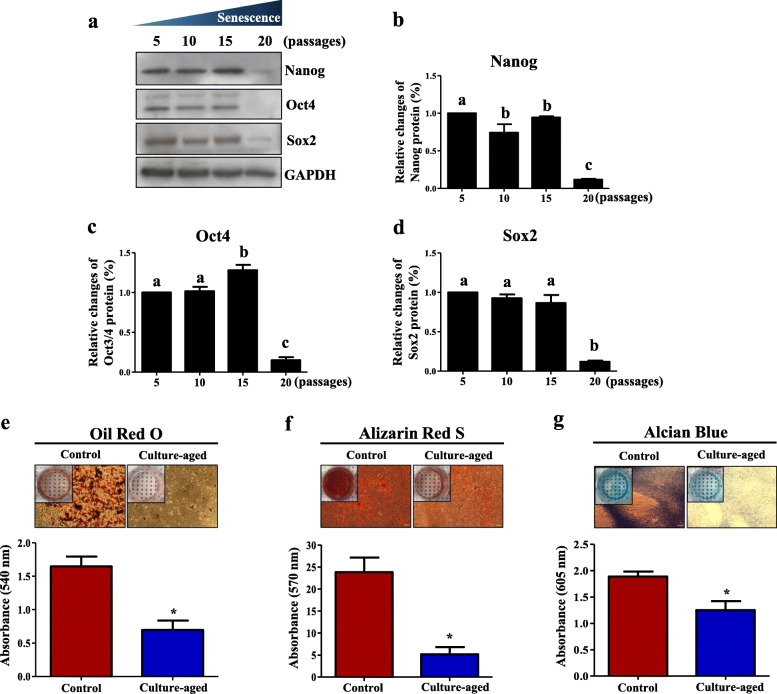
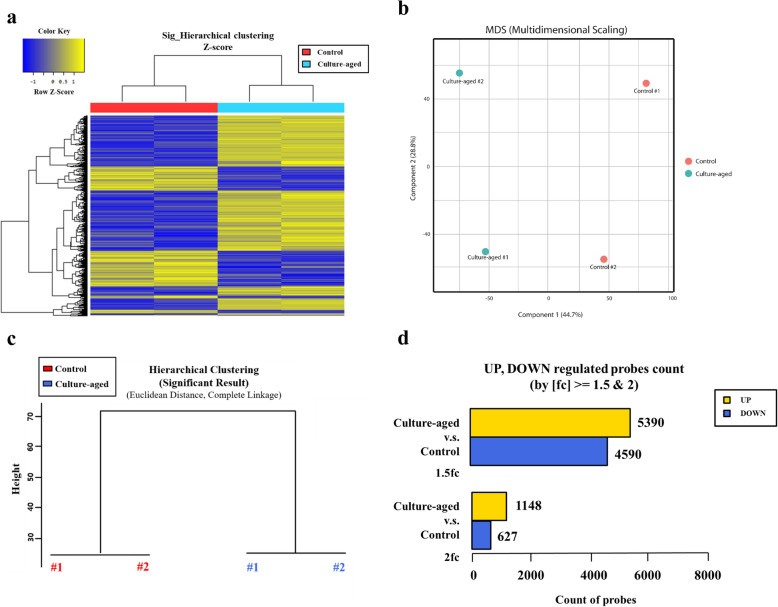
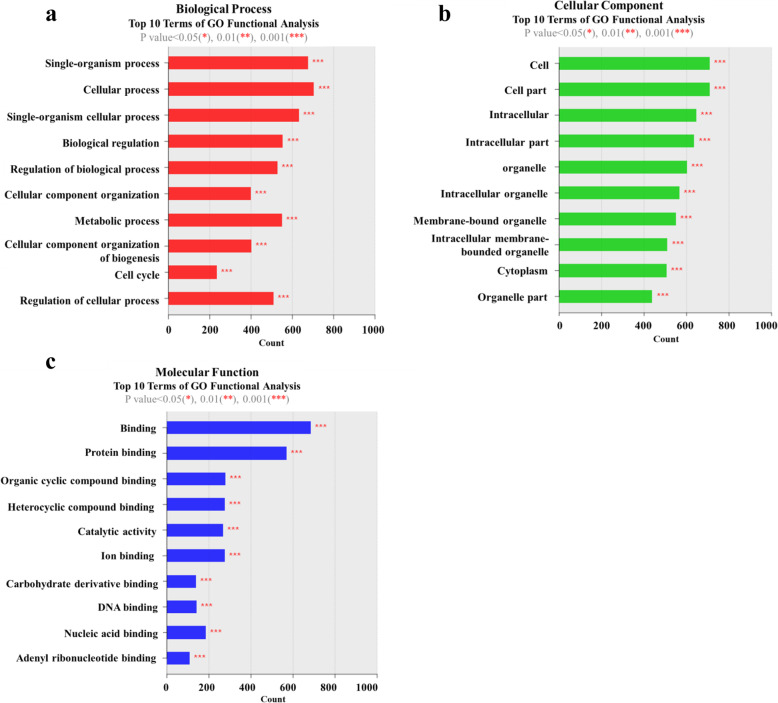
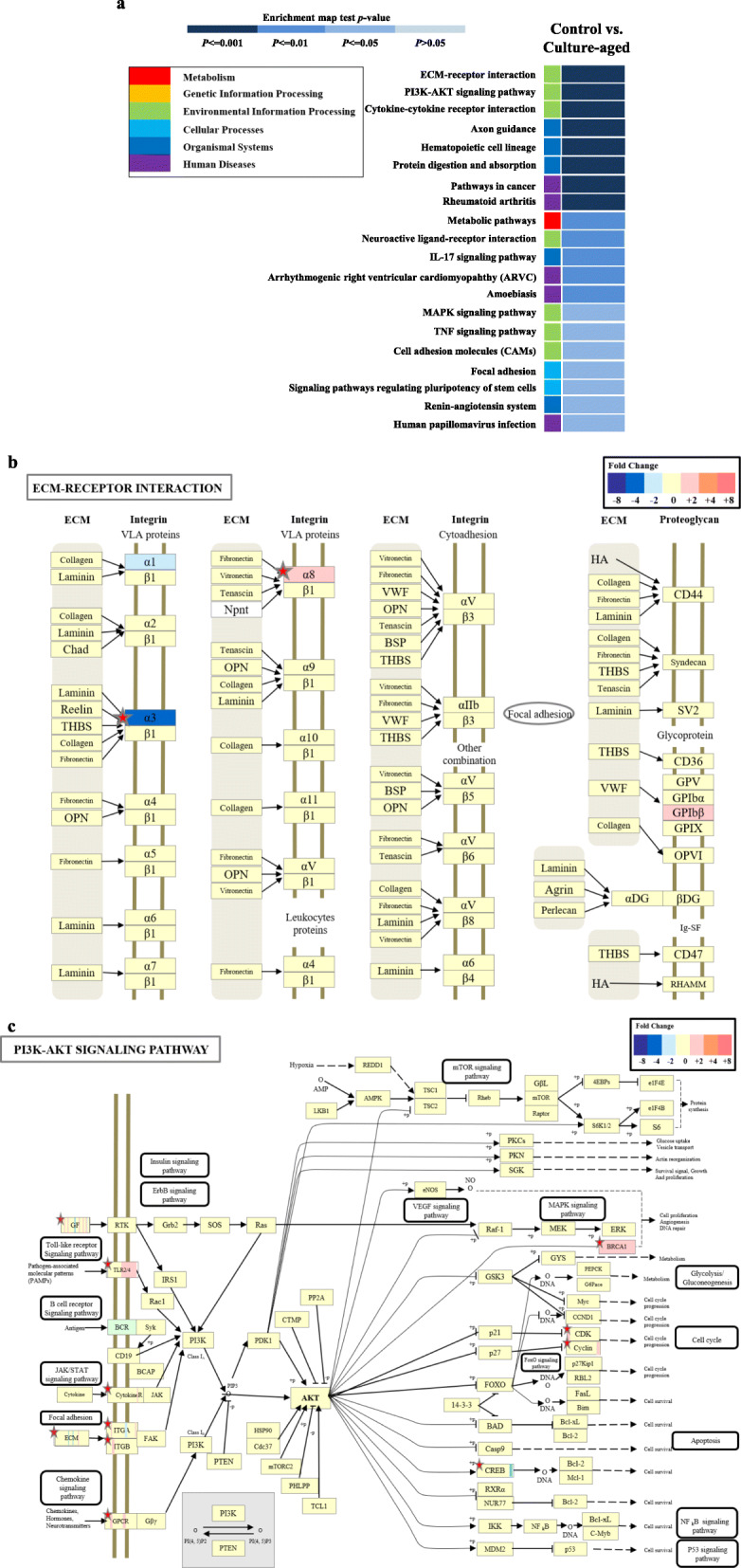
The culture-aged TMSCs showed longer doubling time compared to control TMSCs and had higher expression of senescence-associated (SA)-β-gal staining but lower expression of the stemness protein markers, including Nanog, Oct4, and Sox2 with decreased adipogenic, osteogenic, and chondrogenic differentiation potentials. Microarray analyses identified a total of 18,614 differentially expressed genes between the culture-aged and control TMSCs. The differentially expressed genes were classified into the Gene Ontology categories of cellular component (CC), functional component (FC), and biological process (BP) using KEGG (Kyoto encyclopedia of genes and genomes) pathway analysis. This analysis revealed that those genes associated with CC and BP showed the most significant difference between the culture-aged and control TMSCs. The genes related to extracellular matrix-receptor interactions were also shown to be significantly different (p < 0.001). We also found that culture-aged TMSCs had decreased expressions of integrin α3 (ITGA3) and phosphorylated AKT protein (p-AKT-Ser) compared to the control TMSCs.
Our data suggest that activation of ECM-receptor signaling, specifically involved with integrin family-mediated activation of the intracellular cell survival-signaling molecule AKT, can regulate stem cell senescence in TMSCs. Among these identified factors, ITGA3 was found to be a representative biomarker of the senescent TMSCs. Exclusion of the TMSCs with the senescent TMSC markers in this study could potentially increase the therapeutic efficacy of TMSCs in clinical applications.
间充质干细胞(MSCs)已被广泛用于干细胞治疗,为了满足再生医学实际应用中对细胞数量的需求,通常需要对干细胞进行多次传代培养。长期的细胞传代培养可能会导致复制性衰老,从而导致干细胞功能和干性逐渐下降,失去多能性特征。为了提高干细胞治疗的疗效,确定衰老细胞的特异性标志物非常重要。
将传代 20-25 次的扁桃体来源间充质干细胞(TMSCs)定义为培养老化的 TMSCs,与传代最多 8 次的对照组 TMSCs(定义为年轻组)相比,比较其中胚层分化潜能以及衰老和干性标志物。使用全基因组分析来鉴定区分培养老化和对照组 TMSCs 的新型调控因子。使用 Western blot 分析验证复制性衰老的鉴定标志物。
与对照组 TMSCs 相比,培养老化的 TMSCs 的倍增时间更长,衰老相关-β-半乳糖染色(SA-β-gal)的表达更高,而干性蛋白标志物 Nanog、Oct4 和 Sox2 的表达水平较低,其成脂、成骨和软骨分化潜能降低。微阵列分析在培养老化和对照组 TMSCs 之间共鉴定出 18614 个差异表达基因。使用京都基因与基因组百科全书(KEGG)通路分析将差异表达基因分为细胞成分(CC)、功能成分(FC)和生物过程(BP)的基因本体论(GO)类别。该分析表明,那些与 CC 和 BP 相关的基因在培养老化和对照组 TMSCs 之间存在最显著的差异。与细胞外基质-受体相互作用相关的基因也表现出显著差异(p<0.001)。我们还发现,与对照组 TMSCs 相比,培养老化的 TMSCs 中整合素 α3(ITGA3)和磷酸化 AKT 蛋白(p-AKT-Ser)的表达降低。
我们的数据表明,细胞外基质-受体信号的激活,特别是涉及整联蛋白家族介导的细胞内细胞存活信号分子 AKT 的激活,可以调节 TMSCs 的干细胞衰老。在这些鉴定出的因子中,ITGA3 被发现是衰老 TMSCs 的代表性标志物。在本研究中排除具有衰老 TMSC 标志物的 TMSCs 可能会增加 TMSCs 在临床应用中的治疗效果。