Immunity & Inflammation Theme, Translational and Clinical Research Institute, Faculty of Medical Sciences, Newcastle University, Newcastle upon Tyne, United Kingdom; Great North Children's Hospital (GNCH), Newcastle upon Tyne Hospitals NHS Foundation Trust, Newcastle upon Tyne, United Kingdom.
Department of Blood Cell Research, Sanquin Research, Amsterdam University Medical Centre, University of Amsterdam, Amsterdam, The Netherlands; Department of Pediatric Immunology, Rheumatology and Infectious Disease, Emma Children's Hospital, Amsterdam University Medical Centre, University of Amsterdam, Amsterdam, The Netherlands.
J Allergy Clin Immunol. 2021 Jun;147(6):2381-2385.e2. doi: 10.1016/j.jaci.2020.11.025. Epub 2020 Dec 3.
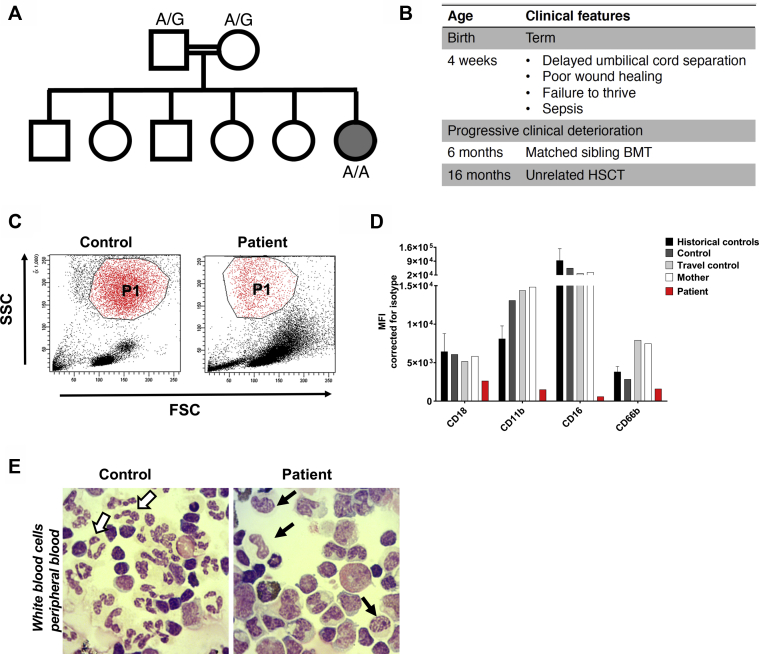
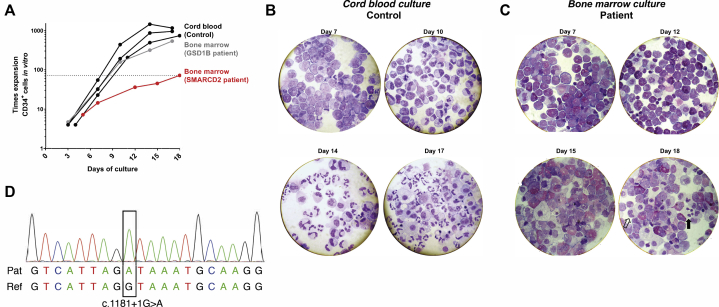
SMARCD2 (SWI/SNF-related, matrix-associated, actin-dependent regulator of chromatin, subfamily D, member 2) has recently been shown to have a critical role in granulopoiesis in humans, mice, and zebrafish. Our patient presented with delayed cord separation, failure to thrive, and sepsis. Retrospective whole-exome sequencing confirmed a homozygous splice-site mutation in SMARCD2.
We sought to provide the second description of human SMARCD2 deficiency and the first functional analysis of human primary SMARCD2-deficient cells.
Heparinized venous blood and bone marrow were collected from the patient after obtaining informed consent. Patient leukocytes and CD34 cells were then isolated, phenotyped, and assessed functionally.
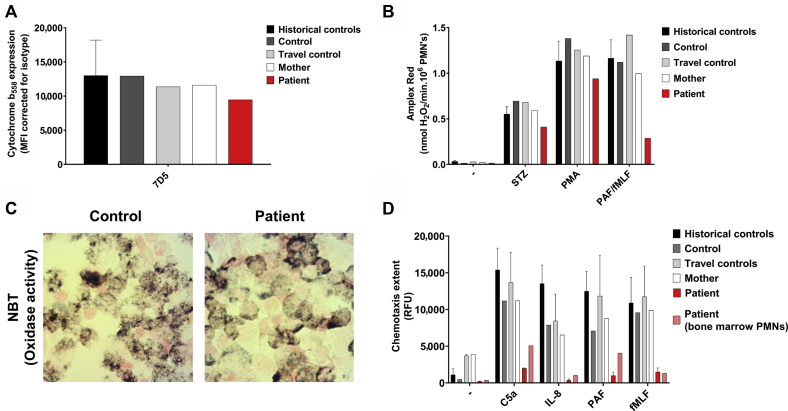
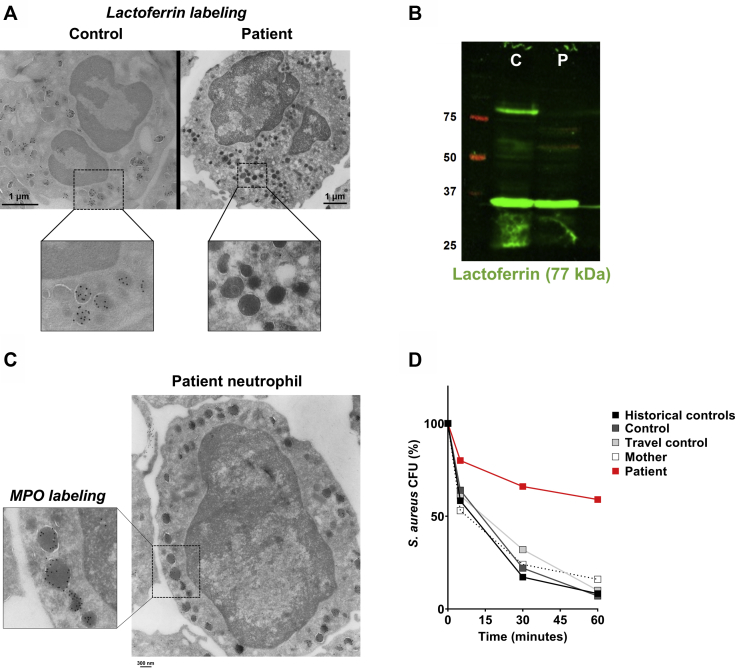
Circulating neutrophils appeared phenotypically immature, lacking multilobed nuclei, and neutrophil granules lacked lactoferrin but showed normal levels of myeloperoxidase. Neutrophil oxidative burst was preserved in response to phorbol 12-myristate 13-acetate. Patient bone marrow-derived neutrophils and white blood cells showed a severely impaired chemotactic response. Furthermore, white blood cells showed defective in vitro killing of Staphylococcus aureus, consistent with a specific granule deficiency. Finally, patient bone marrow-derived CD34 cells showed markedly impaired in vitro expansion and differentiation toward the neutrophil lineage. Before her molecular diagnosis, our patient underwent hematopoietic stem cell transplantation and is well 8 years later.
This report highlights an important role for SMARCD2 in human myelopoiesis and the curative effect of hematopoietic stem cell transplantation for the hematopoietic features of SMARCD2 deficiency.
SMARCD2(SWI/SNF 相关、基质相关、肌动蛋白依赖性染色质调节剂,亚家族 D,成员 2)最近被证明在人类、小鼠和斑马鱼的粒细胞生成中具有关键作用。我们的患者表现为脐带延迟分离、生长不良和败血症。回顾性全外显子组测序证实 SMARCD2 存在纯合剪接位点突变。
我们旨在提供人类 SMARCD2 缺乏症的第二例描述,并首次对人类原发性 SMARCD2 缺陷细胞进行功能分析。
在获得知情同意后,从患者采集肝素化静脉血和骨髓。然后分离、表型分析和功能评估患者白细胞和 CD34 细胞。
循环中性粒细胞表型不成熟,缺乏多分叶核,中性粒细胞颗粒缺乏乳铁蛋白,但髓过氧化物酶水平正常。中性粒细胞氧化爆发对佛波醇 12-肉豆蔻酸 13-乙酸的反应保持不变。患者骨髓来源的中性粒细胞和白细胞表现出严重受损的趋化反应。此外,白细胞对金黄色葡萄球菌的体外杀伤能力存在缺陷,这与特异性颗粒缺陷一致。最后,患者骨髓来源的 CD34 细胞表现出体外向中性粒细胞系显著受损的扩增和分化。在分子诊断之前,我们的患者接受了造血干细胞移植,8 年后情况良好。
本报告强调了 SMARCD2 在人类髓系生成中的重要作用,以及造血干细胞移植对 SMARCD2 缺乏症的造血特征的治疗效果。