Lähteenmäki Sabina, Sioris Thanos, Mahrberg Heidi, Rinta-Kiikka Irina, Laurikka Jari
Faculty of Medicine and Health Technology, Tampere University, Tampere, Finland.
Tampere Heart Hospital, Tampere, Finland.
J Thorac Dis. 2020 Nov;12(11):6701-6711. doi: 10.21037/jtd-20-1668.
Prompt and uneventful recovery after resective pulmonary surgery benefits patients by decreasing length and total costs of hospital stay. Postoperative physiotherapy has been shown to be advantageous for patient recovery in several studies and lately inspiratory muscle training (IMT) physiotherapy has been used also in thoracic patients. This randomized controlled trial intended to evaluate whether IMT is an efficient and feasible method of physiotherapy compared to water bottle positive expiratory physiotherapy (PEP) immediately after lung resections.
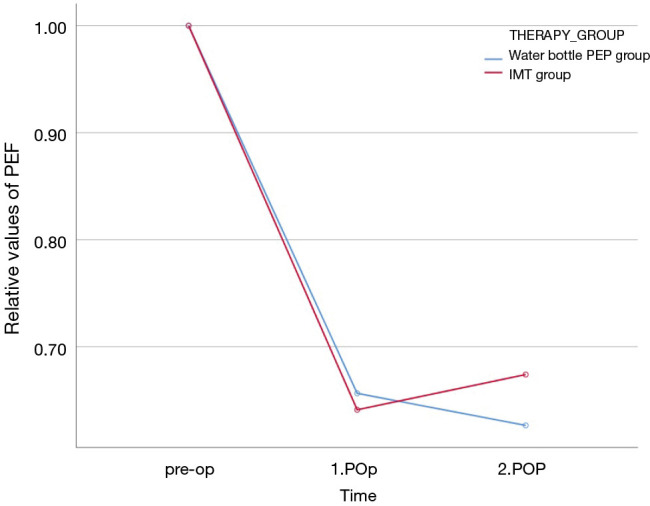
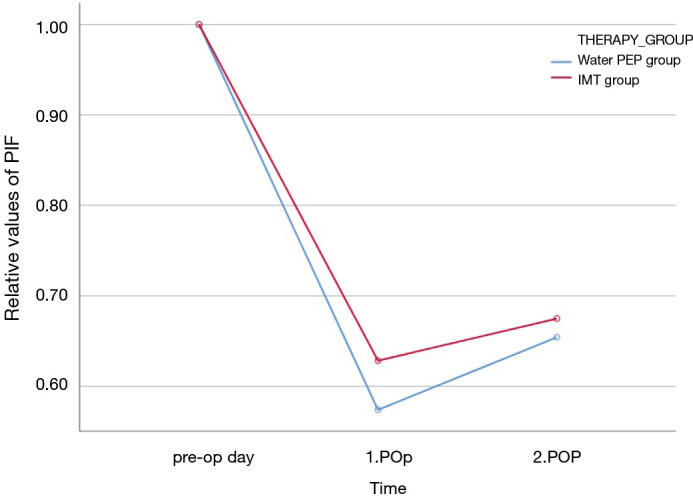
Forty-two patients were randomly allocated into two intervention groups: water bottle PEP (n=20) and IMT group (n=22). Patients were given physiotherapeutic guidance once a day and patients were also instructed to do independent exercises. Measurements of pulmonary function were compared between the treatment groups according to intention to treat by using two-way repeated measures analysis of variances at three time points (preoperative, first postoperative day, and second postoperative day). Walking distance was measured at first and second postoperative day and similarly, evaluation of postoperative air leak during exercises was performed. Physiotherapy was modified or temporarily interrupted, if necessary, because of the air leak.
Postoperative pulmonary function tests were equal between the intervention groups. Air leak was relatively common after lung resections: 31% of all patients had mild or moderate/severe air leak at first postoperative day and 14% of all patients had mild to severe air leak at second postoperative day respectively. There were no statistically significant differences in occurrence of air leak between intervention groups, but water resistance had to be reduced or physiotherapy discontinued significantly more often among the water bottle PEP group patients (P=0.01). Walking distance improved slightly faster in the IMT group between the first and the second postoperative day when compared to the water bottle PEP group, but the difference between the groups was not statistically significant.
IMT physiotherapy is equally effective to water bottle PEP training in postoperative physiotherapy after lung resection surgery evaluated with pulmonary function tests and walking distance. In addition, IMT physiotherapy is safe and more feasible form of physiotherapy during postoperative air leak compared to water bottle PEP.
肺切除术后迅速且平稳的恢复对患者有益,可缩短住院时间并降低总费用。多项研究表明,术后物理治疗有利于患者康复,最近吸气肌训练(IMT)物理治疗也已应用于胸科患者。这项随机对照试验旨在评估与肺切除术后立即进行的水瓶式呼气末正压物理治疗(PEP)相比,IMT是否是一种有效且可行的物理治疗方法。
42例患者被随机分为两个干预组:水瓶式PEP组(n = 20)和IMT组(n = 22)。患者每天接受一次物理治疗指导,并被指导进行自主锻炼。在三个时间点(术前、术后第一天和术后第二天),使用双向重复测量方差分析,根据意向性分析比较治疗组之间的肺功能测量值。在术后第一天和第二天测量步行距离,同样,对运动期间的术后漏气情况进行评估。如有必要,因漏气对物理治疗进行调整或暂时中断。
干预组之间术后肺功能测试结果相当。肺切除术后漏气相对常见:所有患者中,分别有31%在术后第一天出现轻度或中度/重度漏气,14%在术后第二天出现轻度至重度漏气。干预组之间漏气发生率无统计学显著差异,但水瓶式PEP组患者中,不得不更频繁地降低水阻力或停止物理治疗的情况显著更多(P = 0.01)。与水瓶式PEP组相比,IMT组在术后第一天和第二天之间步行距离改善略快,但两组之间的差异无统计学意义。
在通过肺功能测试和步行距离评估的肺切除术后物理治疗中,IMT物理治疗与水瓶式PEP训练同样有效。此外,与水瓶式PEP相比,IMT物理治疗在术后漏气期间是一种更安全、更可行的物理治疗形式。