Farag Adam, Thompson R Terry, Thiessen Jonathan D, Butler John, Prato Frank S, Théberge Jean
Lawson Health Research Institute, Imaging Division, 268 Grosvenor St., Rm E5-118, PO Box 5777, STN B, London, ON N6A 4V2 Canada.
Department of Medical Biophysics, Western University, London, ON Canada.
Eur J Hybrid Imaging. 2019;3(1):13. doi: 10.1186/s41824-019-0061-7. Epub 2019 Aug 22.
Cardiovascular imaging using hybrid positron emission tomography (PET) and magnetic resonance imaging (MRI) requires a radio frequency phased array resonator capable of high acceleration factors in order to achieve the shortest breath-holds while maintaining optimal MRI signal-to-noise ratio (SNR) and minimum PET photon attenuation. To our knowledge, the only two arrays used today for hybrid PET/MRI cardiovascular imaging are either incapable of achieving high acceleration or affect the PET photon count greatly.
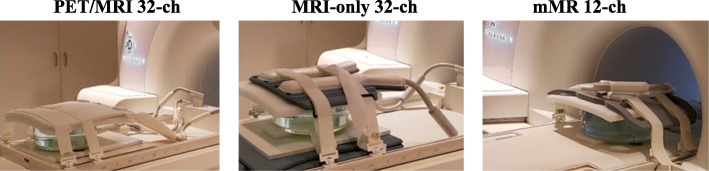
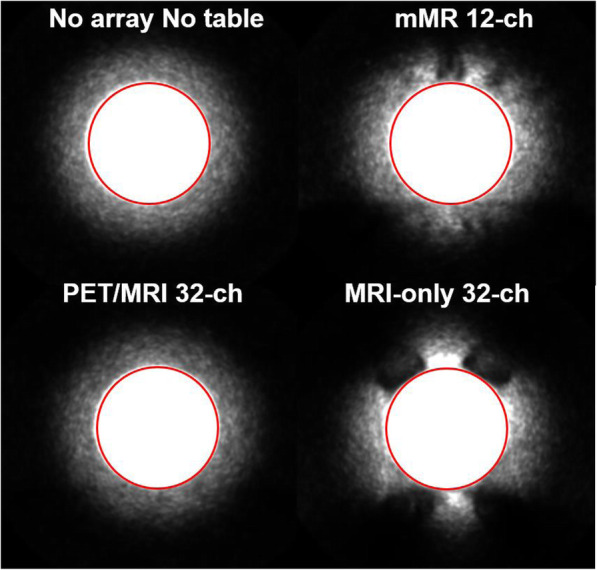
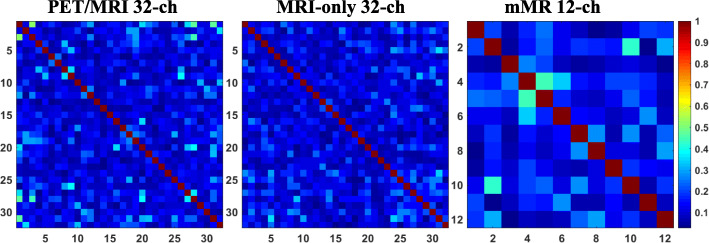
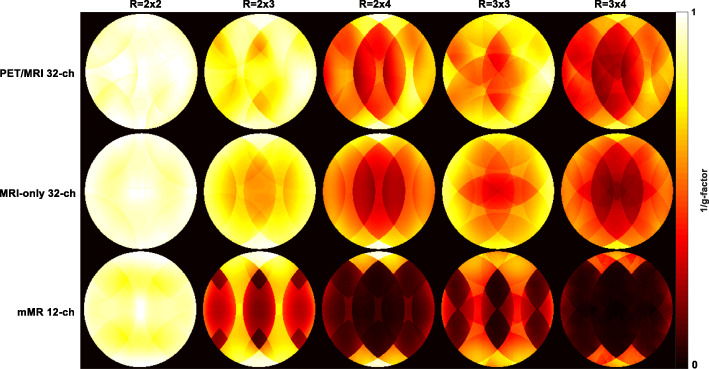
This study is focused on the evaluation of the MRI performance of a novel third-party prototype 32-channel phased array designed for simultaneous PET/MRI cardiovascular imaging. The study compares the quality parameters of MRI parallel imaging, such as g-factor, noise correlation coefficients, and SNR, to the conventional arrays (mMR 12-channel and MRI-only 32-channel) currently used with hybrid PET/MRI systems. The quality parameters of parallel imaging were estimated for multiple acceleration factors on a phantom and three healthy volunteers. Using a Germanium-68 (Ge-68) phantom, preliminary measurements of PET photon attenuation caused by the novel array were briefly compared to the photon counts produced from no-array measurements.
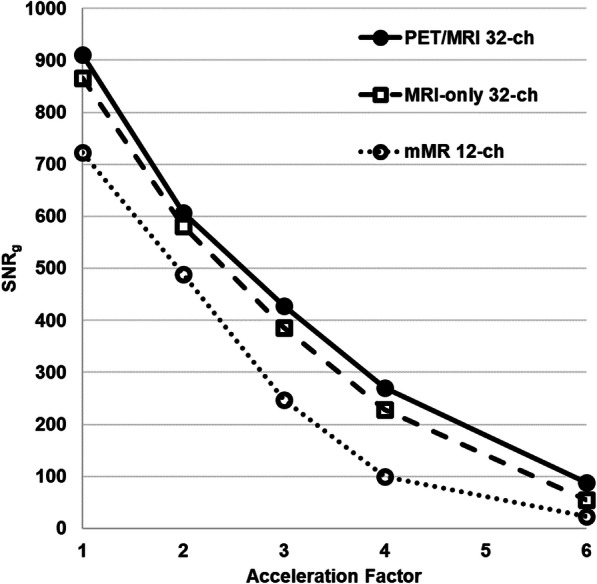
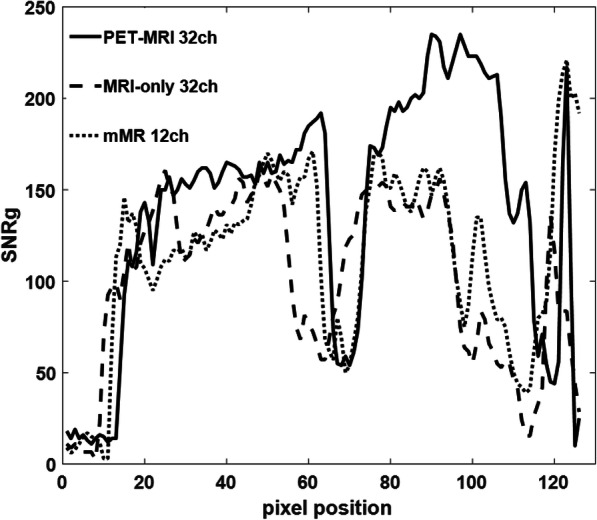
The global mean of the g-factor and SNR produced by the novel 32-channel PET/MRI array were better than those produced by the MRI-only 32-channel array by 5% or more. The novel array has resulted in MRI SNR improvements of > 30% at all acceleration factors, in comparison to the mMR12-channel array. Preliminary evaluation of PET transparency showed less than 5% photon attenuation caused by both anterior and posterior parts of the novel array.
The MRI performance of the novel PET/MRI 32-channel array qualifies it to be a viable alternative to the conventional arrays for cardiovascular hybrid PET/MRI. A detailed evaluation of the novel array's PET performance remains to be conducted, but cursory assessment promises significantly reduced attenuation.
使用正电子发射断层扫描(PET)与磁共振成像(MRI)相结合的心血管成像技术,需要一个能够实现高加速因子的射频相控阵谐振器,以便在保持最佳MRI信噪比(SNR)和最小PET光子衰减的同时,实现最短的屏气时间。据我们所知,目前用于PET/MRI心血管成像的仅有的两种阵列,要么无法实现高加速,要么对PET光子计数有很大影响。
本研究聚焦于评估一款专为PET/MRI心血管成像设计的新型第三方原型32通道相控阵的MRI性能。该研究将MRI并行成像的质量参数,如g因子、噪声相关系数和SNR,与目前用于PET/MRI系统的传统阵列(mMR 12通道和仅用于MRI的32通道)进行比较。在体模和三名健康志愿者身上,针对多个加速因子估计了并行成像的质量参数。使用锗-68(Ge-68)体模,将新型阵列引起的PET光子衰减的初步测量结果与无阵列测量产生的光子计数进行了简要比较。
新型32通道PET/MRI阵列产生的g因子和SNR的全局平均值,比仅用于MRI的32通道阵列产生的要好5%或更多。与mMR12通道阵列相比,新型阵列在所有加速因子下都使MRI SNR提高了>30%。对PET透明度的初步评估显示,新型阵列的前部和后部引起的光子衰减均小于5%。
新型PET/MRI 32通道阵列的MRI性能使其有资格成为心血管PET/MRI混合成像中传统阵列的可行替代品。虽然对新型阵列的PET性能仍有待进行详细评估,但初步评估表明其衰减显著降低。