Department of Urology, Chongqing Medical University First Affiliated Hospital, Chongqing, China.
Fuling Center Hospital of Chongqing City, Chongqing, China.
J Biomater Appl. 2021 Jul;36(1):3-14. doi: 10.1177/0885328220975249. Epub 2020 Dec 6.
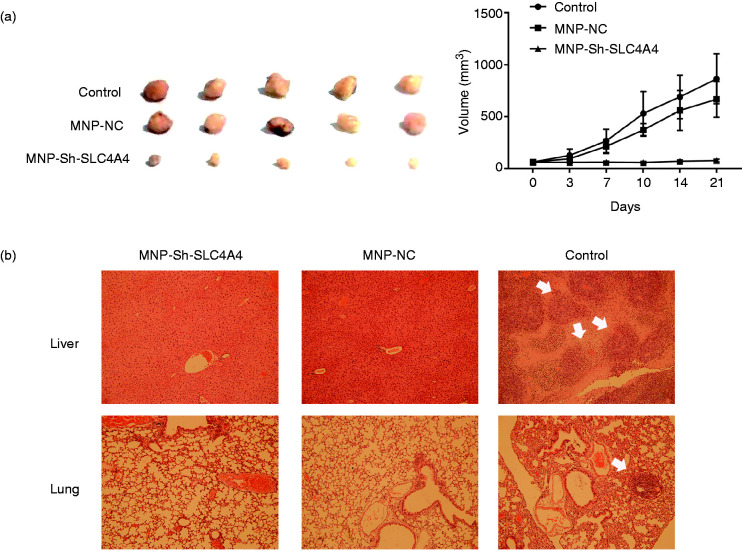
Prostate cancer is an epithelial malignant tumor of the prostate, and it is one of the malignant tumors with a high incidence of urogenital system in men. The local treatment of prostate cancer is mainly radical resection and radical radiotherapy, but they are not applicable to advanced prostate cancer. Systemic therapy mainly includes targeted therapy and immunotherapy which could cause many complications, and will affect the prognosis and quality of life of patients. It is urgent to find new treatments for prostate cancer. Bioinformatics offers hope for us to find reliable therapeutic targets. Bioinformatics can use the tumor informations in database and analyze them to screen out the best differentially expressed genes. Using the selected differentially expressed genes as targets, a gene interference plasmid was designed, and the constructed plasmid was used for targeted gene therapy. There are some problems about gene therapy that need to be solved, such as how to transfer genes to target cells is also an important challenge. Due to their large molecular weight and hydrophilic nature, they cannot enter cells through passive diffusion mechanisms. Here we synthesized a DNA carrier used surface modified iron based nanoparticles, and used it to load plasmid including ShRNA which can inhibit the expression of oncogene SLC4A4 selected by bioinformatics' method. After that we use this iron based nanoparticles/plasmid DNA nanocomposite to treat prostate cancer cells in vitro and in vivo. The target gene SLC4A4 we had selected using bioinformatics had a strong effect on the proliferation of prostate cells; Our nanocomposite could inhibit the expression of SLC4A4 effectively, it had strong inhibitory effects on prostate cancer cells both in vivo and in vitro, and can be used as a potential method for prostate cancer treatment.
前列腺癌是一种前列腺上皮恶性肿瘤,是男性泌尿生殖系统高发恶性肿瘤之一。前列腺癌的局部治疗主要为根治性切除术和根治性放疗,但它们不适用于晚期前列腺癌。系统治疗主要包括靶向治疗和免疫治疗,这些治疗方法可能会引起许多并发症,并会影响患者的预后和生活质量。因此,迫切需要寻找新的前列腺癌治疗方法。生物信息学为我们寻找可靠的治疗靶点提供了希望。生物信息学可以利用数据库中的肿瘤信息进行分析,筛选出最佳差异表达基因。选择的差异表达基因作为靶点,设计基因干扰质粒,并构建质粒进行靶向基因治疗。基因治疗存在一些需要解决的问题,例如如何将基因转染到靶细胞也是一个重要的挑战。由于其分子量较大和亲水性,它们不能通过被动扩散机制进入细胞。在这里,我们合成了一种 DNA 载体,该载体使用表面修饰的铁基纳米粒子,并使用它来负载包括通过生物信息学方法选择的抑癌基因 SLC4A4 的 ShRNA。之后,我们将这种铁基纳米粒子/质粒 DNA 纳米复合物用于体外和体内治疗前列腺癌细胞。我们通过生物信息学选择的靶基因 SLC4A4 对前列腺细胞的增殖有很强的作用;我们的纳米复合物能有效抑制 SLC4A4 的表达,对体内外的前列腺癌细胞均有很强的抑制作用,可作为前列腺癌治疗的一种潜在方法。