Department of Histopathology and Morbid Anatomy, Sir Patrick Dun Translational Research Lab, St. James's Hospital, Dublin, Ireland.
Department of Pharmaceutical Biotechnology, Faculty of Pharmacy, Ege University, Bornova, Izmir, Turkey.
J Nanobiotechnology. 2021 Mar 8;19(1):71. doi: 10.1186/s12951-021-00781-z.
siRNAs hold a great potential for cancer therapy, however, poor stability in body fluids and low cellular uptake limit their use in the clinic. To enhance the bioavailability of siRNAs in tumors, novel, safe, and effective carriers are needed.
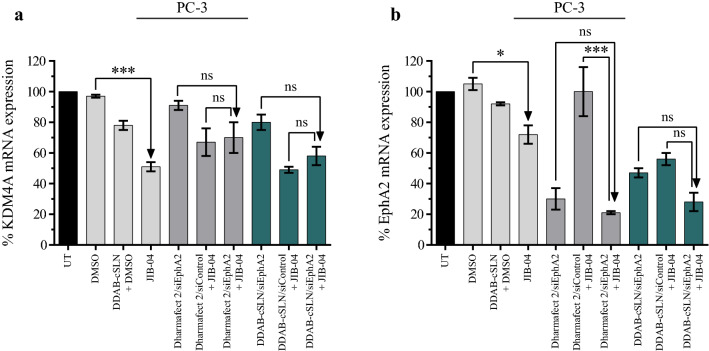
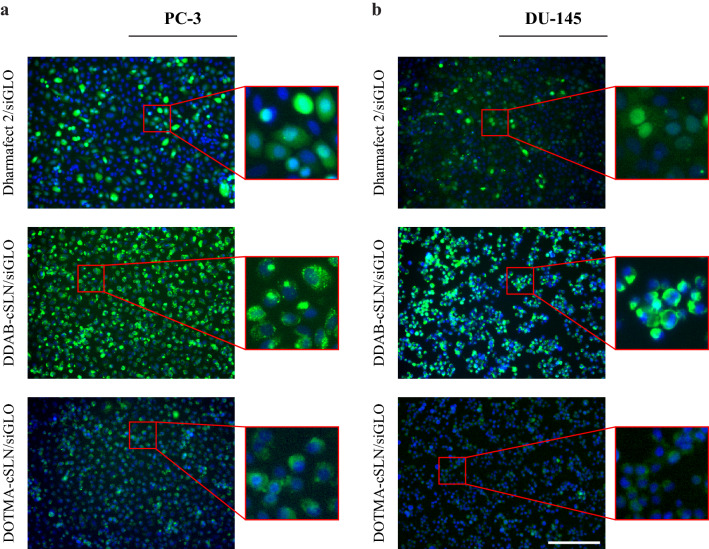
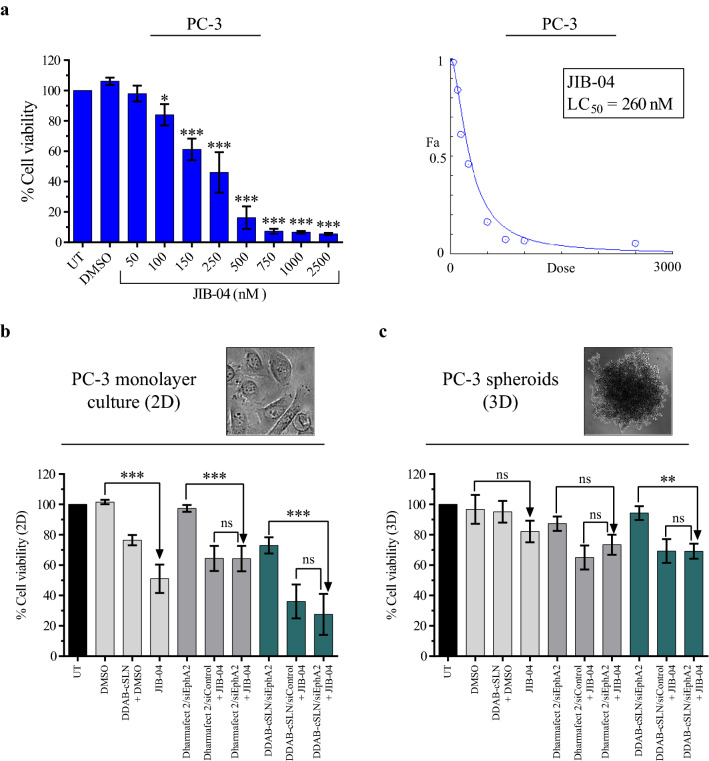
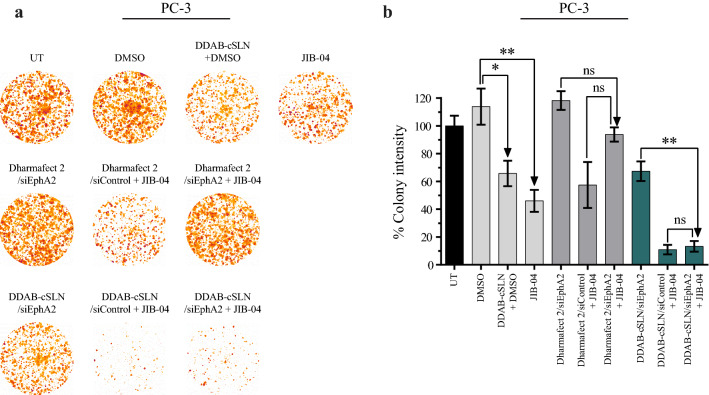
Here, we developed cationic solid lipid nanoparticles (cSLNs) to carry siRNAs targeting EphA2 receptor tyrosine kinase (siEphA2), which is overexpressed in many solid tumors including prostate cancer. Using DDAB cationic lipid instead of DOTMA reduced nanoparticle size and enhanced both cellular uptake and gene silencing in prostate cancer cells. DDAB-cSLN showed better cellular uptake efficiency with similar silencing compared to commercial transfection reagent (Dharmafect 2). After verifying the efficacy of siEphA2-loaded nanoparticles, we further evaluated a potential combination with a histone lysine demethylase inhibitor, JIB-04. Silencing EphA2 by siEphA2-loaded DDAB-cSLN did not affect the viability (2D or 3D culture), migration, nor clonogenicity of PC-3 cells alone. However, upon co-administration with JIB-04, there was a decrease in cellular responses. Furthermore, JIB-04 decreased EphA2 expression, and thus, silencing by siEphA2-loaded nanoparticles was further increased with co-treatment.
We have successfully developed a novel siRNA-loaded lipid nanoparticle for targeting EphA2. Moreover, preliminary results of the effects of JIB-04, alone and in combination with siEphA2, on prostate cancer cells and prostate cancer tumor spheroids were presented for the first time. Our delivery system provides high transfection efficiency and shows great promise for targeting other genes and cancer types in further in vitro and in vivo studies.
siRNA 在癌症治疗中具有巨大的潜力,然而,其在体液中的稳定性差和细胞摄取率低限制了其在临床上的应用。为了提高 siRNA 在肿瘤中的生物利用度,需要新型、安全、有效的载体。
本研究开发了阳离子固体脂质纳米粒(cSLN)来携带针对 EphA2 受体酪氨酸激酶(siEphA2)的 siRNA,EphA2 在包括前列腺癌在内的许多实体瘤中过度表达。使用 DDAB 阳离子脂质代替 DOTMA 可减小纳米粒的尺寸,并增强前列腺癌细胞的细胞摄取和基因沉默。与商业转染试剂(Dharmafect 2)相比,DDAB-cSLN 具有更好的细胞摄取效率和相似的沉默效果。在验证了载有 siEphA2 的纳米粒的功效后,我们进一步评估了与组蛋白赖氨酸去甲基化酶抑制剂 JIB-04 的潜在联合应用。单独用载有 siEphA2 的 DDAB-cSLN 沉默 EphA2 并不影响 PC-3 细胞的活力(2D 或 3D 培养)、迁移或集落形成能力。然而,当与 JIB-04 共同给药时,细胞反应减少。此外,JIB-04 降低了 EphA2 的表达,因此,与共同处理时,载有 siEphA2 的纳米粒的沉默作用进一步增强。
我们成功开发了一种新型用于靶向 EphA2 的 siRNA 负载脂质纳米粒。此外,首次提出了 JIB-04 单独及与 siEphA2 联合对前列腺癌细胞和前列腺癌肿瘤球体的初步作用。我们的递药系统提供了高转染效率,并为进一步的体外和体内研究靶向其他基因和癌症类型提供了很大的希望。