Amsterdam UMC, Faculty of Medicine, Vrije Universiteit Amsterdam, Research in Education, Amsterdam, The Netherlands.
LEARN! Research Institute for Learning and Education, Faculty of Psychology and Education, Vrije Universiteit Amsterdam, Amsterdam, The Netherlands.
Perspect Med Educ. 2021 Aug;10(4):245-251. doi: 10.1007/s40037-020-00633-w. Epub 2020 Dec 7.
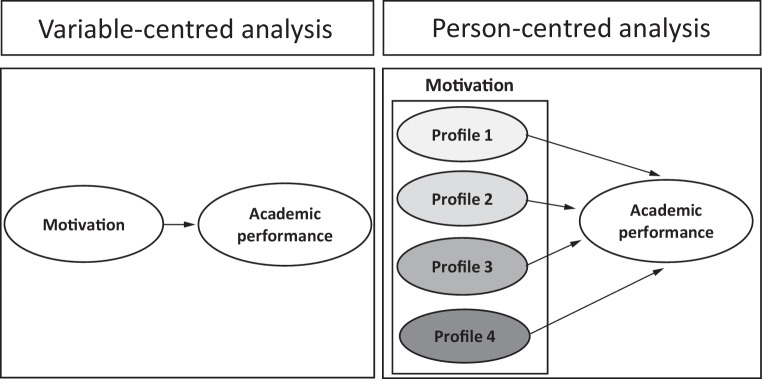
Health professions education (HPE) research is dominated by variable-centred analysis, which enables the exploration of relationships between different independent and dependent variables in a study. Although the results of such analysis are interesting, an effort to conduct a more person-centred analysis in HPE research can help us in generating a more nuanced interpretation of the data on the variables involved in teaching and learning. The added value of using person-centred analysis, next to variable-centred analysis, lies in what it can bring to the applications of the research findings in educational practice. Research findings of person-centred analysis can facilitate the development of more personalized learning or remediation pathways and customization of teaching and supervision efforts. Making the research findings more recognizable in practice can make it easier for teachers and supervisors to understand and deal with students. The aim of this article is to compare and contrast different methods that can be used for person-centred analysis and show the incremental value of such analysis in HPE research. We describe three methods for conducting person-centred analysis: cluster, latent class and Q‑sort analyses, along with their advantages and disadvantage with three concrete examples for each method from HPE research studies.
健康专业教育(HPE)研究主要采用变量为中心的分析方法,这种方法可以在研究中探索不同独立变量和因变量之间的关系。虽然这种分析的结果很有趣,但是在 HPE 研究中进行更以人为中心的分析可以帮助我们更细致地解释教学和学习中涉及的变量数据。除了变量为中心的分析之外,使用以人为中心的分析的附加价值在于它可以为教育实践中的研究结果的应用带来什么。以人为中心的分析研究结果可以促进更个性化的学习或补救途径的发展,并使教学和监督工作更加个性化。使研究结果在实践中更加易于识别,可以使教师和管理者更容易理解和处理学生。本文的目的是比较和对比可用于以人为中心的分析的不同方法,并展示这种分析在 HPE 研究中的附加价值。我们描述了三种进行以人为中心的分析的方法:聚类分析、潜在类别分析和 Q 分类分析,以及每种方法的三个具体示例及其在 HPE 研究中的优缺点。