Department of Medical Environmental Biology, Chung-Ang University College of Medicine, Seoul, Republic of Korea.
Department of Parasitology, School of Biology and Basic Medical Sciences, Medical College, Soochow University, Suzhou, Jiangsu, PR China.
PLoS Negl Trop Dis. 2020 Dec 7;14(12):e0008952. doi: 10.1371/journal.pntd.0008952. eCollection 2020 Dec.
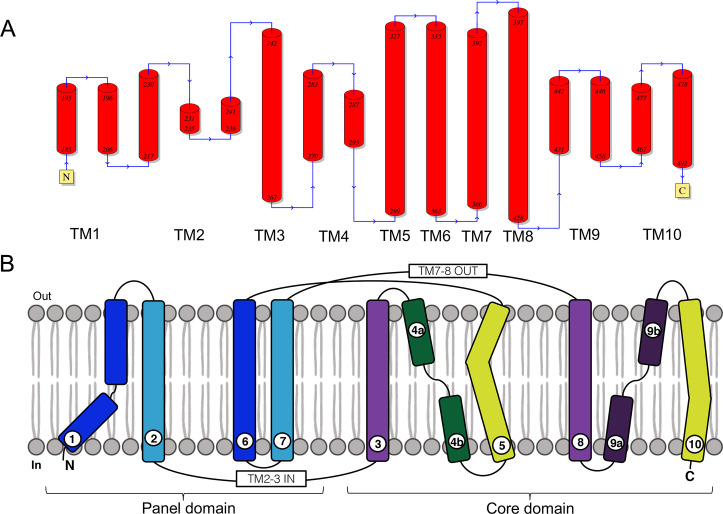
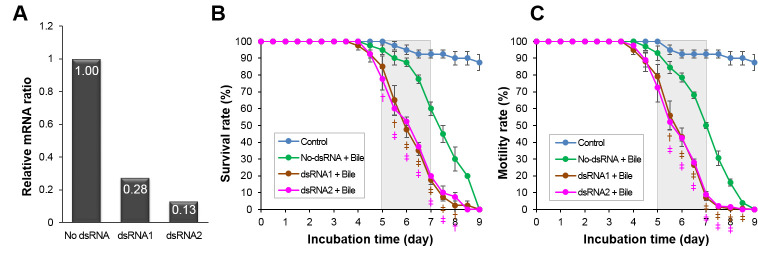
The liver fluke Clonorchis sinensis inhabits the bile ducts, where bile concentration disparities across the fluke cell membrane can cause bile intoxication. Sodium-bile acid co-transporter (SBAT) plays a crucial role in bile acid recycling. The process by which SBAT imports bile acids is electrically coupled to sodium ion co-transportation. Here, we report that the SBAT of C. sinensis (CsSBAT) is involved in bile acid transportation. CsSBAT cDNA encoded a putative polypeptide of 546 amino acid residues. Furthermore, CsSBAT consisted of ten putative transmembrane domains, and its 3D structure was predicted to form panel and core domains. The CsSBAT had one bile acid- and three Na+-binding sites, enabling coordination of a symport process. CsSBAT was mainly localized in the mesenchymal tissue throughout the fluke body and sparsely localized in the basement of the tegument, intestinal epithelium, and excretory bladder wall. Bile acid permeated into the adult flukes in a short time and remained at a low concentration level. Bile acid accumulated inside the mesenchymal tissue when CsSBAT was inhibited using polyacrylic acid-tetradeoxycholic acid conjugate. The accumulated bile acid deteriorated the C. sinensis adults leading to death. CsSBAT silencing shortened the lifespan of the fluke when it was placed into bile. Taken together, we propose that CsSBAT transports bile acids in the mesenchymal tissue and coordinate with outward transporters to maintain bile acid homeostasis of C. sinensis adults, contributing to C. sinensis survival in the bile environment.
华支睾吸虫栖息在胆管中,胆管中华支睾吸虫细胞膜两侧的胆汁浓度差异可能导致胆汁中毒。钠-胆汁酸共转运体 (SBAT) 在胆汁酸循环中起着至关重要的作用。SBAT 将胆汁酸导入细胞的过程与钠离子共转运相偶联。在这里,我们报告华支睾吸虫的 SBAT (CsSBAT) 参与了胆汁酸的运输。CsSBAT cDNA 编码一个含有 546 个氨基酸残基的假定多肽。此外,CsSBAT 由十个假定的跨膜结构域组成,其 3D 结构被预测形成面板和核心结构域。CsSBAT 具有一个胆汁酸结合位点和三个 Na+ 结合位点,能够协调共转运过程。CsSBAT 主要定位于虫体的间质组织中,在体被的基底、肠上皮和排泄囊壁中稀疏分布。短时间内胆汁酸就渗透进入成虫体内,并保持在低浓度水平。当用聚丙烯酸-十四去氧胆酸缀合物抑制 CsSBAT 时,胆汁酸在间质组织中积累。积累的胆汁酸使华支睾吸虫成虫恶化,导致其死亡。当 CsSBAT 沉默并将其置于胆汁中时,会缩短虫体的寿命。综上所述,我们提出 CsSBAT 在间质组织中运输胆汁酸,并与外向转运体协同作用,以维持华支睾吸虫成虫的胆汁酸稳态,有助于华支睾吸虫在胆汁环境中的生存。