State Key Laboratory of Oncology in South China, Collaborative Innovation Center for Cancer Medicine, Sun Yat-sen University Cancer Center, Guangzhou 510060, P. R. China.
Department of Clinical Oncology, The University of Hong Kong, Hong Kong 852, P. R. China.
Aging (Albany NY). 2020 Dec 3;13(1):537-554. doi: 10.18632/aging.202164.
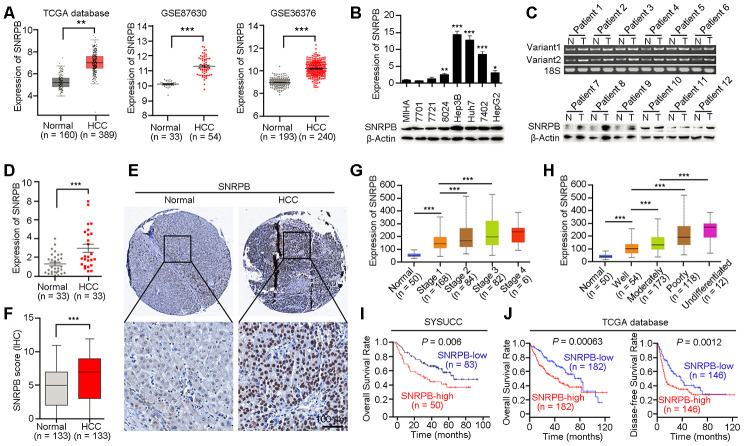
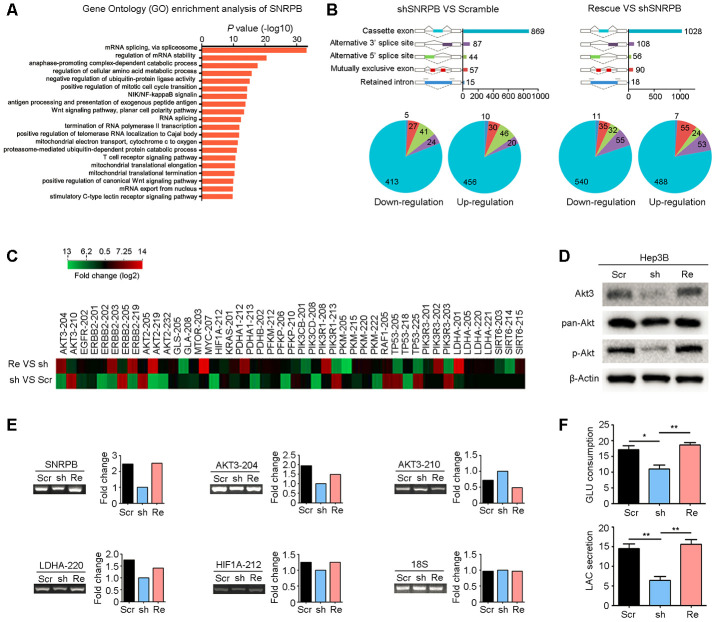
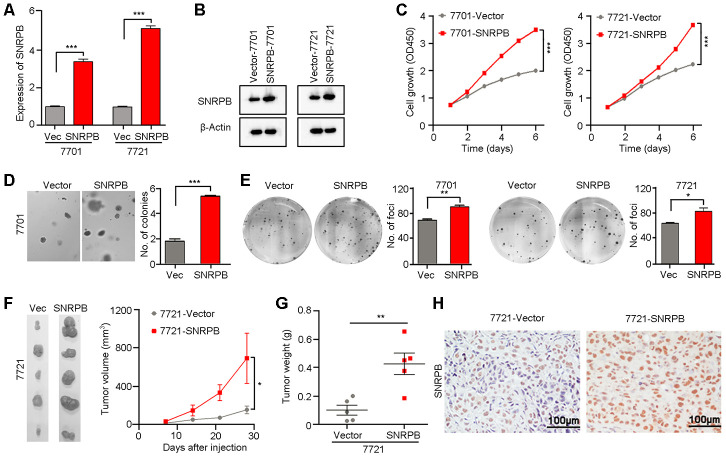
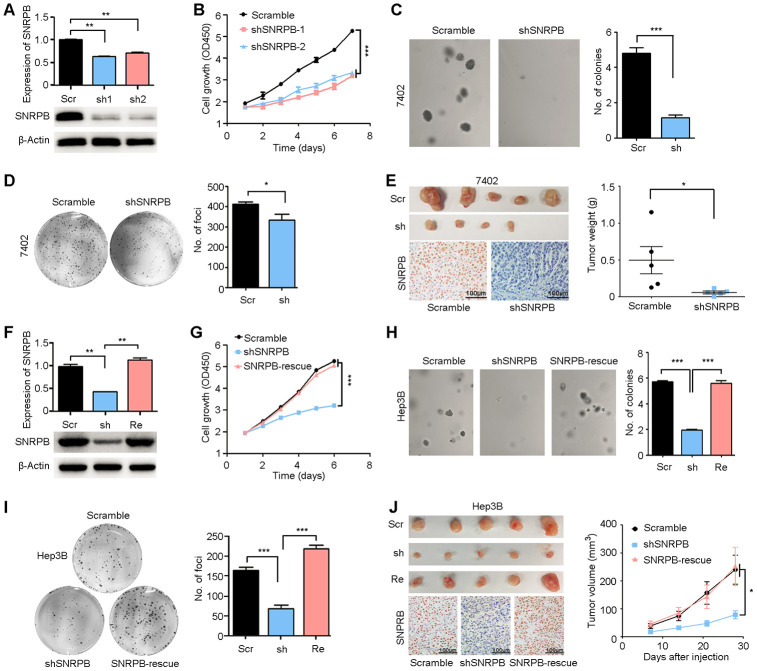
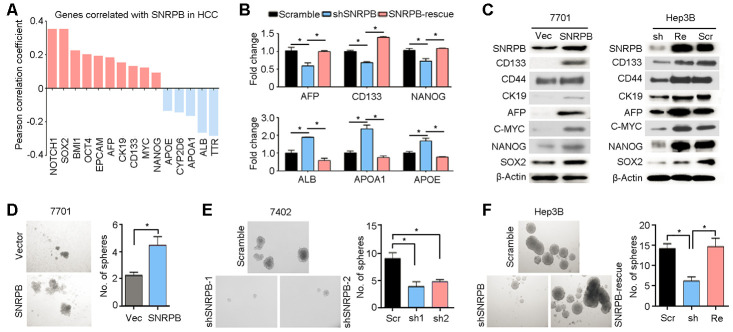
Hepatocellular carcinoma (HCC) is one of the leading malignant diseases worldwide, but therapeutic targets for HCC are lacking. Here, we characterized a significant upregulation of Small Nuclear Ribonucleoprotein Polypeptides B and B1 (SNRPB) in HCC via qRT-PCR, western blotting, tissue microarray and public database analyses. Increased SNRPB expression was positively associated with adjacent organ invasion, tumor size, serum AFP level and poor HCC patient survival. Next, we transfected SNRPB into HCC cells to construct SNRPB-overexpressing cell lines, and short hairpin RNA targeting SNRPB was used to silence SNRPB in HCC cells. Functional studies showed that SNRPB overexpression could promote HCC cell malignant proliferation and stemness maintenance. Inversely, SNRPB knockdown in HCC cells caused inverse effects. Importantly, analysis of alternative splicing by RNA sequencing revealed that SNRPB promoted the formation of AKT3-204 and LDHA-220 splice variants, which activated the Akt pathway and aerobic glycolysis in HCC cells. In conclusion, SNRPB could serve as a prognostic predictor for patients with HCC, and it promotes HCC progression by inducing metabolic reprogramming.
肝细胞癌(HCC)是全球主要的恶性疾病之一,但 HCC 的治疗靶点仍然缺乏。在这里,我们通过 qRT-PCR、western blot、组织微阵列和公共数据库分析,发现小核核糖核蛋白多肽 B 和 B1(SNRPB)在 HCC 中显著上调。SNRPB 表达的增加与邻近器官侵犯、肿瘤大小、血清 AFP 水平和 HCC 患者不良预后呈正相关。接下来,我们将 SNRPB 转染到 HCC 细胞中构建 SNRPB 过表达细胞系,并使用针对 SNRPB 的短发夹 RNA 沉默 HCC 细胞中的 SNRPB。功能研究表明,SNRPB 过表达可促进 HCC 细胞恶性增殖和干细胞特性维持。相反,沉默 HCC 细胞中的 SNRPB 会产生相反的效果。重要的是,通过 RNA 测序分析剪接发现,SNRPB 促进了 AKT3-204 和 LDHA-220 剪接变体的形成,从而激活了 HCC 细胞中的 Akt 通路和有氧糖酵解。总之,SNRPB 可以作为 HCC 患者的预后预测因子,通过诱导代谢重编程促进 HCC 的进展。