Bakker Akke, Zweije Remko, Kok Henny Petra, Kolff Merel Willemijn, van den Bongard H J G Desiree, Schmidt Manfred, van Tienhoven Geertjan, Crezee Hans
Department of Radiation Oncology, Amsterdam UMC, 1105 AZ Amsterdam, The Netherlands.
Department of Radiation Oncology, University Hospital Erlangen, 91054 Erlangen, Germany.
Cancers (Basel). 2020 Dec 4;12(12):3644. doi: 10.3390/cancers12123644.
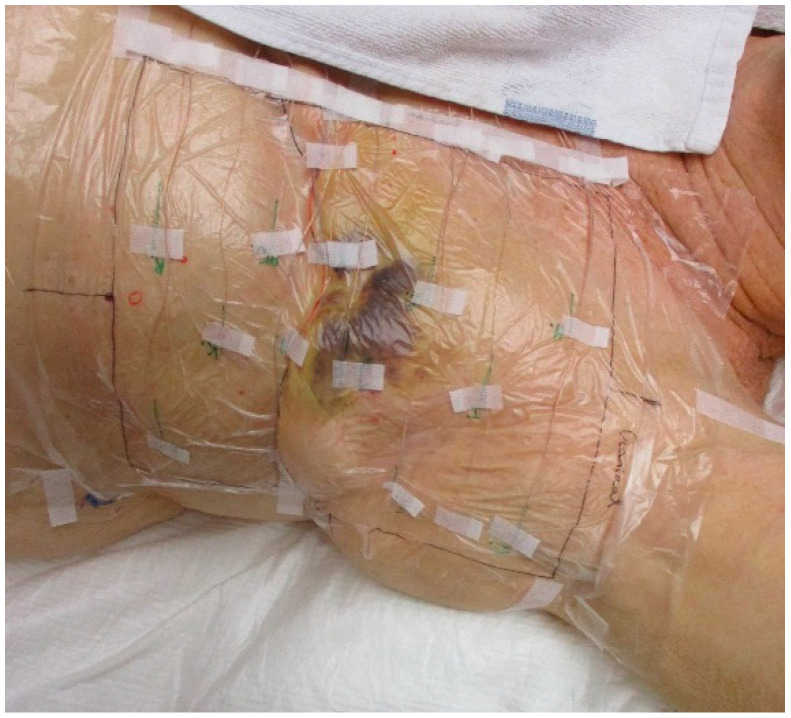
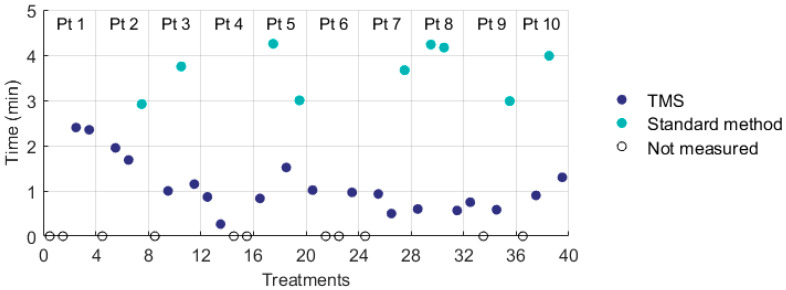
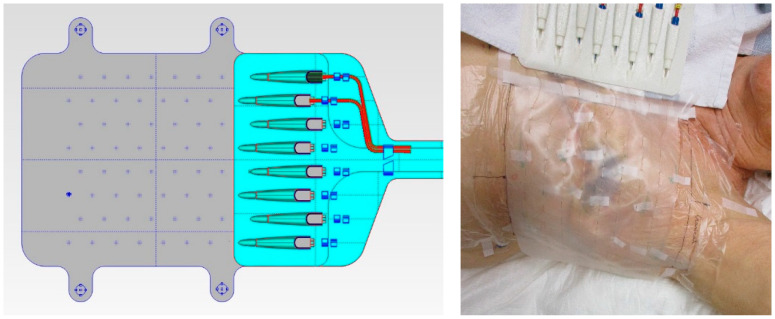
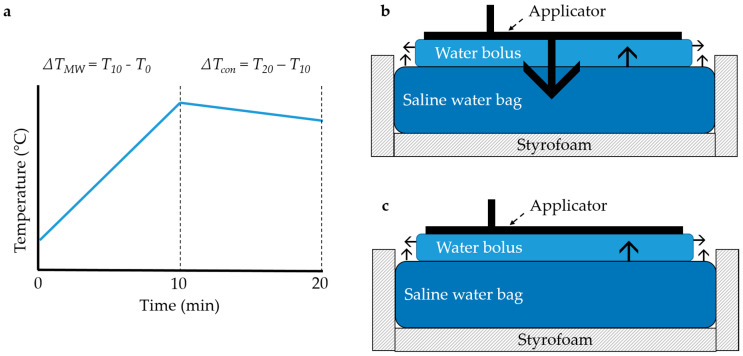
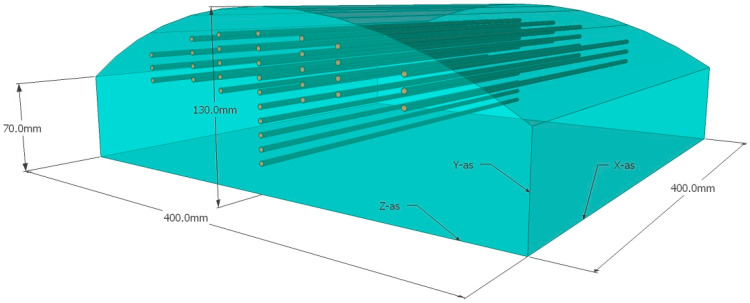
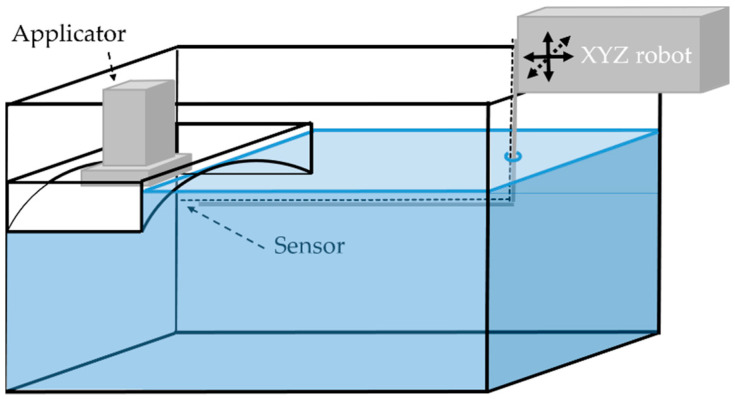
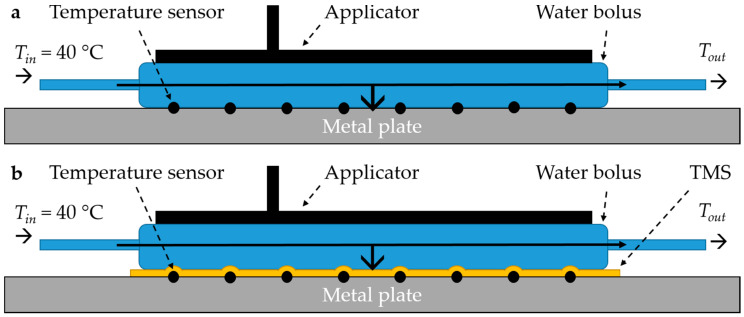
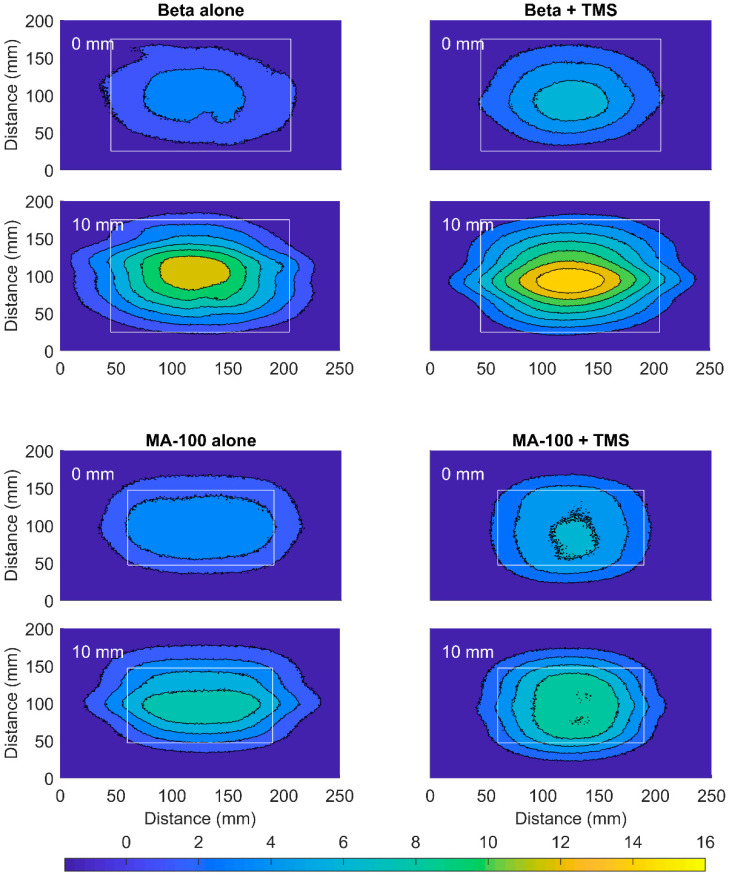
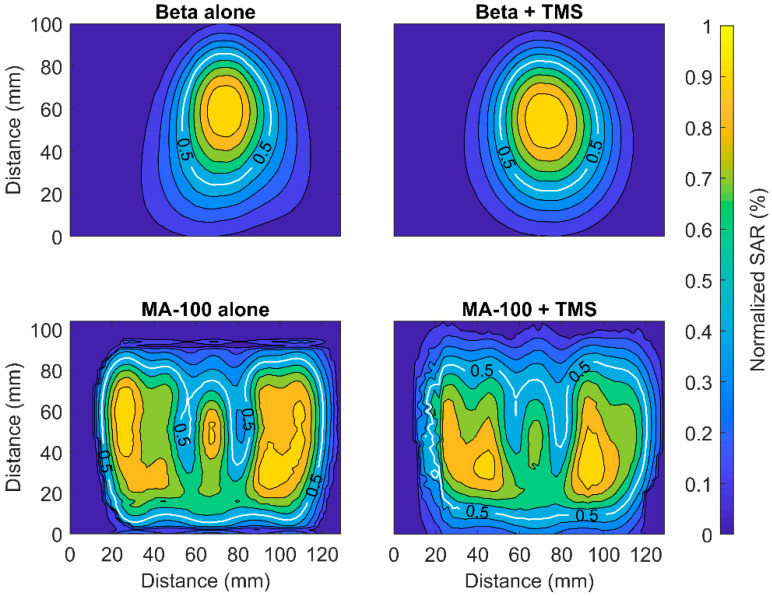
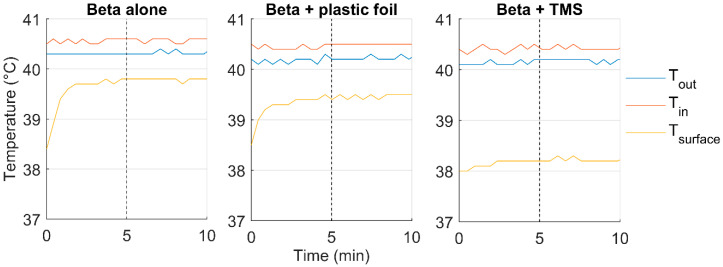
Accurate monitoring of skin surface temperatures is necessary to ensure treatment quality during superficial hyperthermia. A high-resolution thermal monitoring sheet (TMS) was developed to monitor the skin surface temperature distribution. The influence of the TMS on applicator performance was investigated, feasibility and ability to reliably monitor the temperature distribution were evaluated in a clinical study. Phantom experiments were performed to determine the influence of the TMS on power deposition patterns, applicator efficiency, and heat transfer of the water bolus for 434 and 915 MHz applicators. Clinical feasibility was evaluated in 10 women with locoregional recurrent breast cancer. Skin surface temperatures during consecutive treatments were monitored alternatingly with either standard Amsterdam UMC thermometry or TMS. Treatments were compared using (generalized) linear mixed models. The TMS did not significantly affect power deposition patterns and applicator efficiency (1-2%), the reduced heat transfer of the water boluses (51-56%) could be compensated by adjusting the water bolus flow. Skin surface temperatures were monitored reliably, and no alteration of thermal toxicity was observed compared to standard Amsterdam UMC thermometry. Clinical application of the TMS is feasible. Power deposition patterns and applicator efficiency were not affected. Surface temperatures were monitored reliably.
在浅表热疗过程中,准确监测皮肤表面温度对于确保治疗质量至关重要。为此开发了一种高分辨率热监测片(TMS)来监测皮肤表面温度分布。研究了TMS对施热器性能的影响,并在一项临床研究中评估了其可靠监测温度分布的可行性和能力。进行了体模实验,以确定TMS对434和915 MHz施热器的功率沉积模式、施热器效率以及水囊传热的影响。对10名局部复发性乳腺癌女性患者进行了临床可行性评估。在连续治疗过程中,交替使用标准的阿姆斯特丹大学医学中心测温法或TMS监测皮肤表面温度。使用(广义)线性混合模型对治疗进行比较。TMS对功率沉积模式和施热器效率没有显著影响(1-2%),水囊传热减少(51-56%)可通过调整水囊流速来补偿。皮肤表面温度得到可靠监测,与标准的阿姆斯特丹大学医学中心测温法相比,未观察到热毒性改变。TMS的临床应用是可行的。功率沉积模式和施热器效率未受影响。表面温度得到可靠监测。