Abbate Jessica M, Macrì Francesco, Capparucci Fabiano, Iaria Carmelo, Briguglio Giovanni, Cicero Luca, Salvo Andrea, Arfuso Francesca, Ieni Antonio, Piccione Giuseppe, Lanteri Giovanni
Department of Veterinary Science, University of Messina, 98168 Messina, Italy.
Department of Chemical, Biological, Pharmaceutical and Environmental Sciences, University of Messina, 98166 Messina, Italy.
Animals (Basel). 2020 Dec 4;10(12):2303. doi: 10.3390/ani10122303.
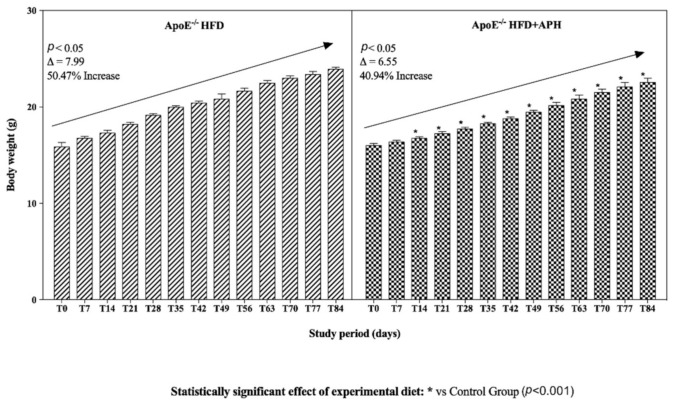
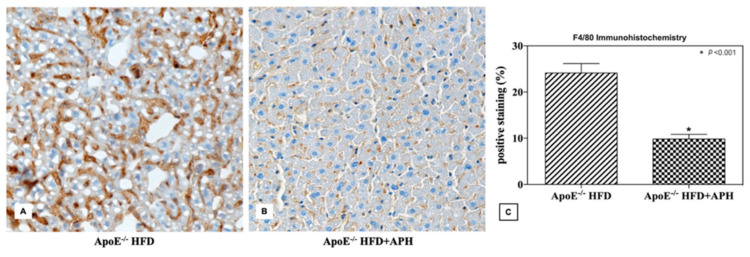
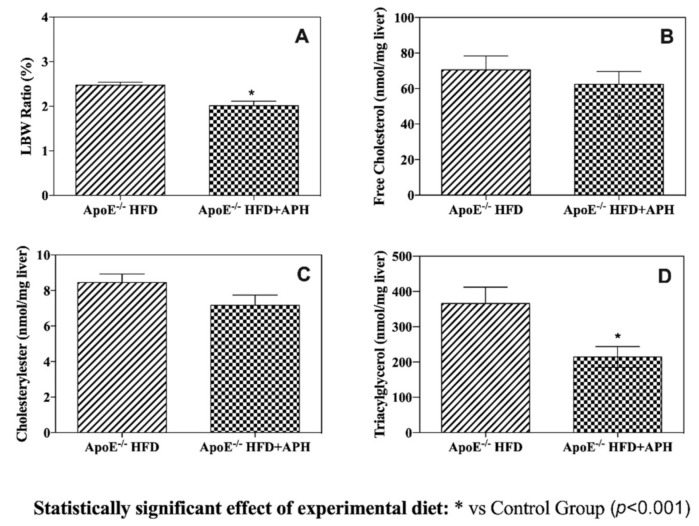
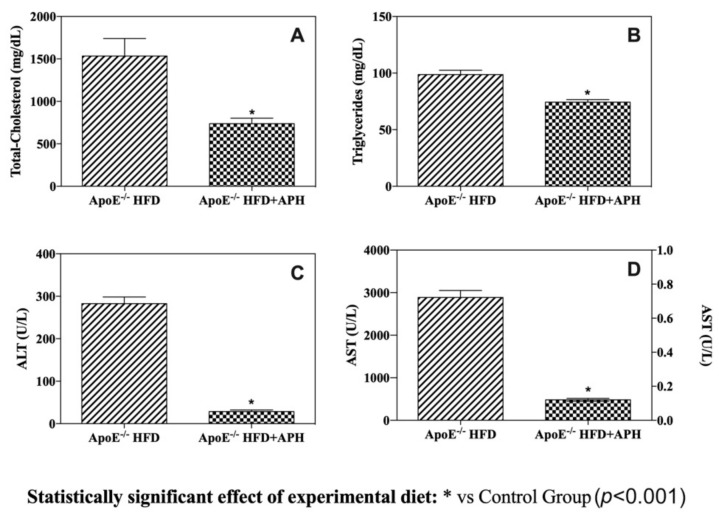
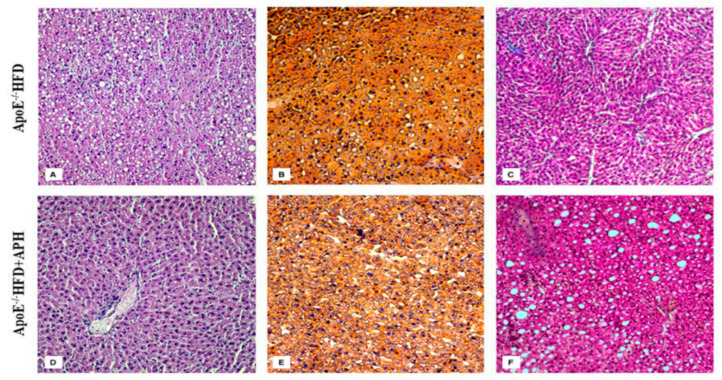
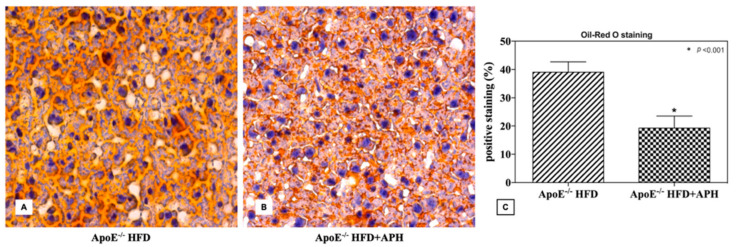
Metabolic dysfunction-associated fatty liver disease (MAFLD) includes several diseases, ranging from simple steatosis to steatohepatitis, fibrosis and cirrhosis. Fish-rich diets are considered helpful in the prevention of MAFLD, and the enzymatic hydrolysis of fish waste has been explored as a means of obtaining high-value protein hydrolysates, which have been proven to exert beneficial bioactivities including anti-obesity and hypocholesterol effects. This study aimed to assess the effect of the administration of protein hydrolysates from anchovy waste (APH) for 12 weeks on attenuated high-fat diet-induced MAFLD in apolipoprotein E-knockout mice (ApoE). Thirty ApoE mice were divided into two groups ( = 15/group) and fed a high-fat diet (HFD), with and without the addition of 10% (/) APH. After 12 weeks, serum and hepatic lipid profiles, hepatic enzyme activities, liver histology and immunohistochemistry were analyzed to assess hepatic steatosis, inflammation and fibrosis. Twelve-weeks on a 10% (/) APH diet reduces total cholesterol and triglyceride serum levels, hepatic enzyme activity and hepatic triacylglycerol content ( < 0.0001), and results in a reduction in hepatic fat accumulation and macrophage recruitment ( < 0.0001). The results suggest that a 10% APH diet has an anti-obesity effect, with an improvement in lipid metabolism, hepatic steatosis and liver injury as a result of a high-fat diet. Protein hydrolysates from fish waste may represent an efficient nutritional strategy in several diseases, and their use as nutraceuticals is worthy of future investigation.
代谢功能障碍相关脂肪性肝病(MAFLD)包括多种疾病,从单纯性脂肪变性到脂肪性肝炎、纤维化和肝硬化。富含鱼类的饮食被认为有助于预防MAFLD,并且人们已经探索了对鱼废料进行酶水解以获得高价值蛋白质水解物的方法,这些水解物已被证明具有有益的生物活性,包括抗肥胖和降胆固醇作用。本研究旨在评估给予凤尾鱼废料蛋白水解物(APH)12周对载脂蛋白E基因敲除小鼠(ApoE)中高脂饮食诱导的MAFLD的缓解作用。将30只ApoE小鼠分为两组(每组 = 15只),分别喂食高脂饮食(HFD),一组添加10%(/)的APH,另一组不添加。12周后,分析血清和肝脏脂质谱、肝酶活性、肝脏组织学和免疫组织化学,以评估肝脏脂肪变性、炎症和纤维化情况。连续12周给予10%(/)的APH饮食可降低血清总胆固醇和甘油三酯水平、肝酶活性以及肝脏三酰甘油含量(< 0.0001),并减少肝脏脂肪堆积和巨噬细胞募集(< 0.0001)。结果表明,10%的APH饮食具有抗肥胖作用,可改善高脂饮食导致的脂质代谢、肝脏脂肪变性和肝损伤。鱼废料蛋白水解物可能是治疗多种疾病的一种有效营养策略,其作为营养保健品的用途值得未来进一步研究。