Zhang Hongying, Kong Qingbin, Wang Jiao, Jiang Yangfu, Hua Hui
Laboratory of Oncogene, National Clinical Research Center for Geriatrics, West China Hospital, Sichuan University, Chengdu, China.
School of Basic Medicine, Chengdu University of Traditional Chinese Medicine, Chengdu, China.
Exp Hematol Oncol. 2020 Nov 24;9(1):32. doi: 10.1186/s40164-020-00191-1.
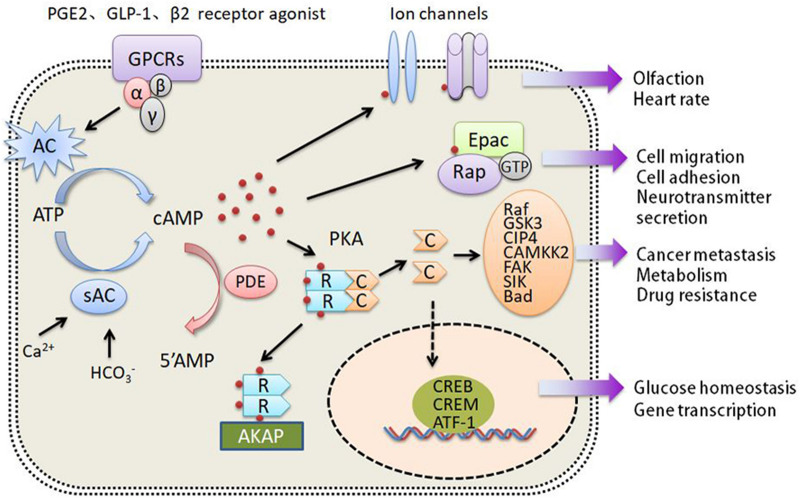
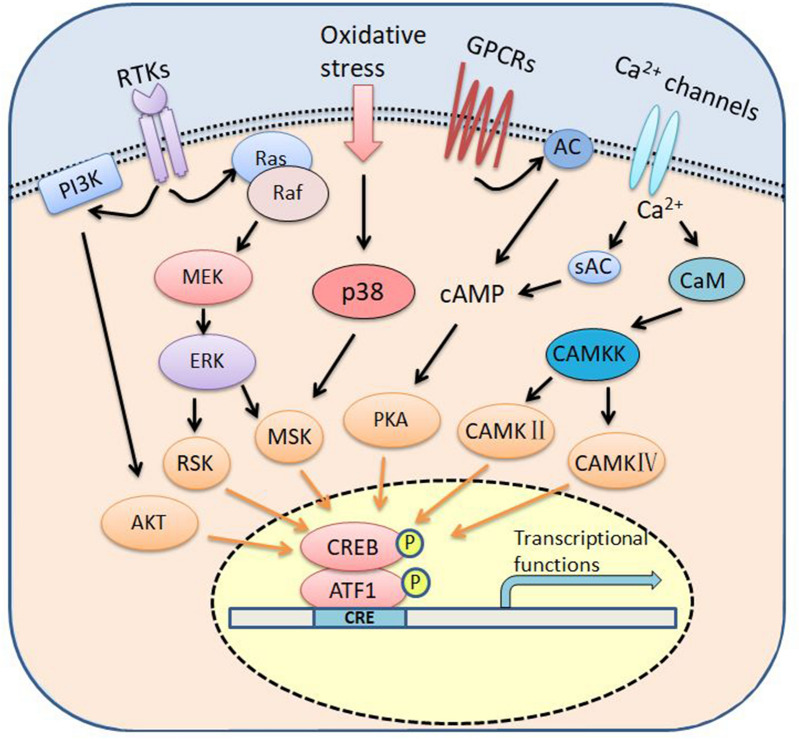
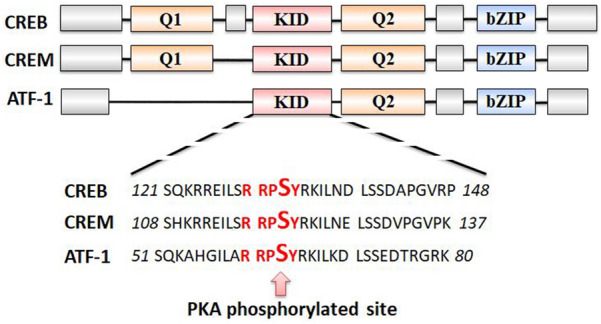
Cyclic adenosine monophosphate (cAMP) is the first discovered second messenger, which plays pivotal roles in cell signaling, and regulates many physiological and pathological processes. cAMP can regulate the transcription of various target genes, mainly through protein kinase A (PKA) and its downstream effectors such as cAMP-responsive element binding protein (CREB). In addition, PKA can phosphorylate many kinases such as Raf, GSK3 and FAK. Aberrant cAMP-PKA signaling is involved in various types of human tumors. Especially, cAMP signaling may have both tumor-suppressive and tumor-promoting roles depending on the tumor types and context. cAMP-PKA signaling can regulate cancer cell growth, migration, invasion and metabolism. This review highlights the important roles of cAMP-PKA-CREB signaling in tumorigenesis. The potential strategies to target this pathway for cancer therapy are also discussed.
环磷酸腺苷(cAMP)是最早发现的第二信使,在细胞信号传导中起关键作用,并调节许多生理和病理过程。cAMP主要通过蛋白激酶A(PKA)及其下游效应物如环磷酸腺苷反应元件结合蛋白(CREB)来调节各种靶基因的转录。此外,PKA可以使许多激酶如Raf、GSK3和FAK磷酸化。异常的cAMP-PKA信号传导与多种类型的人类肿瘤有关。特别是,根据肿瘤类型和背景,cAMP信号传导可能具有肿瘤抑制和肿瘤促进双重作用。cAMP-PKA信号传导可以调节癌细胞的生长、迁移、侵袭和代谢。本综述强调了cAMP-PKA-CREB信号传导在肿瘤发生中的重要作用。还讨论了针对该通路进行癌症治疗的潜在策略。