Division of Molecular Cardiovascular Biology, Cincinnati Children's Hospital Medical Center, Cincinnati, OH, 45229, USA.
Department of Biosciences, University of Oslo, Oslo, Norway.
Nat Commun. 2020 Dec 8;11(1):6287. doi: 10.1038/s41467-020-20058-7.
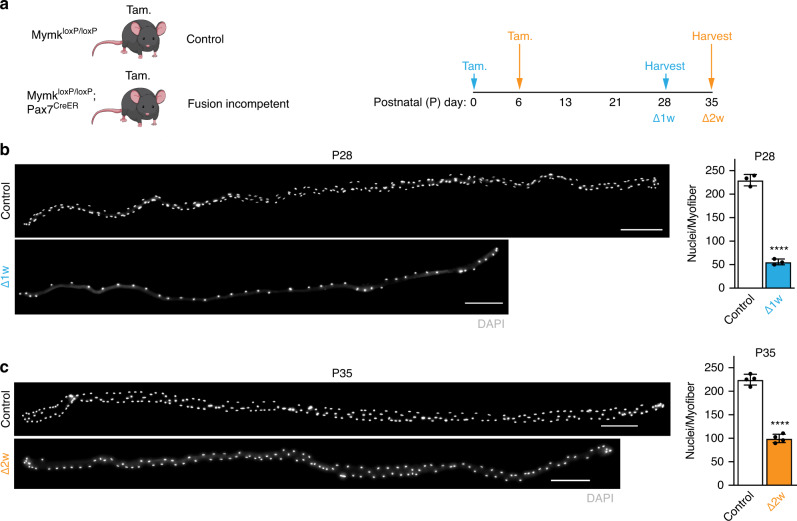
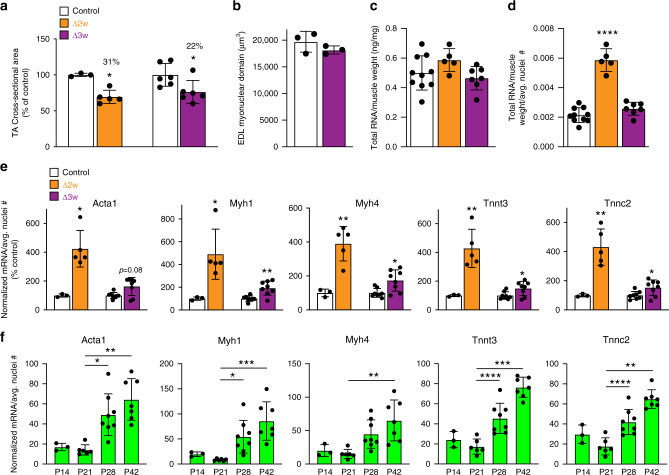
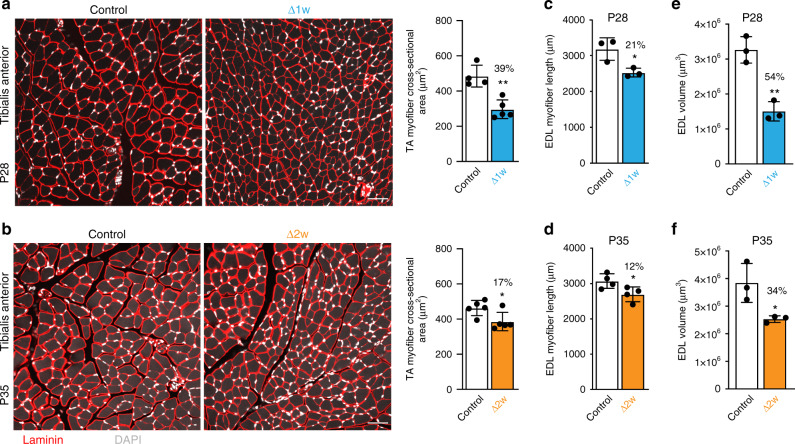
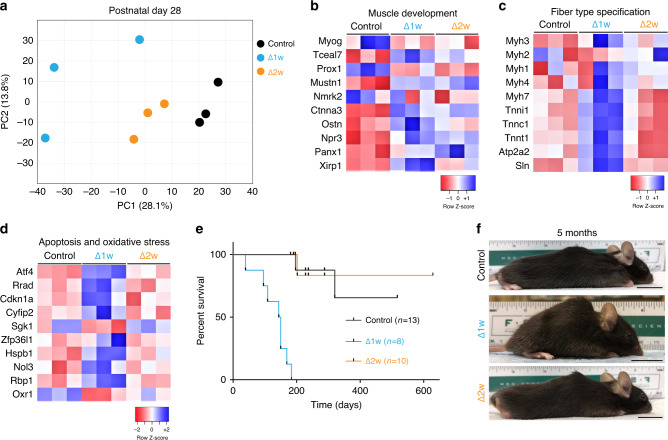
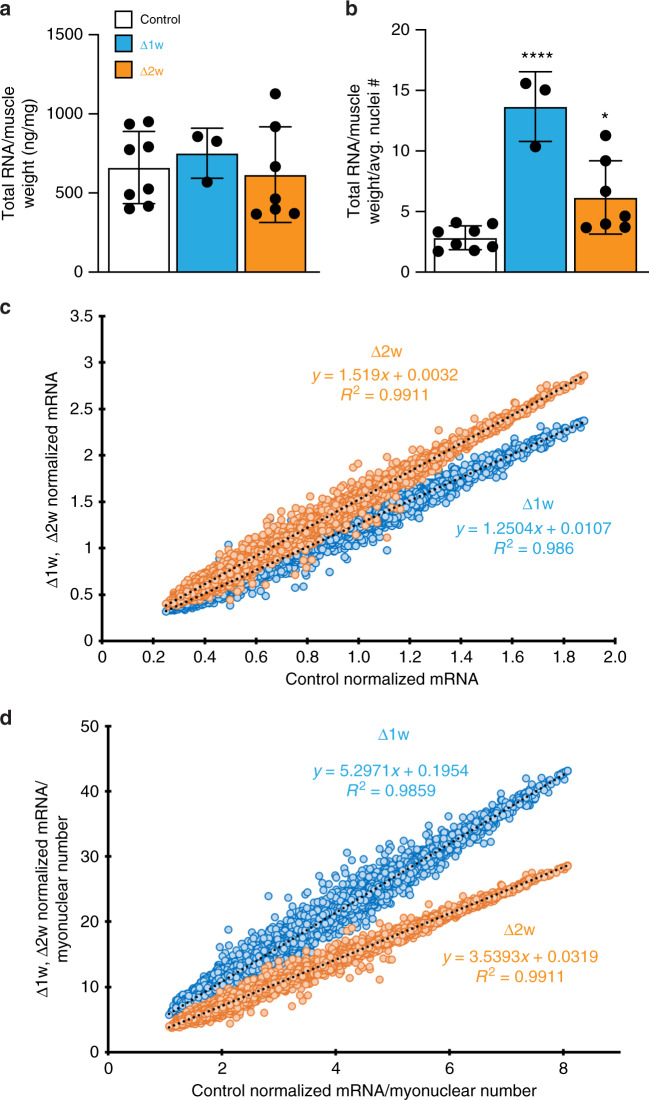
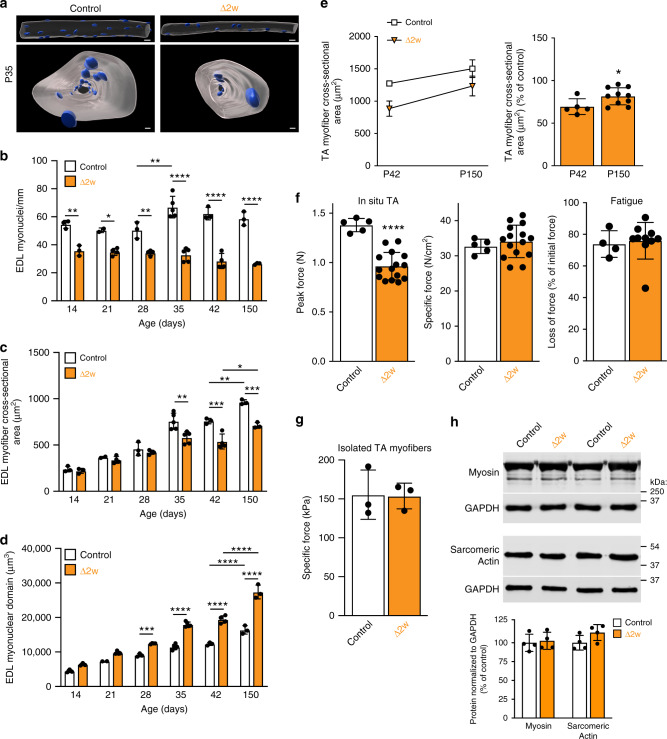
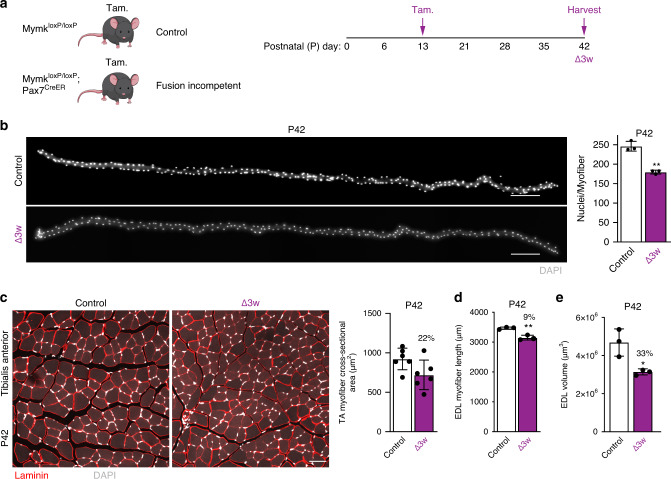
Mammalian cells exhibit remarkable diversity in cell size, but the factors that regulate establishment and maintenance of these sizes remain poorly understood. This is especially true for skeletal muscle, comprised of syncytial myofibers that each accrue hundreds of nuclei during development. Here, we directly explore the assumed causal relationship between multinucleation and establishment of normal size through titration of myonuclear numbers during mouse neonatal development. Three independent mouse models, where myonuclear numbers were reduced by 75, 55, or 25%, led to the discovery that myonuclei possess a reserve capacity to support larger functional cytoplasmic volumes in developing myofibers. Surprisingly, the results revealed an inverse relationship between nuclei numbers and reserve capacity. We propose that as myonuclear numbers increase, the range of transcriptional return on a per nuclear basis in myofibers diminishes, which accounts for both the absolute reliance developing myofibers have on nuclear accrual to establish size, and the limits of adaptability in adult skeletal muscle.
哺乳动物细胞在细胞大小上表现出显著的多样性,但调节这些大小的建立和维持的因素仍知之甚少。对于骨骼肌来说尤其如此,骨骼肌由合胞体肌纤维组成,这些肌纤维在发育过程中会积累数百个核。在这里,我们通过在小鼠新生发育过程中滴定肌核数量,直接探索了多核化与正常大小建立之间的假定因果关系。三种独立的小鼠模型中,肌核数量减少了 75%、55%或 25%,这一发现表明肌核具有储备能力,可以在发育中的肌纤维中支持更大的功能细胞质体积。令人惊讶的是,结果显示核数与储备能力呈反比关系。我们提出,随着肌核数量的增加,肌纤维中每个核的转录反应的范围会减小,这既解释了发育中的肌纤维绝对依赖核积累来建立大小的原因,也解释了成年骨骼肌适应性的局限性。