School of Laboratory Medicine and Life Sciences, Wenzhou Medical University, Wenzhou 325027, People's Republic of China.
Research Center of Blood Transfusion Medicine, Ministry of Education Key Laboratory of Laboratory Medicine, Zhejiang Provincial People's Hospital, People's Hospital of Hangzhou Medical College, Hangzhou 310014, People's Republic of China.
Drug Des Devel Ther. 2020 Dec 1;14:5315-5324. doi: 10.2147/DDDT.S278414. eCollection 2020.
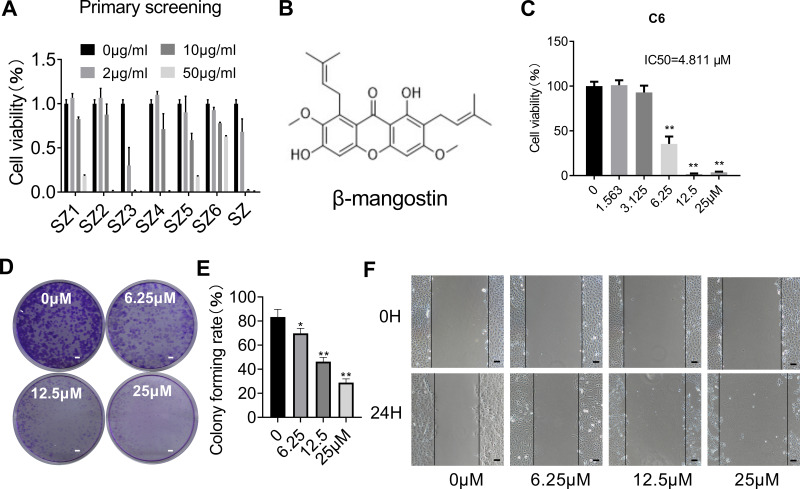
Glioma is the most common malignant tumor of the nervous system, which accounts for more than 45% of central nervous system tumors and seriously threatens our health. Because of high mortality rate, limitations, and many complications of traditional treatment methods, new treatment methods are urgently needed. β-Mangostin is a natural compound derived from the fruit of L. and it has anticancer activity in several types of cancer cells. However, the antitumor effect of β-mangostin in glioma has not been clarified. Hence, this study aimed to investigate its therapeutic effects on gliomas.
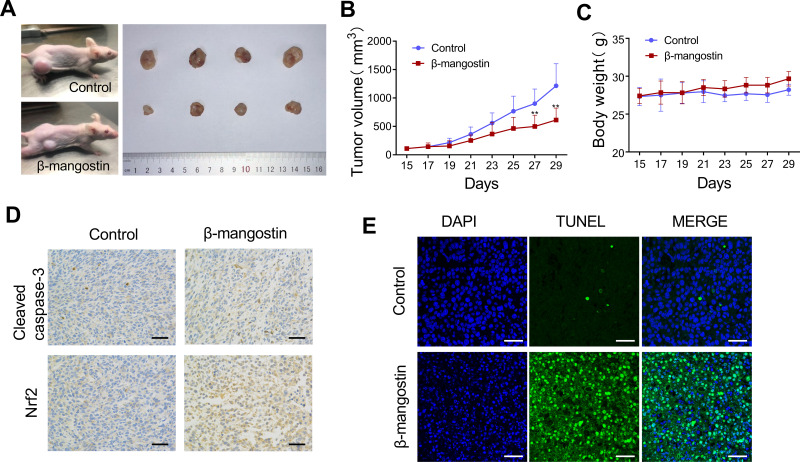
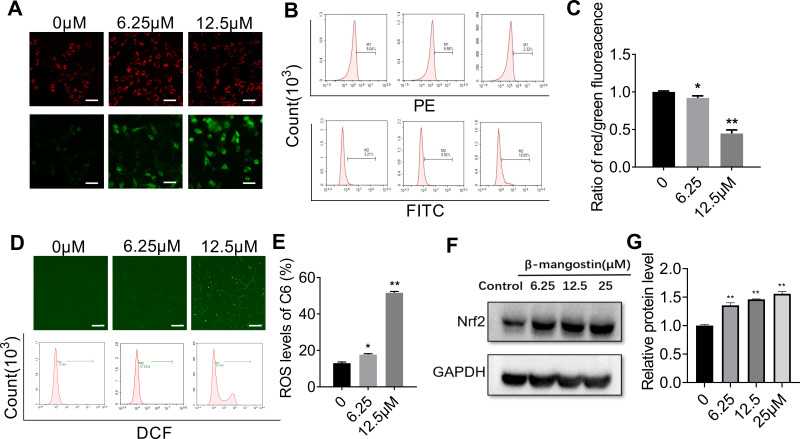
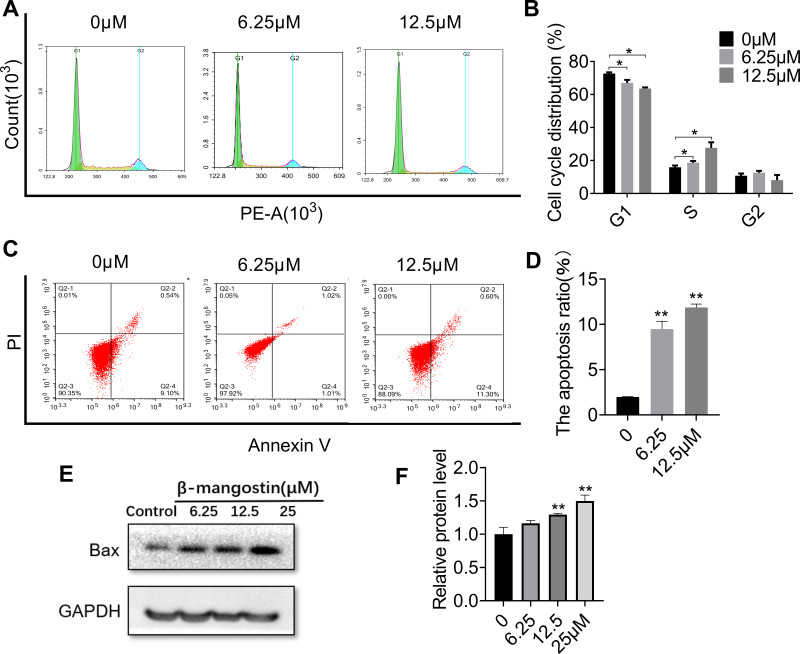
To study the effect of β-mangostin on glioma cells, cell viability assay, reactive oxygen species production, cell cycle, apoptosis, and mitochondrial membrane potential were evaluated in the C6 cell line in vitro. Immunofluorescence and Western blotting were used to analyze protein expression and phosphorylation to study its mechanism of action. A subcutaneous xenograft model was used to investigate the effect of β-mangostin on tumorigenesis in vivo.
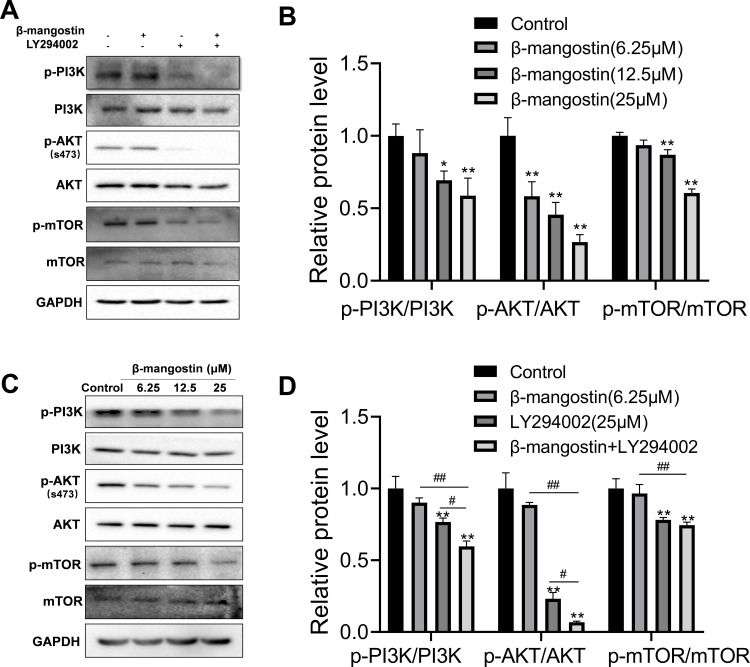
We found that β-mangostin can inhibit glioma cell growth and induce oxidative damage in vitro. In addition, it reduces the phosphorylated form levels of PI3K, AKT and mTOR. Furthermore, the phosphorylated form levels of PI3K, AKT and mTOR were increased after the PI3K inhibitor was added. In vivo experiments showed that β-mangostin can inhibit tumor growth as shown by its reduced size and weight.
This study suggests that β-mangostin can inhibit cell proliferation and induce oxidative damage in cells. It is the first study to demonstrate that β-mangostin induces oxidative damage in glioma cells by inhibiting the PI3K/AKT/mTOR signaling pathway.
神经胶质瘤是最常见的神经系统恶性肿瘤,占中枢神经系统肿瘤的 45%以上,严重威胁着我们的健康。由于传统治疗方法的高死亡率、局限性和许多并发症,急需新的治疗方法。β-倒捻子素是一种天然化合物,来源于 L. 的果实,它在几种类型的癌细胞中具有抗癌活性。然而,β-倒捻子素在神经胶质瘤中的抗肿瘤作用尚未阐明。因此,本研究旨在探讨其对神经胶质瘤的治疗作用。
为了研究β-倒捻子素对神经胶质瘤细胞的影响,我们在体外 C6 细胞系中评估了细胞活力测定、活性氧产生、细胞周期、细胞凋亡和线粒体膜电位。免疫荧光和 Western blotting 用于分析蛋白质表达和磷酸化,以研究其作用机制。皮下异种移植模型用于研究β-倒捻子素在体内对肿瘤发生的影响。
我们发现β-倒捻子素可以抑制神经胶质瘤细胞的生长并在体外诱导氧化损伤。此外,它降低了 PI3K、AKT 和 mTOR 的磷酸化形式水平。此外,加入 PI3K 抑制剂后,PI3K、AKT 和 mTOR 的磷酸化形式水平增加。体内实验表明,β-倒捻子素可以抑制肿瘤生长,表现为肿瘤体积和重量减小。
本研究表明,β-倒捻子素可以抑制细胞增殖并诱导细胞氧化损伤。这是首次证明β-倒捻子素通过抑制 PI3K/AKT/mTOR 信号通路诱导神经胶质瘤细胞氧化损伤的研究。