Wu Hao, Wei Min, Li Yuping, Ma Qiang, Zhang Hengzhu
Graduate School of Dalian Medical University, Dalian, China.
Department of Neurosurgery, The Yangzhou School of Clinical Medicine of Dalian Medical University, Dalian, China.
Front Mol Neurosci. 2022 Jul 22;15:910543. doi: 10.3389/fnmol.2022.910543. eCollection 2022.
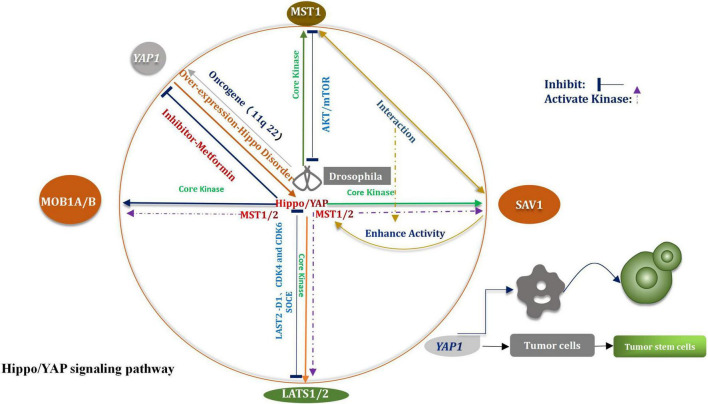
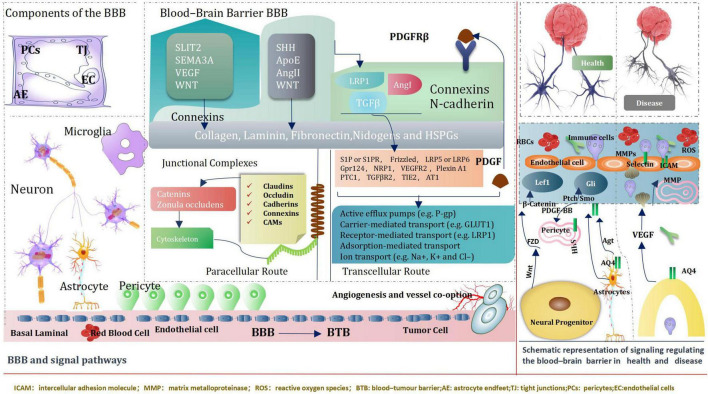
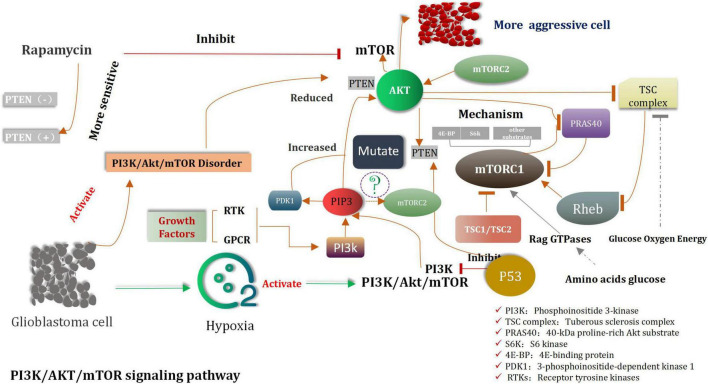
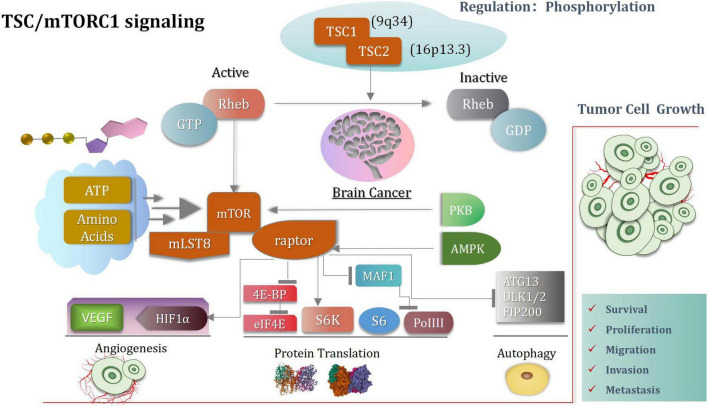
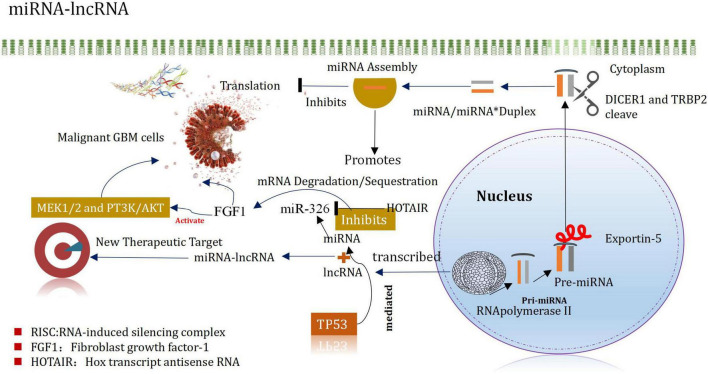
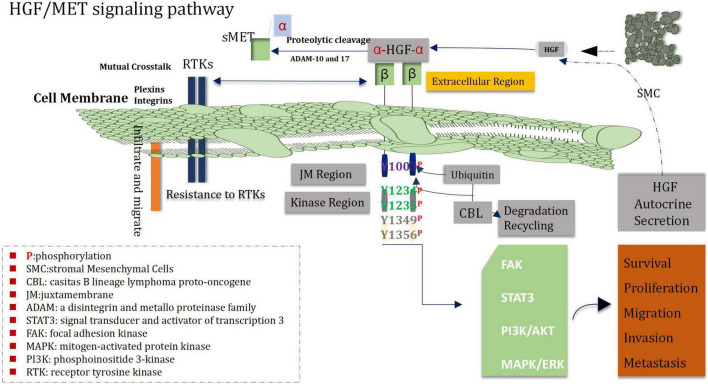
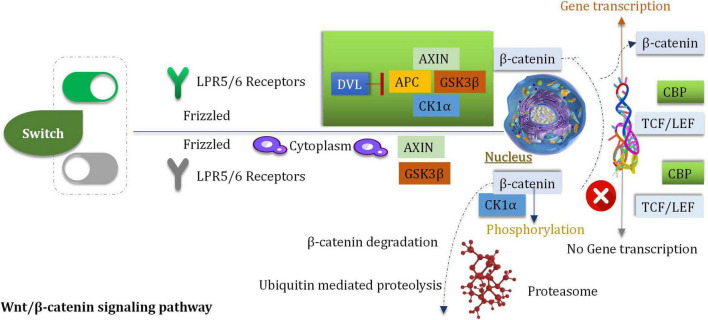
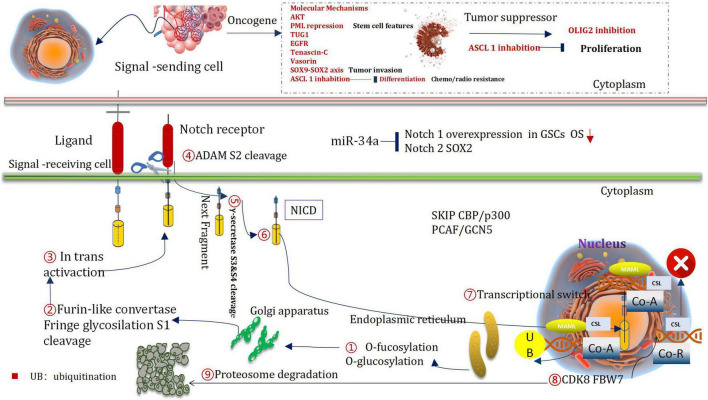
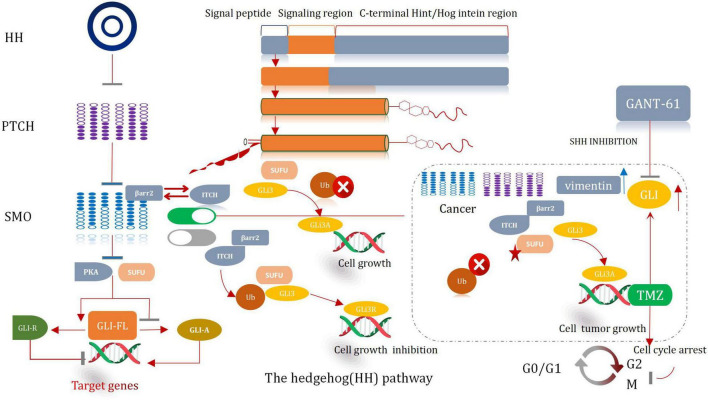
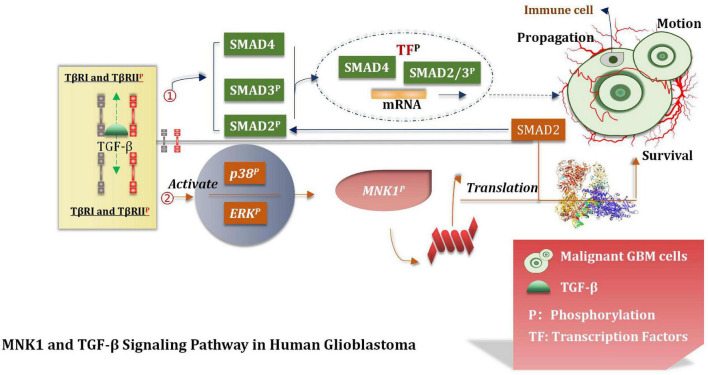
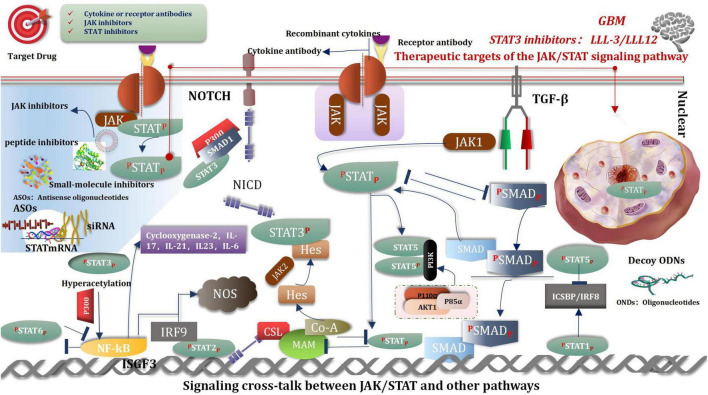
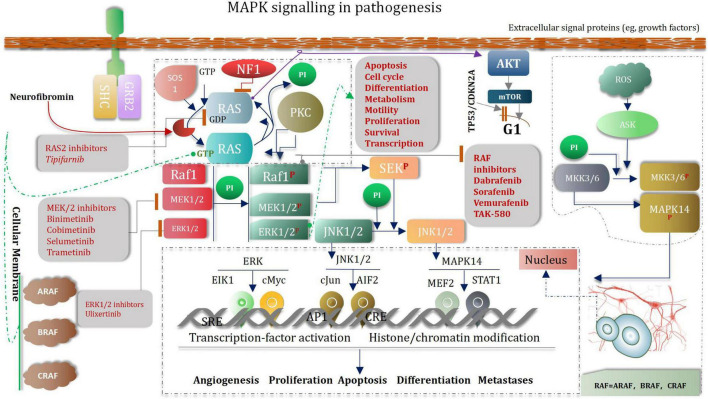
As is known to all, glioma, a global difficult problem, has a high malignant degree, high recurrence rate and poor prognosis. We analyzed and summarized signal pathway of the Hippo/YAP, PI3K/AKT/mTOR, miRNA, WNT/β-catenin, Notch, Hedgehog, TGF-β, TCS/mTORC1 signal pathway, JAK/STAT signal pathway, MAPK signaling pathway, the relationship between BBB and signal pathways and the mechanism of key enzymes in glioma. It is concluded that Yap1 inhibitor may become an effective target for the treatment of glioma in the near future through efforts of generation after generation. Inhibiting PI3K/Akt/mTOR, Shh, Wnt/β-Catenin, and HIF-1α can reduce the migration ability and drug resistance of tumor cells to improve the prognosis of glioma. The analysis shows that Notch1 and Sox2 have a positive feedback regulation mechanism, and Notch4 predicts the malignant degree of glioma. In this way, notch cannot only be treated for glioma stem cells in clinic, but also be used as an evaluation index to evaluate the prognosis, and provide an exploratory attempt for the direction of glioma treatment. MiRNA plays an important role in diagnosis, and in the treatment of glioma, VPS25, KCNQ1OT1, KB-1460A1.5, and CKAP4 are promising prognostic indicators and a potential therapeutic targets for glioma, meanwhile, Rheb is also a potent activator of Signaling cross-talk etc. It is believed that these studies will help us to have a deeper understanding of glioma, so that we will find new and better treatment schemes to gradually conquer the problem of glioma.
众所周知,胶质瘤作为一个全球性难题,具有高恶性程度、高复发率和预后差的特点。我们分析总结了Hippo/YAP、PI3K/AKT/mTOR、miRNA、WNT/β-连环蛋白、Notch、Hedgehog、TGF-β、TCS/mTORC1信号通路、JAK/STAT信号通路、MAPK信号通路、血脑屏障与信号通路的关系以及胶质瘤中关键酶的机制。得出结论,经过一代又一代的努力,Yap1抑制剂可能在不久的将来成为治疗胶质瘤的有效靶点。抑制PI3K/Akt/mTOR、Shh、Wnt/β-连环蛋白和HIF-1α可以降低肿瘤细胞的迁移能力和耐药性,从而改善胶质瘤的预后。分析表明,Notch1和Sox2存在正反馈调节机制,Notch4可预测胶质瘤的恶性程度。如此一来,Notch不仅可在临床上用于治疗胶质瘤干细胞,还可作为评估预后的指标,为胶质瘤治疗方向提供探索性尝试。MiRNA在诊断中发挥重要作用,在胶质瘤治疗方面,VPS25、KCNQ1OT1、KB-1460A1.5和CKAP4是有前景的预后指标和胶质瘤潜在的治疗靶点,同时,Rheb也是信号串扰的有效激活剂等。相信这些研究将有助于我们对胶质瘤有更深入的了解,从而找到新的更好的治疗方案,逐步攻克胶质瘤难题。