Ni Sheng, Wei Qian, Yang Li
Department of Occupational Health and Occupational Medicine, School of Public Health, Guangxi Medical University, Nanning, Guangxi Zhuang Autonomous Region 530021, People's Republic of China.
Behavioral Style Construction Office, Guangxi Medical University Cancer Hospital, Nanning, Guangxi Zhuang Autonomous Region 530021, People's Republic of China.
Onco Targets Ther. 2020 Dec 1;13:12409-12419. doi: 10.2147/OTT.S272621. eCollection 2020.
Hepatocellular carcinoma (HCC) is a common malignancy worldwide. Although the contradictory role of ADORA1 has been explored in certain types of cancers, its clinical significance and function in hepatocellular carcinoma cells are largely unknown.
The level of ADORA1 in HCC tissues and cells was evaluated by RT-PCR. The function of ADORA1 overexpression on HCC cell proliferation and invasion was assessed by MTS, transwell analysis, and colony formation assay. In addition, a mouse subcutaneous xenograft model was used to study in vivo effects. The efficacy of knockdown of ADORA1 sensitizes to chemotherapy was assessed by staining with Annexin V/propidium iodide followed with flow cytometry and nuclei fragmentation.
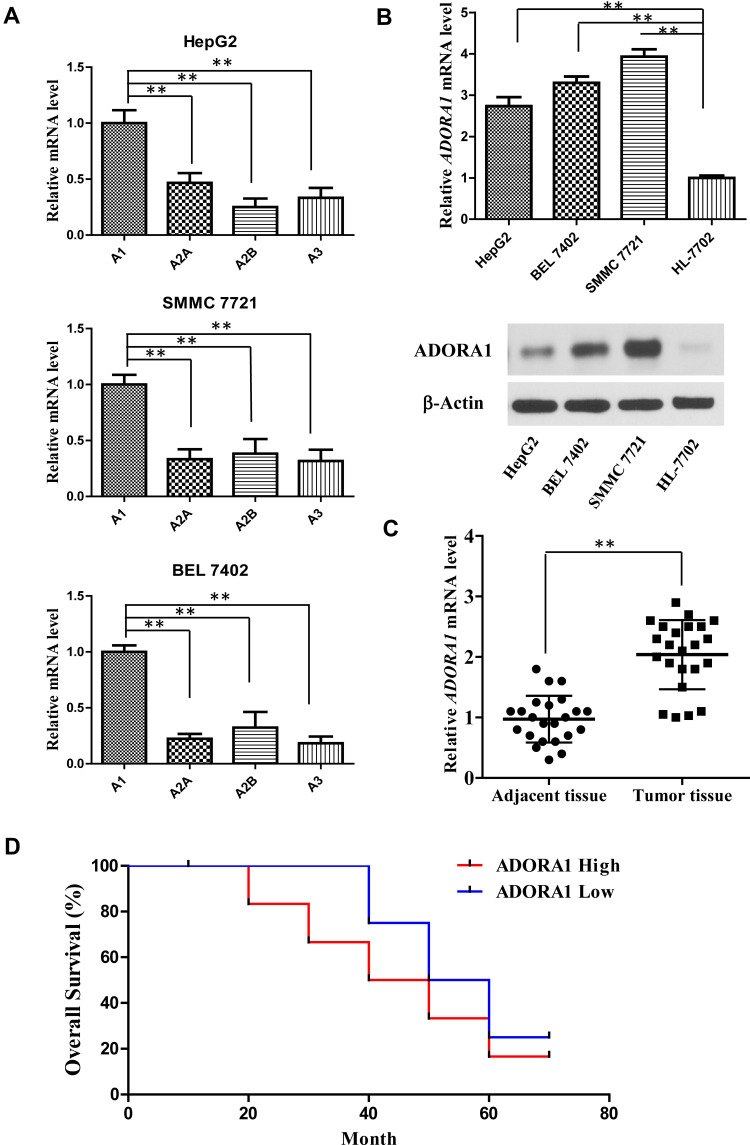
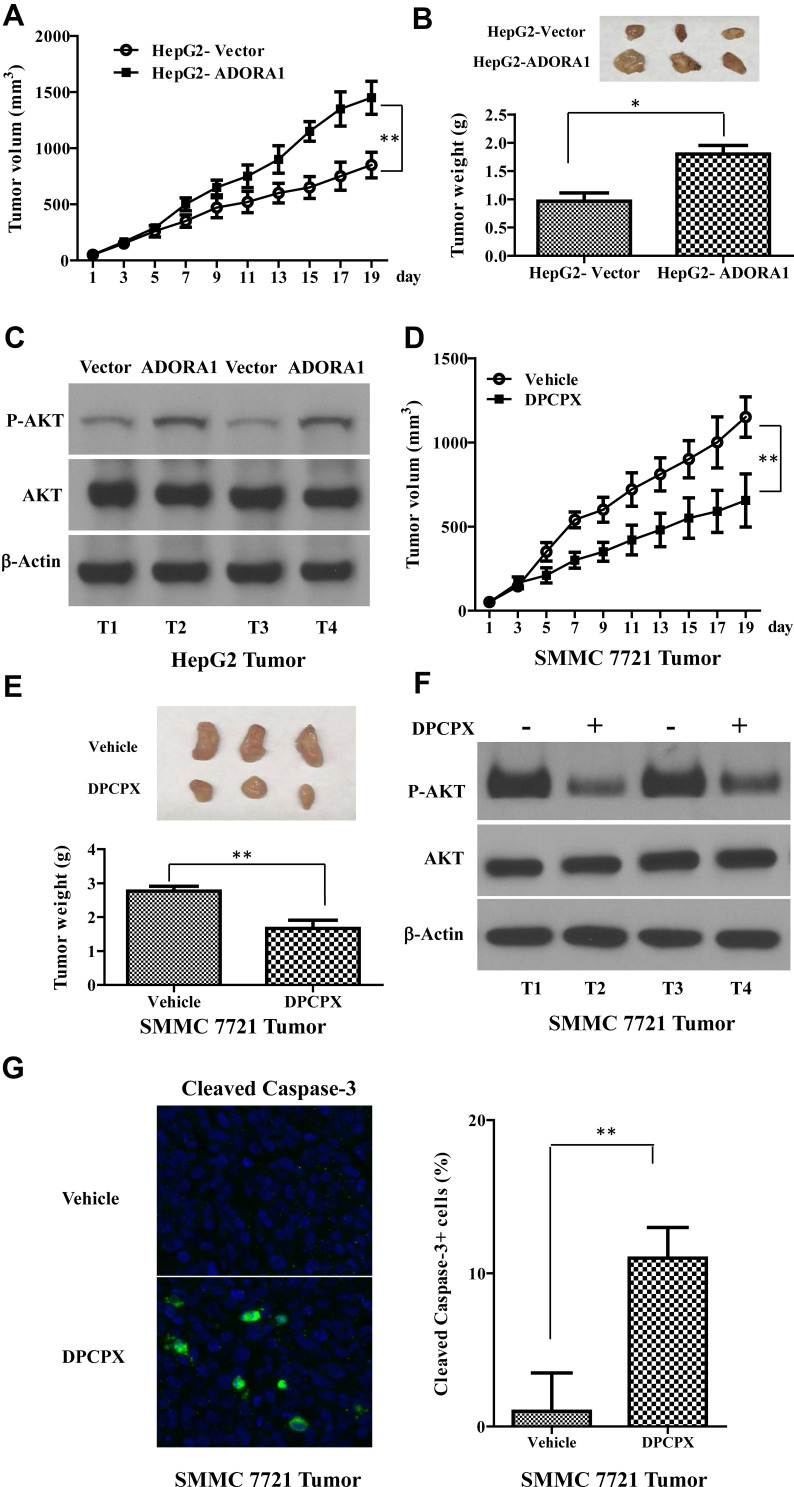
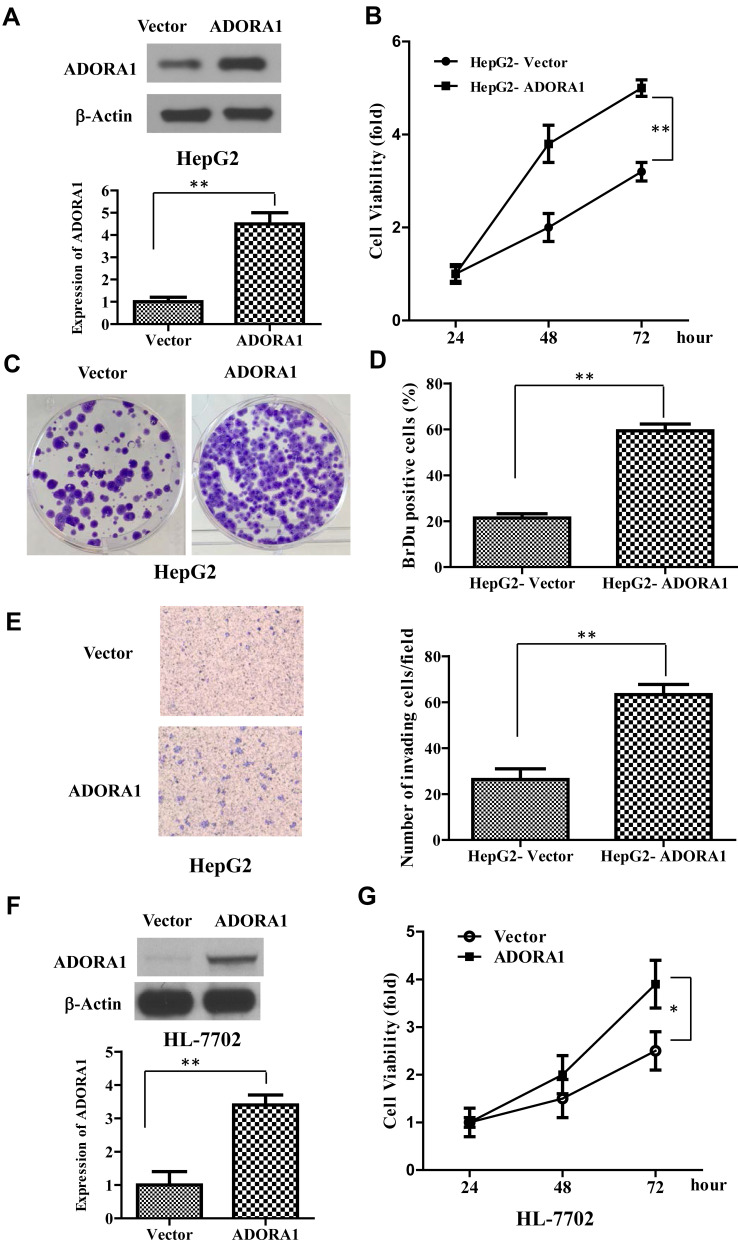
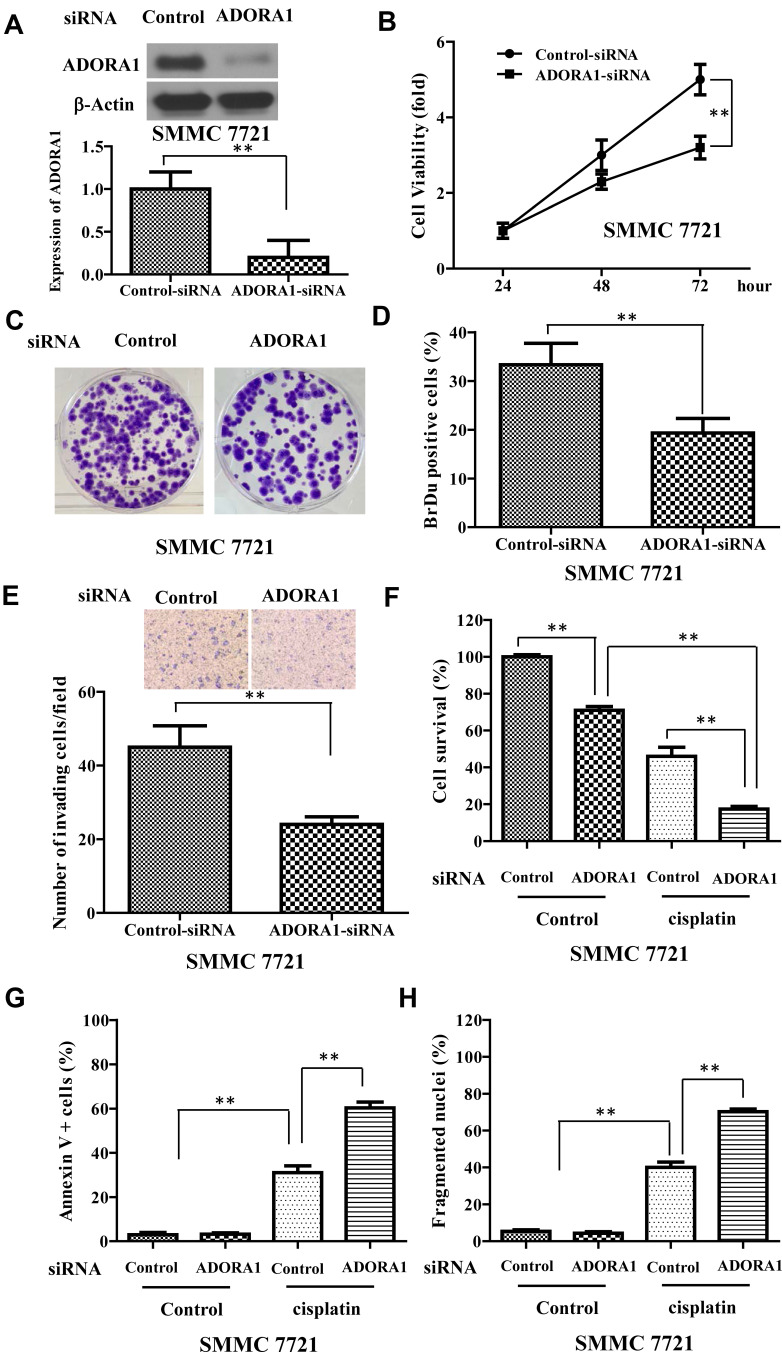
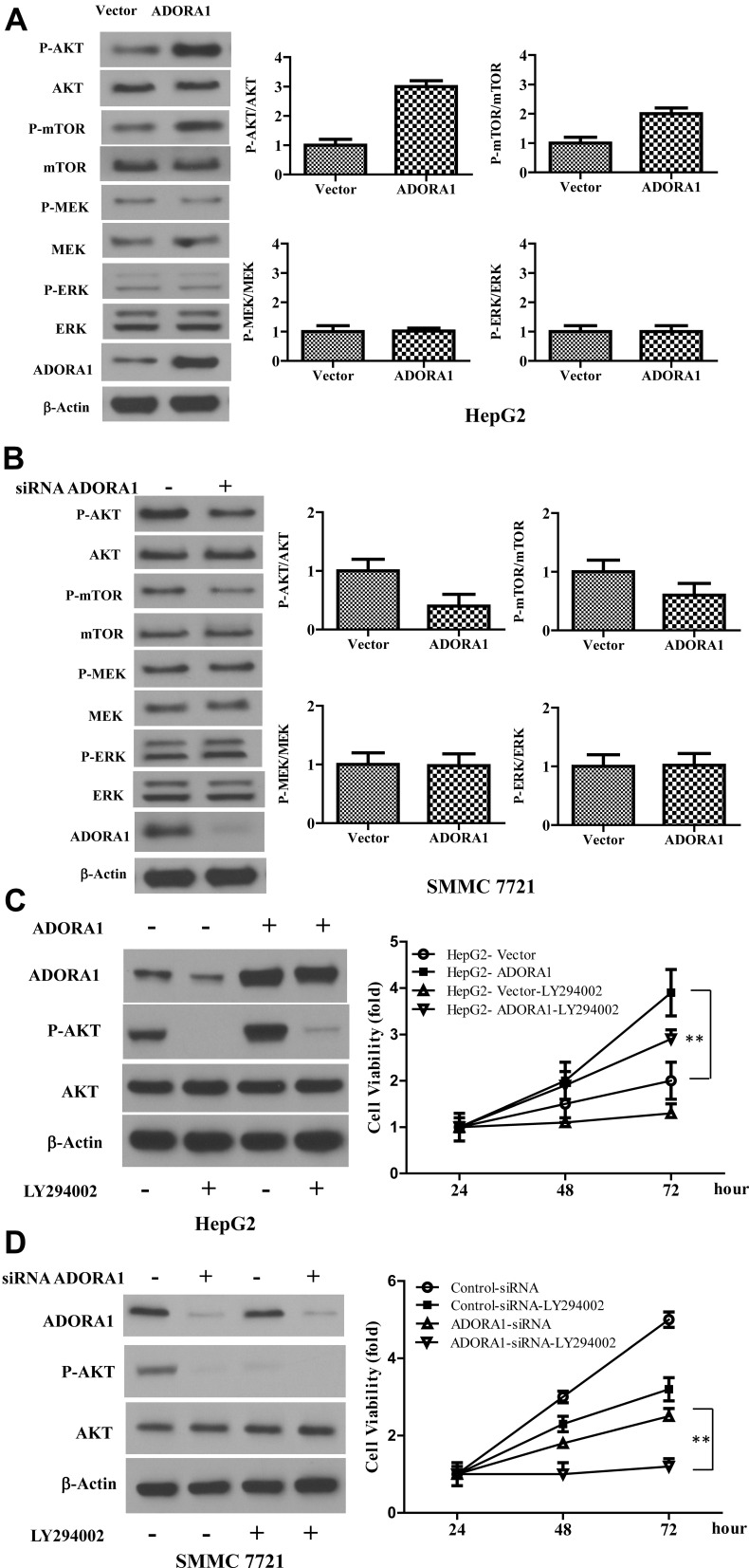
In this study, ADORA1 was identified to be up-regulated in HCC tissues compared with adjacent normal tissue. High ADORA1 mRNA expression predicted poor survival in hepatocellular carcinoma patients. Ectopic expression of ADORA1 increased hepatocellular carcinoma cell proliferation and invasion. ADORA1 knockdown inhibited HCC cell growth and sensitized to chemotherapy. Furthermore, ADORA1 activated PI3K/AKT oncogenic signaling pathways. Treatment with PI3K inhibitor LY294002 blocked the effects of ADORA1 on tumor growth in either ADORA1-overexpressing or -deficiency cells. Finally, overexpression of ADORA1 stimulates HCC tumor growth in vivo. Treatment of ADORA1 antagonist oppositely suppressed HCC xenograft tumor growth.
ADORA1 serves as an important oncoprotein and a promoter of cell proliferation through PI3K/AKT signaling pathway in hepatocellular carcinoma.
肝细胞癌(HCC)是全球常见的恶性肿瘤。尽管已在某些类型的癌症中探讨了ADORA1的矛盾作用,但其在肝癌细胞中的临床意义和功能仍 largely 未知。
通过RT-PCR评估HCC组织和细胞中ADORA1的水平。通过MTS、transwell分析和集落形成试验评估ADORA1过表达对HCC细胞增殖和侵袭的作用。此外,使用小鼠皮下异种移植模型研究体内效应。通过Annexin V/碘化丙啶染色后进行流式细胞术和细胞核碎片化评估敲低ADORA1对化疗敏感性的疗效。
在本研究中,与相邻正常组织相比,ADORA1在HCC组织中被鉴定为上调。高ADORA1 mRNA表达预测肝细胞癌患者生存不良。ADORA1的异位表达增加了肝癌细胞的增殖和侵袭。敲低ADORA1抑制HCC细胞生长并使其对化疗敏感。此外,ADORA1激活PI3K/AKT致癌信号通路。用PI3K抑制剂LY294002处理可阻断ADORA1对过表达或缺失ADORA1细胞中肿瘤生长的影响。最后,ADORA1的过表达在体内刺激HCC肿瘤生长。ADORA1拮抗剂处理则相反地抑制HCC异种移植肿瘤生长。
ADORA1在肝细胞癌中作为一种重要的癌蛋白,通过PI3K/AKT信号通路促进细胞增殖。