Jilin Provincial Key Laboratory on Molecular and Chemical Genetic, The Second Hospital of Jilin University, Changchun, China.
Department of Neurosurgery, First Hospital of Jilin University, Changchun, China.
Neural Plast. 2020 Nov 26;2020:8861903. doi: 10.1155/2020/8861903. eCollection 2020.
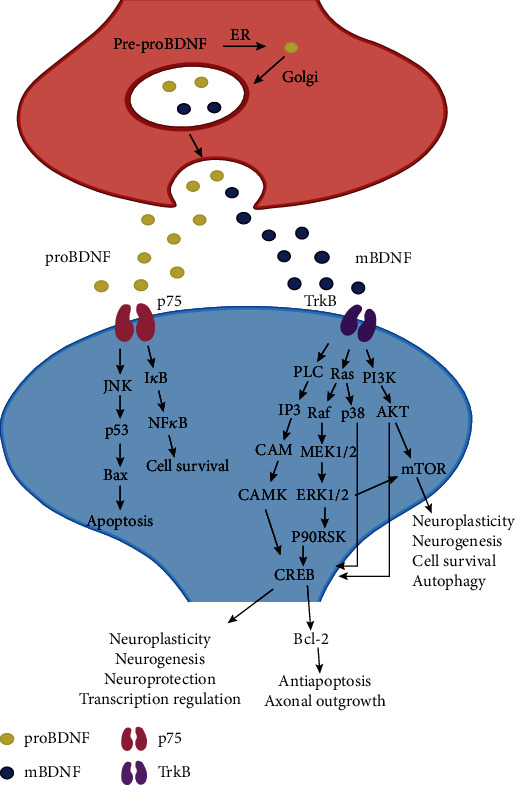
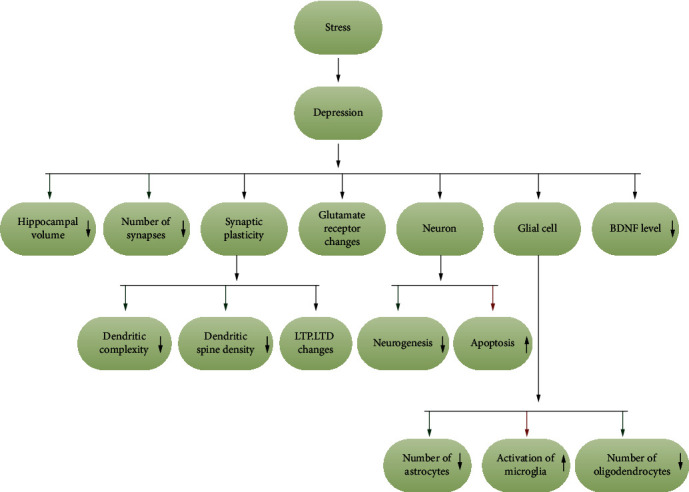
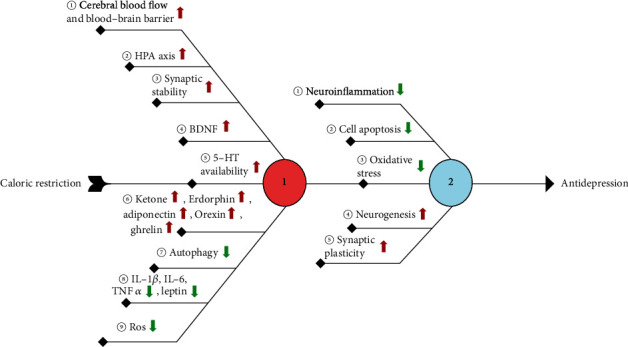
Depression is a common neurological disease that seriously affects human health. There are many hypotheses about the pathogenesis of depression, and the most widely recognized and applied is the monoamine hypothesis. However, no hypothesis can fully explain the pathogenesis of depression. At present, the brain-derived neurotrophic factor (BDNF) and neurogenesis hypotheses have highlighted the important role of plasticity in depression. The plasticity of neurons and glial cells plays a vital role in the transmission and integration of signals in the central nervous system. Plasticity is the adaptive change in the nervous system in response to changes in external signals. The hippocampus is an important anatomical area associated with depression. Studies have shown that some antidepressants can treat depression by changing the plasticity of the hippocampus. Furthermore, caloric restriction has also been shown to affect antidepressant and hippocampal plasticity changes. In this review, we summarize the latest research, focusing on changes in the plasticity of hippocampal neurons and glial cells in depression and the role of BDNF in the changes in hippocampal plasticity in depression, as well as caloric restriction and mitochondrial plasticity. This review may contribute to the development of antidepressant drugs and elucidating the mechanism of depression.
抑郁症是一种常见的神经疾病,严重影响人类健康。抑郁症的发病机制有许多假说,其中被广泛认可和应用的是单胺假说。但是,没有任何假说可以完全解释抑郁症的发病机制。目前,脑源性神经营养因子(BDNF)和神经发生假说突出了可塑性在抑郁症中的重要作用。神经元和神经胶质细胞的可塑性在中枢神经系统信号的传递和整合中起着至关重要的作用。可塑性是神经系统对外部信号变化的适应性改变。海马体是与抑郁症相关的一个重要解剖区域。研究表明,一些抗抑郁药可以通过改变海马体的可塑性来治疗抑郁症。此外,热量限制也被证明会影响抗抑郁药和海马体可塑性的变化。在这篇综述中,我们总结了最新的研究成果,重点关注了抑郁症中海马体神经元和神经胶质细胞可塑性的变化以及 BDNF 在抑郁症中海马体可塑性变化中的作用,以及热量限制和线粒体可塑性。这篇综述可能有助于开发抗抑郁药物和阐明抑郁症的发病机制。