Department of Cardiology and Angiology I, University Heart Center Freiburg-Bad Krozingen and Faculty of Medicine, University of Freiburg, 55 Hugstetter St, 79106, Freiburg, Germany.
Institute for Experimental Cardiovascular Medicine, University Heart Center Freiburg-Bad Krozingen and Faculty of Medicine, University of Freiburg, Freiburg, Germany.
Basic Res Cardiol. 2020 Dec 9;115(6):78. doi: 10.1007/s00395-020-00838-4.
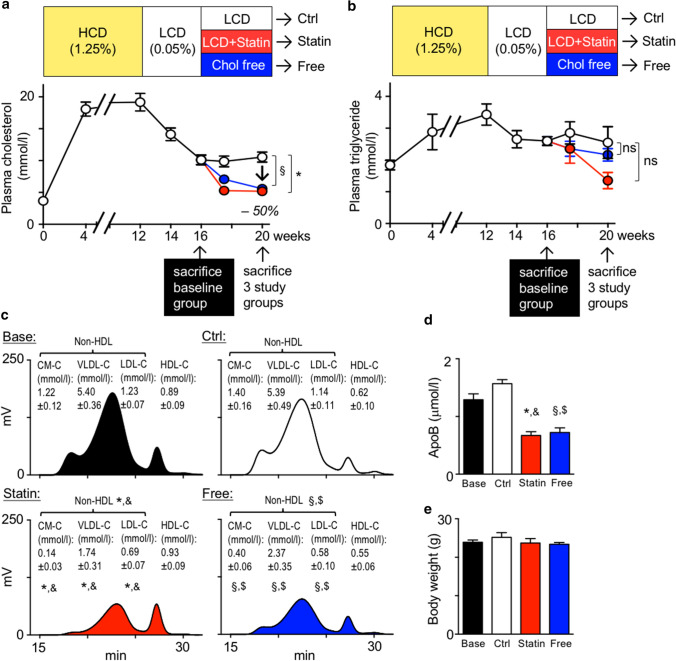
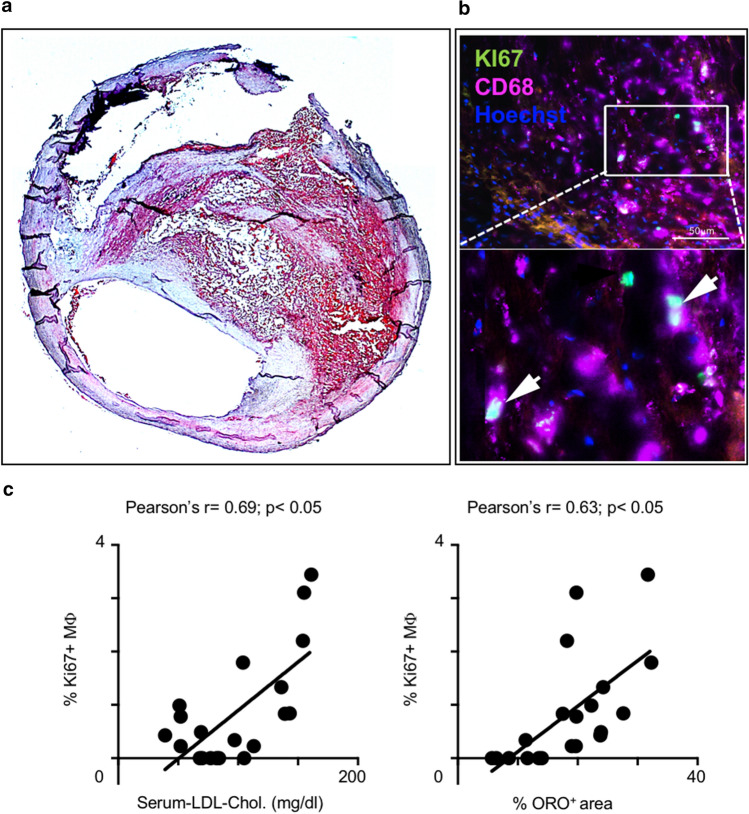
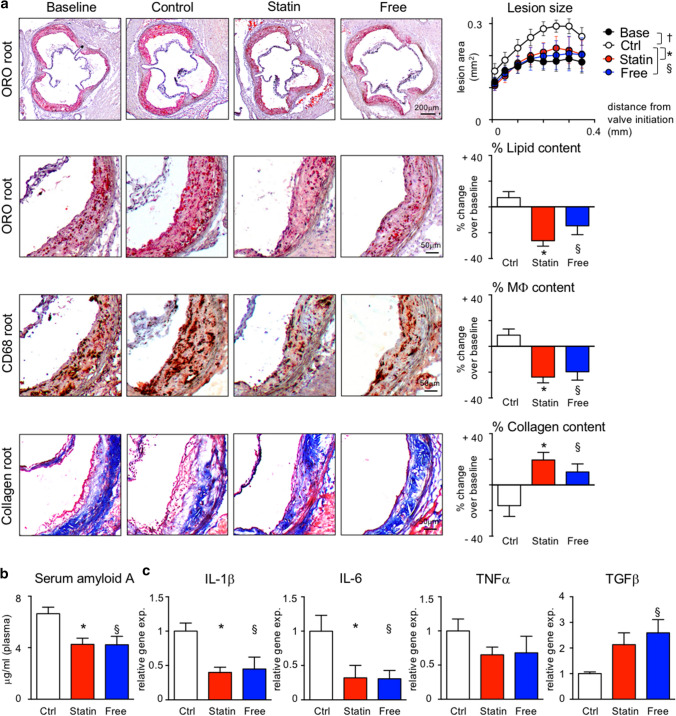
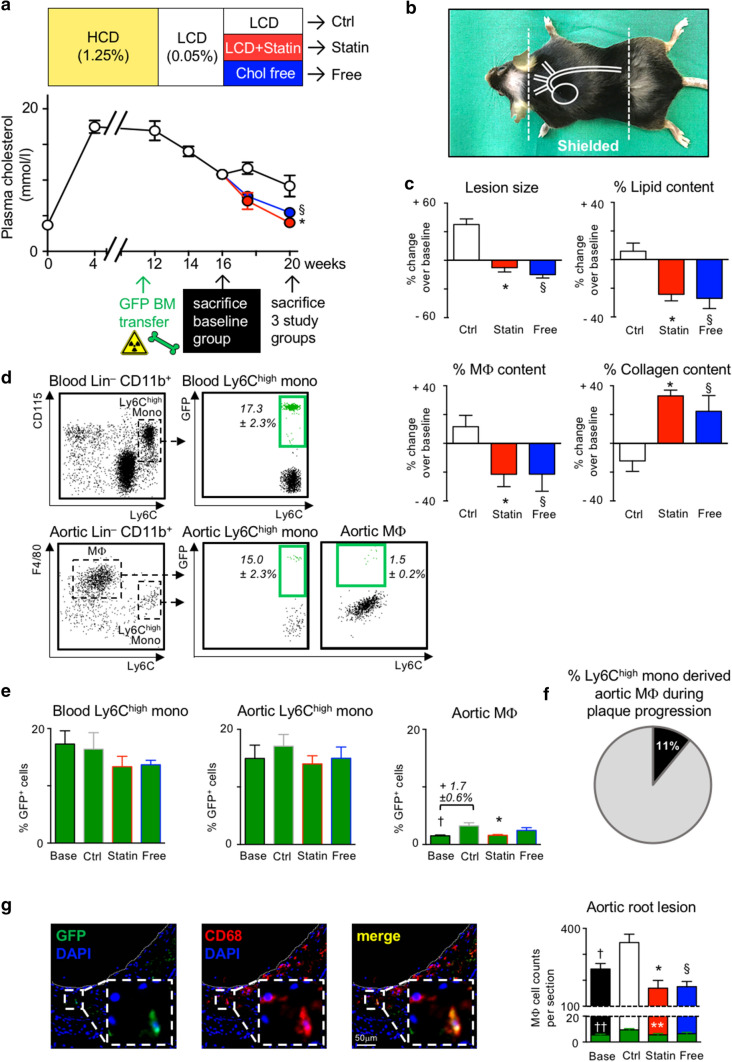
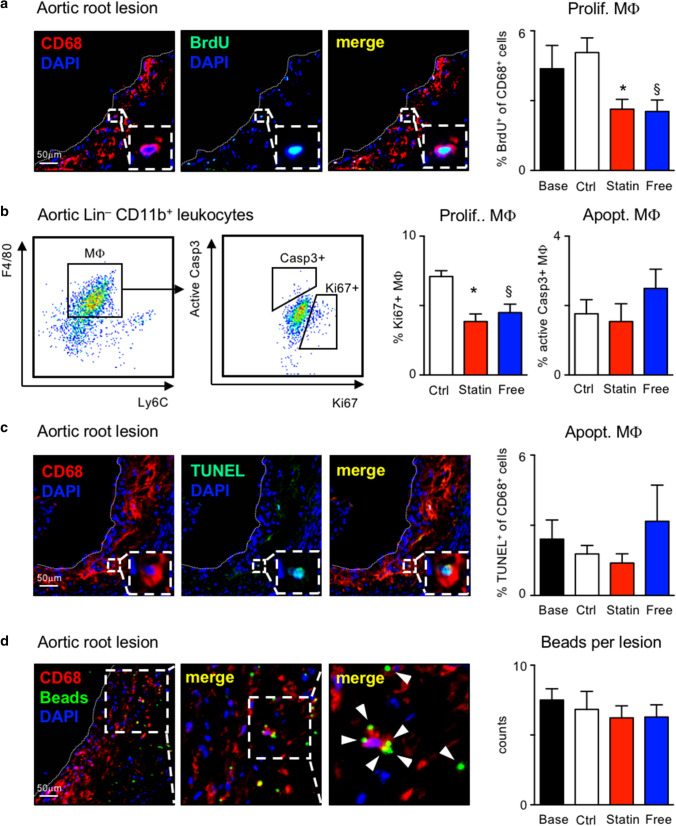
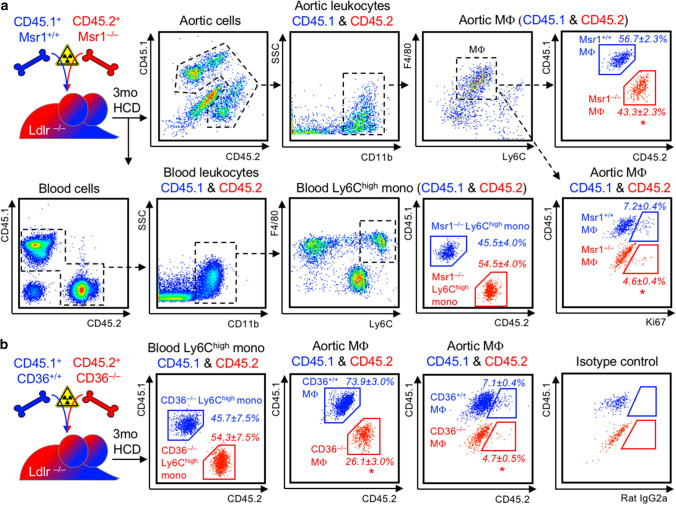
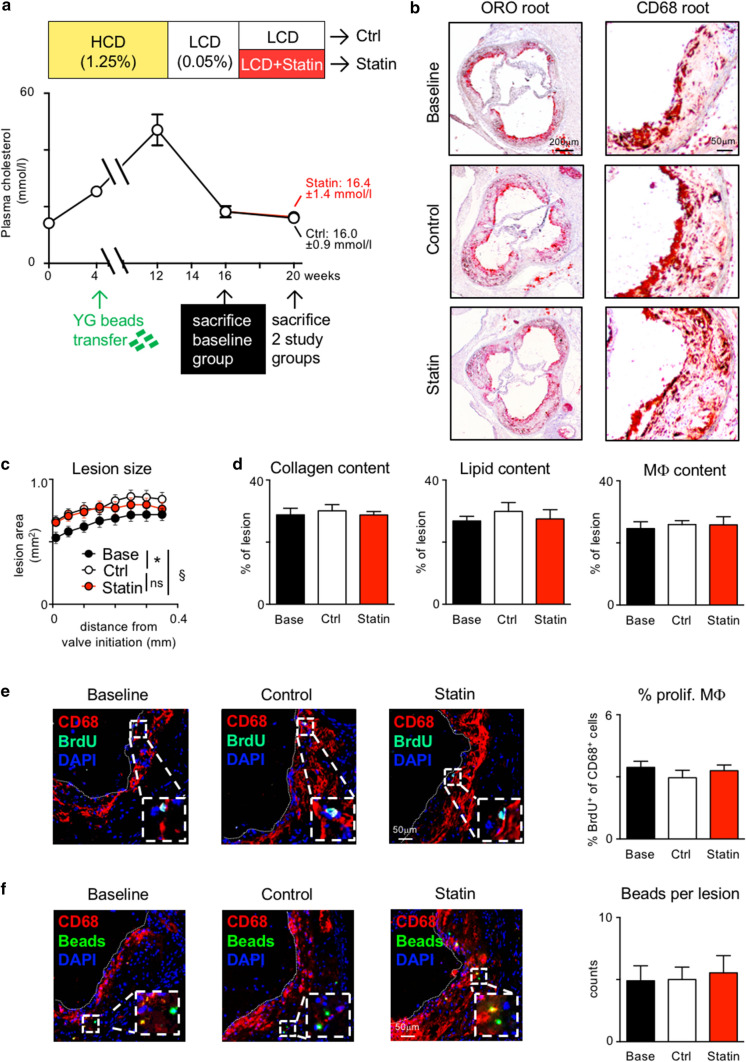
Statins induce plaque regression characterized by reduced macrophage content in humans, but the underlying mechanisms remain speculative. Studying the translational APOE*3-Leiden.CETP mouse model with a humanized lipoprotein metabolism, we find that systemic cholesterol lowering by oral atorvastatin or dietary restriction inhibits monocyte infiltration, and reverses macrophage accumulation in atherosclerotic plaques. Contrary to current believes, none of (1) reduced monocyte influx (studied by cell fate mapping in thorax-shielded irradiation bone marrow chimeras), (2) enhanced macrophage egress (studied by fluorescent bead labeling and transfer), or (3) atorvastatin accumulation in murine or human plaque (assessed by mass spectrometry) could adequately account for the observed loss in macrophage content in plaques that undergo phenotypic regression. Instead, suppression of local proliferation of macrophages dominates phenotypic plaque regression in response to cholesterol lowering: the lower the levels of serum LDL-cholesterol and lipid contents in murine aortic and human carotid artery plaques, the lower the rates of in situ macrophage proliferation. Our study identifies macrophage proliferation as the predominant turnover determinant and an attractive target for inducing plaque regression.
他汀类药物可诱导斑块消退,其特征是人类巨噬细胞含量减少,但潜在机制仍在推测之中。通过研究具有人源化脂蛋白代谢的翻译 APOE*3-Leiden.CETP 小鼠模型,我们发现口服阿托伐他汀或饮食限制降低全身胆固醇可抑制单核细胞浸润,并逆转动脉粥样硬化斑块中巨噬细胞的积累。与目前的观点相反,(1)减少单核细胞浸润(通过胸屏蔽照射骨髓嵌合体中的细胞命运图谱研究),(2)增强巨噬细胞迁出(通过荧光珠标记和转移研究),或(3)阿托伐他汀在鼠或人斑块中的积累(通过质谱法评估)均不能充分解释在经历表型消退的斑块中观察到的巨噬细胞含量的减少。相反,抑制局部巨噬细胞增殖在对胆固醇降低的反应中占主导地位:血清 LDL-胆固醇和鼠主动脉及人颈动脉斑块中脂质含量越低,原位巨噬细胞增殖率越低。我们的研究确定了巨噬细胞增殖是主要的更替决定因素,并为诱导斑块消退提供了有吸引力的靶点。