From the Thrombosis and Atherosclerosis Research Institute, McMaster University and Hamilton Health Sciences (P.Y., T.X., C.B.T., R.N., M.E.M., P.L.G., R.C.A., B.L.T.), St. Joseph's Hamilton Healthcare and Hamilton Center for Kidney Research (P.L., R.C.A.), Department of Biochemistry and Biomedical Sciences (P.Y., T.X., C.B.T., M.E.M., B.L.T.), and Department of Medicine (P.L., R.N., P.L.G., R.C.A.), McMaster University, Hamilton, ON, Canada.
Arterioscler Thromb Vasc Biol. 2018 Jan;38(1):26-39. doi: 10.1161/ATVBAHA.117.305140. Epub 2017 Nov 21.
Rosuvastatin has been widely used in the primary and secondary prevention of coronary heart disease. However, its antiatherosclerotic properties have not been tested in a mouse model that could mimic human coronary heart disease. The present study was designed to test the effects of rosuvastatin on coronary artery atherosclerosis and myocardial fibrosis in SR-B1 (scavenger receptor class B type 1) and apoE (apolipoprotein E) double knockout mice.
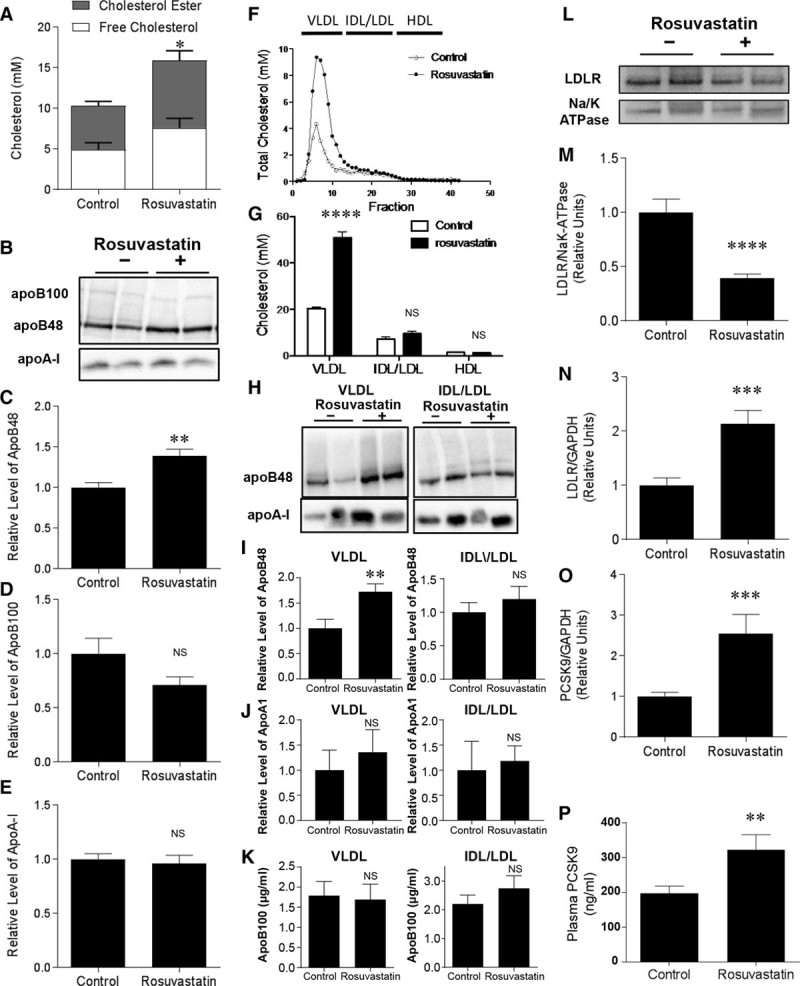
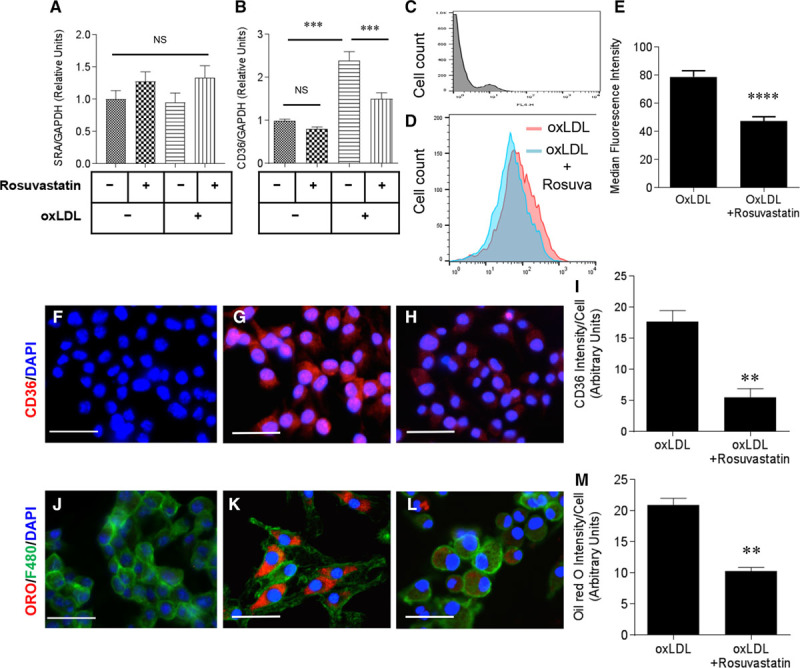
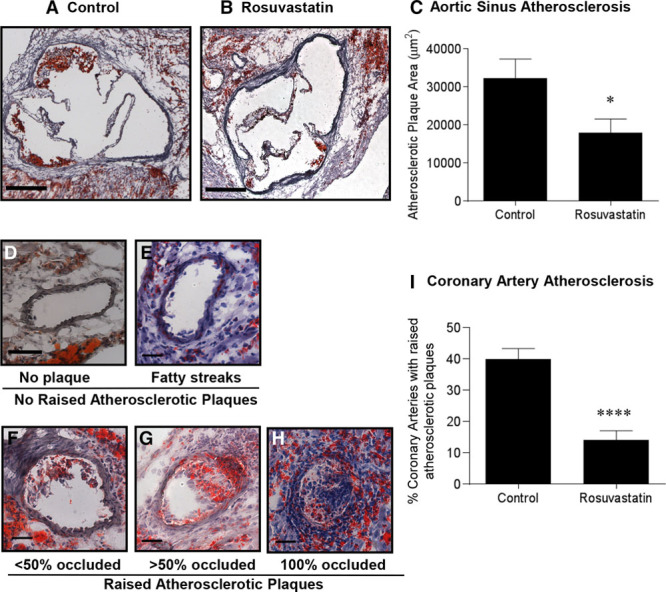
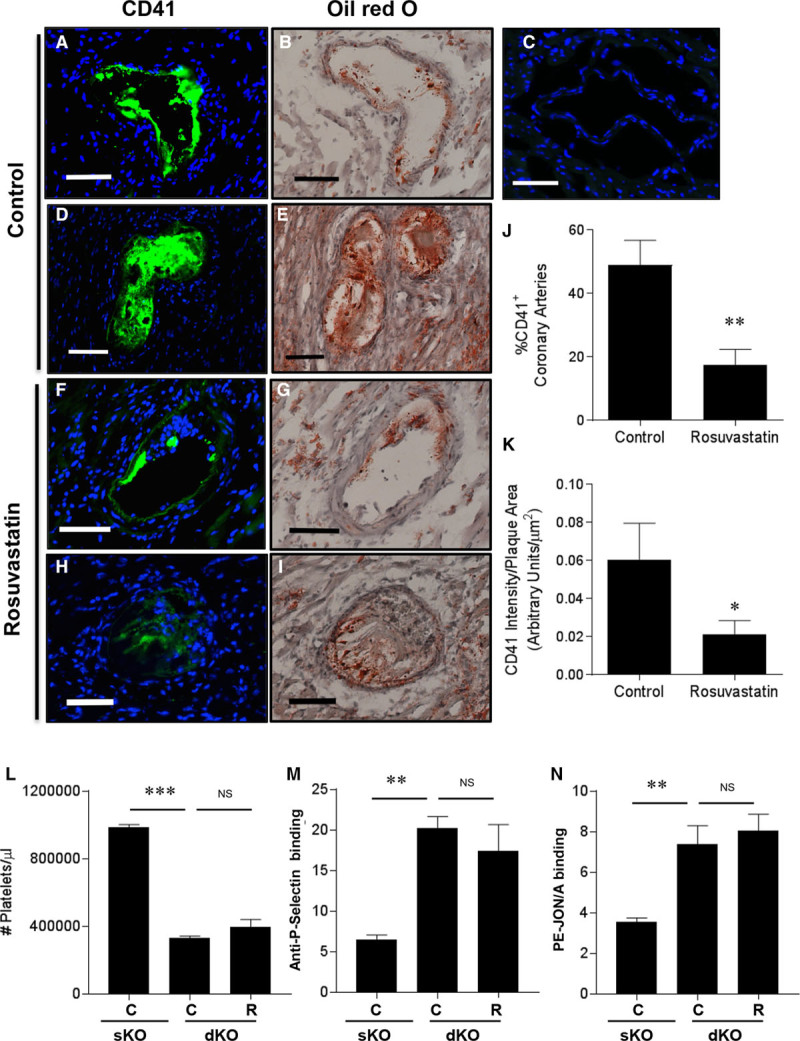
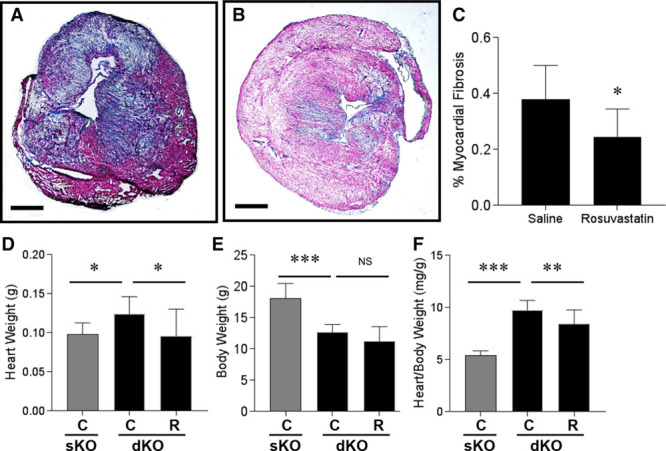
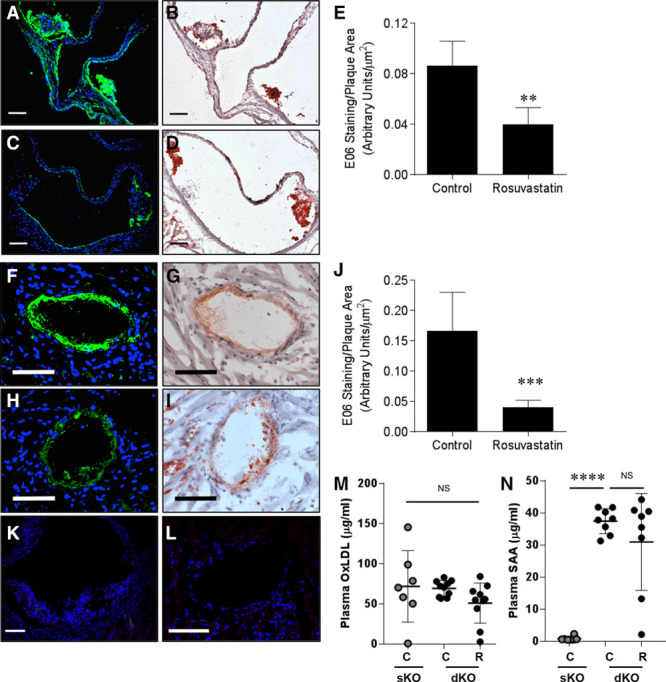
Three-week-old SR-B1/apoE mice were injected daily with 10 mg/kg of rosuvastatin for 2 weeks. Compared with saline-treated mice, rosuvastatin-treated mice showed increased levels of hepatic PCSK9 (proprotein convertase subtilisin/kexin type-9) and LDLR (low-density lipoprotein receptor) message, increased plasma PCSK9 protein but decreased levels of hepatic LDLR protein and increased plasma total cholesterol associated with apoB (apolipoprotein B) 48-containing lipoproteins. In spite of this, rosuvastatin treatment was associated with decreased atherosclerosis in both the aortic sinus and coronary arteries and reduced platelet accumulation in atherosclerotic coronary arteries. Cardiac fibrosis and cardiomegaly were also attenuated in rosuvastatin-treated SR-B1/apoE mice. Two-week treatment with rosuvastatin resulted in significant decreases in markers of oxidized phospholipids in atherosclerotic plaques. In vitro analysis showed that incubation of bone marrow-derived macrophages with rosuvastatin substantially downregulated cluster of differentiation (CD)36 and inhibited oxidized LDL-induced foam cell formation.
Rosuvastatin protected SR-B1/apoE mice against atherosclerosis and platelet accumulation in coronary arteries and attenuated myocardial fibrosis and cardiomegaly, despite increased plasma total cholesterol. The ability of rosuvastatin to reduce oxidized phospholipids in atherosclerotic plaques and inhibit macrophage foam cell formation may have contributed to this protection.
瑞舒伐他汀已广泛用于冠心病的一级和二级预防。然而,其抗动脉粥样硬化特性尚未在可模拟人类冠心病的小鼠模型中得到验证。本研究旨在测试瑞舒伐他汀对 SR-B1(清道夫受体 B 类 1 型)和 apoE(载脂蛋白 E)双敲除小鼠冠状动脉粥样硬化和心肌纤维化的影响。
3 周龄的 SR-B1/apoE 小鼠每天注射 10mg/kg 的瑞舒伐他汀,持续 2 周。与生理盐水处理的小鼠相比,瑞舒伐他汀处理的小鼠肝组织 PCSK9(脯氨酸羧肽酶/丝氨酸蛋白酶 9)和 LDLR(低密度脂蛋白受体)mRNA 水平升高,血浆 PCSK9 蛋白水平升高,但肝 LDLR 蛋白水平降低,与载脂蛋白 B48 相关的脂蛋白的血浆总胆固醇增加。尽管如此,瑞舒伐他汀治疗与主动脉窦和冠状动脉粥样硬化的减少以及动脉粥样硬化性冠状动脉中的血小板聚集减少有关。瑞舒伐他汀处理的 SR-B1/apoE 小鼠的心肌纤维化和心脏肥大也减轻。瑞舒伐他汀治疗 2 周可显著降低动脉粥样斑块中氧化磷脂的标志物。体外分析显示,瑞舒伐他汀孵育骨髓来源的巨噬细胞可显著下调 CD36,并抑制氧化 LDL 诱导的泡沫细胞形成。
尽管血浆总胆固醇升高,瑞舒伐他汀仍能保护 SR-B1/apoE 小鼠免受冠状动脉粥样硬化和血小板在冠状动脉中的聚集,并减轻心肌纤维化和心脏肥大。瑞舒伐他汀降低动脉粥样硬化斑块中氧化磷脂的能力和抑制巨噬细胞泡沫细胞形成的能力可能促成了这种保护作用。