Department of Medical Oncology, St Bartholomew's Hospital, London, UK.
Department of Medical Oncology, University College London Hospital, London, UK.
Womens Health (Lond). 2020 Jan-Dec;16:1745506520961709. doi: 10.1177/1745506520961709.
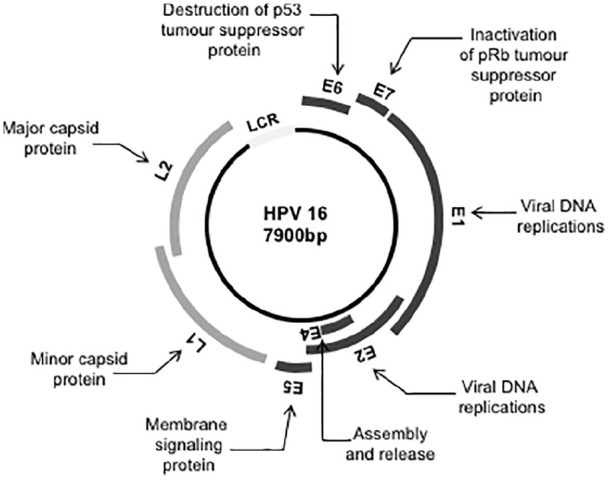
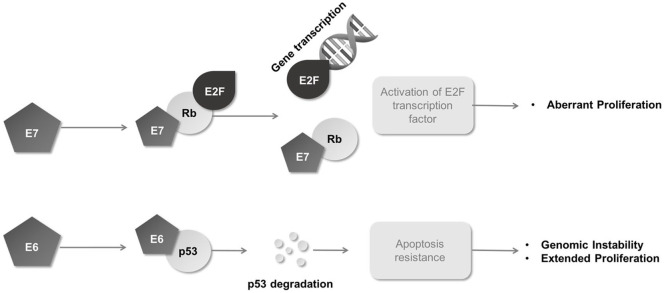
Despite the success of preventive vaccination, the Human Papilloma Virus still accounts for 266,000 deaths annually, as the main causative factor of cervical, vaginal, anal, penile and oropharyngeal cancers. Human Papilloma Virus infects epithelial cells, driving tumourigenesis primarily from incorporation of DNA into the host cellular genome. Translation of two particular Human Papilloma Virus-specific oncoproteins, E6 and E7, are the key drivers of malignancy. If diagnosed early cervical, vaginal and vulval cancers have good prognosis and are treated with curative intent. However, metastatic disease carries a poor prognosis, with first-line systemic treatment providing only modest increase in outcome. Having shown promise in other solid malignancies, immune checkpoint inhibition and therapeutic cancer vaccines have been directed towards Human Papilloma Virus-associated gynaecological cancers, mindful that persistent Human Papilloma Virus infection drives malignancy and is associated with immunosuppression and lack of T-cell immunity. In this review, we discuss novel therapeutic approaches for targeting Human Papilloma Virus-driven gynaecological malignancies including vaccination strategies, use of immunomodulation, immune checkpoint inhibitors and agents targeting Human Papilloma Virus-specific oncoproteins. We also highlight the evolving focus on exciting new treatments including adoptive T-cell therapies.
尽管预防性疫苗接种取得了成功,但人乳头瘤病毒仍然是每年导致 26.6 万人死亡的主要原因,它是宫颈癌、阴道癌、肛门癌、阴茎癌和口咽癌的主要致病因素。人乳头瘤病毒感染上皮细胞,主要通过将 DNA 整合到宿主细胞基因组中来驱动肿瘤发生。两种特定的人乳头瘤病毒特异性致癌蛋白 E6 和 E7 的翻译是恶性肿瘤的主要驱动因素。如果早期诊断出宫颈癌、阴道癌和外阴癌,其预后良好,并采用治愈性治疗。然而,转移性疾病预后较差,一线全身治疗仅能适度提高疗效。免疫检查点抑制和治疗性癌症疫苗在其他实体恶性肿瘤中显示出前景,同时考虑到人乳头瘤病毒持续感染会导致恶性肿瘤,并与免疫抑制和缺乏 T 细胞免疫有关。在这篇综述中,我们讨论了针对人乳头瘤病毒驱动的妇科恶性肿瘤的新型治疗方法,包括疫苗接种策略、免疫调节、免疫检查点抑制剂以及针对人乳头瘤病毒特异性致癌蛋白的药物。我们还强调了人们对包括过继性 T 细胞疗法在内的令人兴奋的新治疗方法的关注日益增加。