Department of Medicine, University of California, Los Angeles, Los Angeles, California, USA.
Department of Medicine, University of Pennsylvania, Philadelphia, Pennsylvania, USA.
Am J Transplant. 2021 Jun;21(6):2018-2024. doi: 10.1111/ajt.16439. Epub 2020 Dec 24.
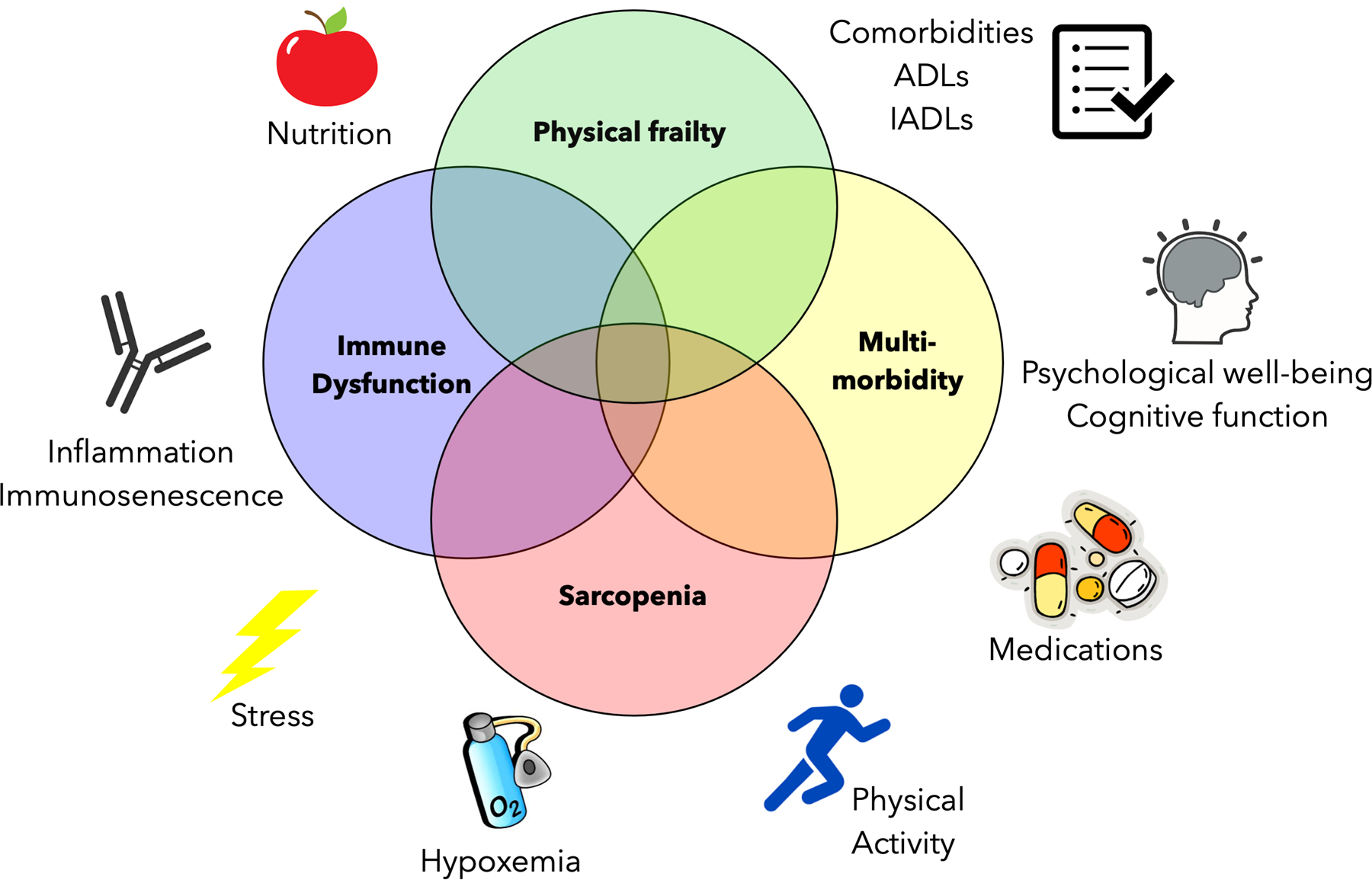
Many lung transplant candidates and recipients are older and frailer compared to previous eras. Older patients are at increased risk for pre- and posttransplant mortality, but this risk is not explained by numerical age alone. This manuscript represents the product of the American Society of Transplantation (AST) conference on frailty. Experts in the field reviewed the latest published research on assessment of elderly and frail lung transplant candidates. Physical frailty, often defined as slowness, weakness, low physical activity, shrinking, and exhaustion, and frailty evaluation is an important tool for evaluation of age-associated dysfunction. Another approach is assessment by cumulative deficits, and both types of frailty are common in lung transplant candidates. Frailty is associated with death or delisting before transplant, and may be associated with posttransplant mortality. Sarcopenia, cognitive dysfunction, depression, and nutrition are other important components for patient evaluation. Aging-associated inflammation, telomere dysfunction, and adaptive immune system senescence may also contribute to frailty. Developing tools for frailty assessment and interventions holds promise for improving patient outcomes before and after lung transplantation.
许多肺移植候选人和受者与前几代相比年龄更大、身体更脆弱。老年患者在移植前和移植后死亡的风险增加,但这种风险不能仅用数字年龄来解释。本文档代表了美国移植学会 (AST) 关于脆弱性的会议的成果。该领域的专家审查了关于评估老年和脆弱肺移植候选者的最新已发表研究。身体虚弱,通常定义为动作缓慢、虚弱、体力活动少、体重减轻和疲惫,以及虚弱评估是评估与年龄相关的功能障碍的重要工具。另一种方法是通过累积缺陷进行评估,这两种类型的虚弱在肺移植候选者中很常见。虚弱与移植前死亡或被取消资格有关,并且可能与移植后死亡率有关。肌少症、认知功能障碍、抑郁和营养是患者评估的其他重要组成部分。与衰老相关的炎症、端粒功能障碍和适应性免疫系统衰老也可能导致虚弱。开发虚弱评估和干预措施的工具有望改善肺移植前后患者的预后。