Genetics of Development and Disease Section, Genetics and Biochemistry Branch, National Institute of Diabetes and Digestive and Kidney Diseases, 9000 Rockville Pike, National Institutes of Health, Bethesda, MD 20892, USA.
Genetics of Development and Disease Section, Genetics and Biochemistry Branch, National Institute of Diabetes and Digestive and Kidney Diseases, 9000 Rockville Pike, National Institutes of Health, Bethesda, MD 20892, USA.
Cell Signal. 2021 Feb;78:109879. doi: 10.1016/j.cellsig.2020.109879. Epub 2020 Dec 6.
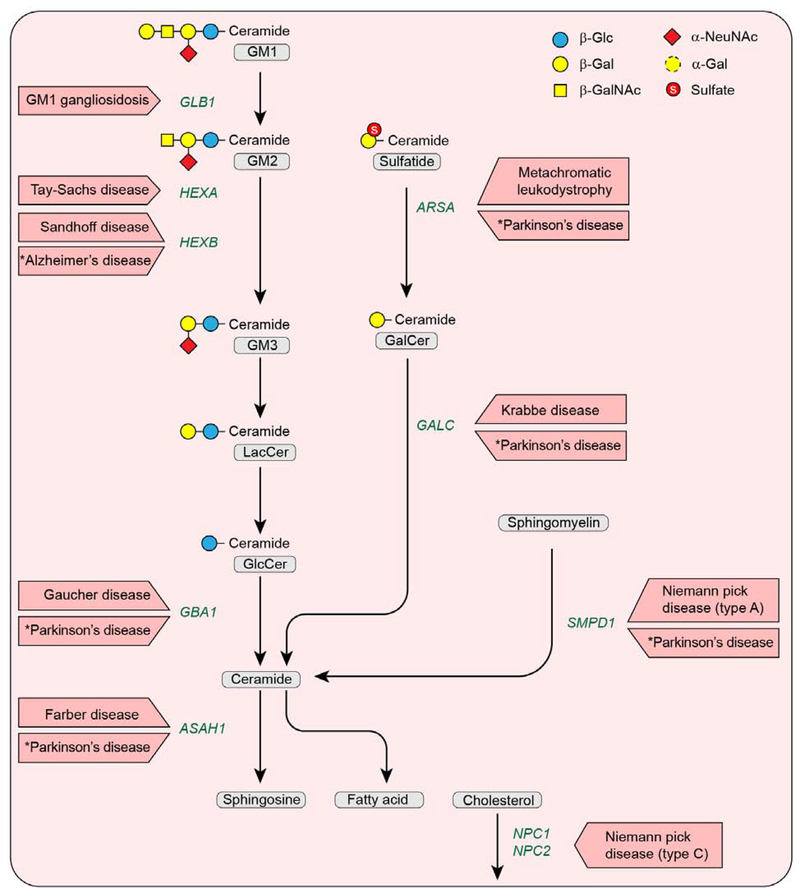
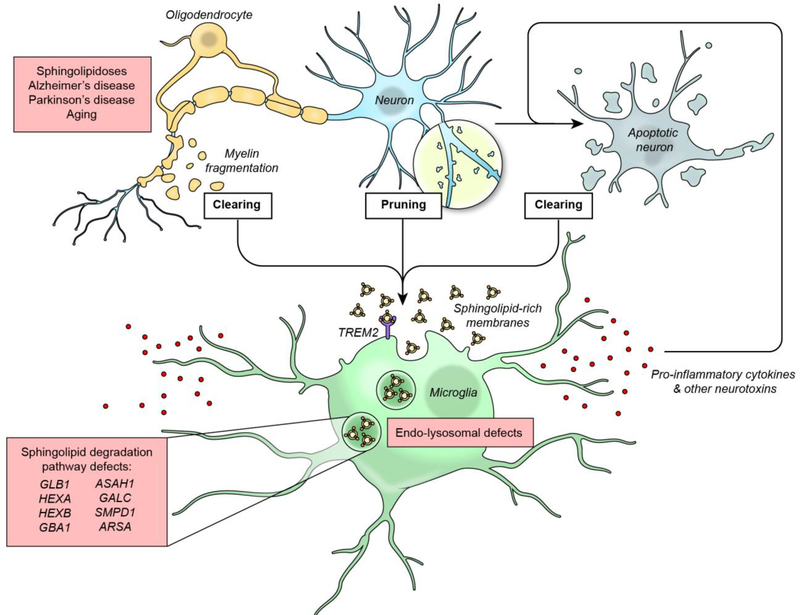
Sphingolipids, which function as plasma membrane lipids and signaling molecules, are highly enriched in neuronal and myelin membranes in the nervous system. They are degraded in lysosomes by a defined sequence of enzymatic steps. In the related group of disorders, the sphingolipidoses, mutations in the genes that encode the individual degradative enzymes cause lysosomal accumulation of sphingolipids and often result in severe neurodegenerative disease. Here we review the information indicating that microglia, which actively clear sphingolipid-rich membranes in the brain during development and homeostasis, are directly affected by these mutations and promote neurodegeneration in the sphingolipidoses. We also identify parallels between the sphingolipidoses and more common forms of neurodegeneration, which both exhibit evidence of defective sphingolipid clearance in the nervous system.
鞘脂类作为质膜脂质和信号分子,在神经系统的神经元和髓鞘膜中高度富集。它们在溶酶体中通过一系列特定的酶促步骤进行降解。在相关的鞘脂贮积症中,编码单个降解酶的基因突变导致溶酶体中鞘脂的积累,通常导致严重的神经退行性疾病。在这里,我们综述了表明在发育和稳态期间,小胶质细胞积极清除大脑中富含鞘脂的膜的信息,这些突变直接影响小胶质细胞,并促进鞘脂贮积症中的神经退行性变。我们还发现鞘脂贮积症与更常见的神经退行性疾病之间存在相似之处,这两种疾病都表现出神经系统中鞘脂清除功能缺陷的证据。