Queen's University Belfast, Belfast, Northern Ireland.
University of Manchester, Manchester, UK.
Psychol Med. 2022 Oct;52(14):3116-3126. doi: 10.1017/S0033291720005164. Epub 2020 Dec 10.
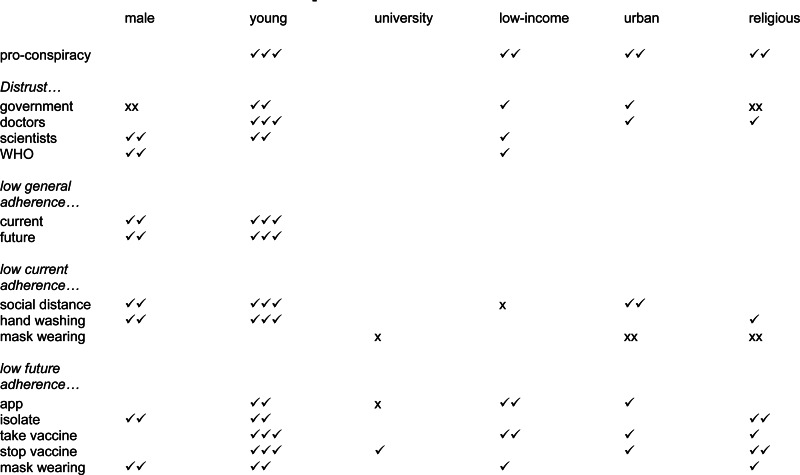
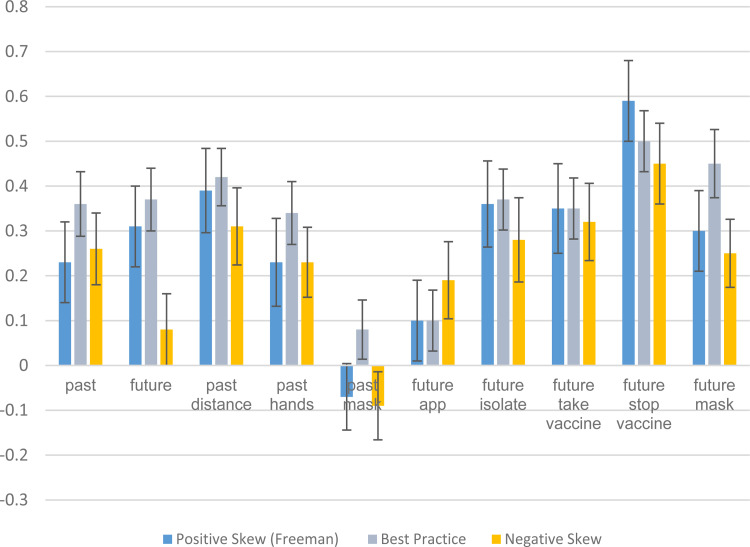
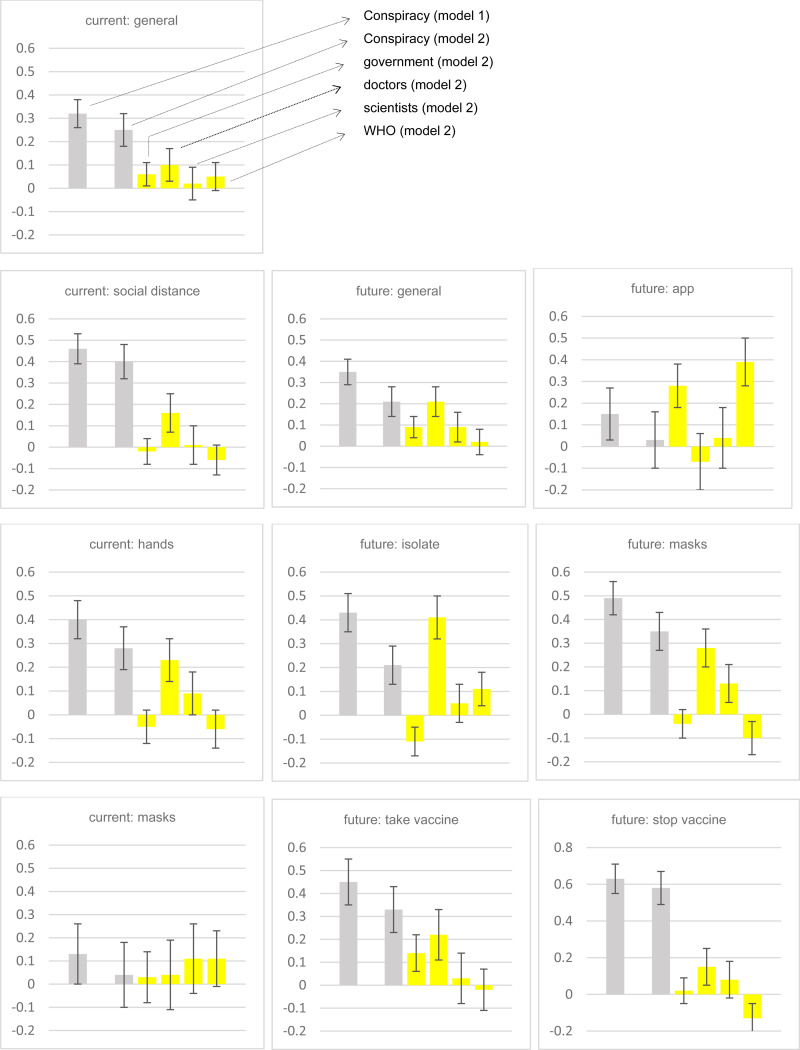
Freeman . (, , 21, 1-13) argue that there is widespread support for coronavirus conspiracy theories in England. We hypothesise that their estimates of prevalence are inflated due to a flawed research design. When asking respondents to their survey to agree or disagree with pro-conspiracy statements, they used a biased set of response options: four agree options and only one disagree option (and no 'don't know' option). We also hypothesise that due to these flawed measures, the Freeman et al. approach -estimates the strength of the correlation between conspiracy beliefs and compliance. Finally, we hypothesise that, due to reliance on bivariate correlations, Freeman et al. -estimate the causal connection between conspiracy beliefs and compliance.
In a pre-registered study, we conduct an experiment embedded in a survey of a representative sample of 2057 adults in England (fieldwork: 16-19 July 2020).
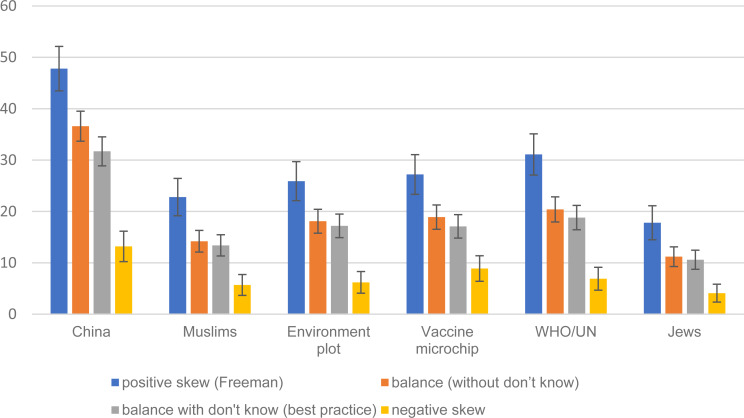
Measured using our advocated 'best practice' approach (balanced response options, with a don't know option), prevalence of support for coronavirus conspiracies is only around five-eighths (62.3%) of that indicated by the Freeman et al. approach. We report mixed results on our correlation and causation hypotheses.
To avoid over-estimating prevalence of support for coronavirus conspiracies, we advocate using a balanced rather than imbalanced set of response options, and including a don't know option.
弗里曼等人(2021 年)认为,在英格兰,人们普遍支持冠状病毒阴谋论。我们假设他们对流行率的估计因研究设计存在缺陷而被夸大了。当要求受访者对支持阴谋论的陈述表示同意或不同意时,他们使用了一组有偏见的回答选项:四个同意选项和一个不同意选项(没有“不知道”选项)。我们还假设,由于这些有缺陷的措施,弗里曼等人的方法——估计了阴谋信念与合规性之间的相关性强度。最后,我们假设,由于依赖于双变量相关,弗里曼等人——估计了阴谋信念与合规性之间的因果关系。
在一项预先注册的研究中,我们在一项对英格兰 2057 名成年人的代表性样本进行的调查中嵌入了一项实验(实地调查:2020 年 7 月 16 日至 19 日)。
使用我们提倡的“最佳实践”方法(平衡的回答选项,包括“不知道”选项)进行衡量,支持冠状病毒阴谋论的比例仅为弗里曼等人方法所表明的比例的大约八分之五(62.3%)。我们报告了我们的相关性和因果关系假设的混合结果。
为了避免高估对冠状病毒阴谋论的支持率,我们主张使用平衡而不是不平衡的回答选项集,并包括“不知道”选项。