Risk Analysis and Genomic Epidemiology Unit, Istituto Zooprofilattico Sperimentale della Lombardia e dell'Emilia Romagna, Parma, Italy.
Quadram Institute Bioscience, Norwich Research Park, Colney, Norwich, UK.
Sci Rep. 2020 Dec 9;10(1):21539. doi: 10.1038/s41598-020-78443-7.
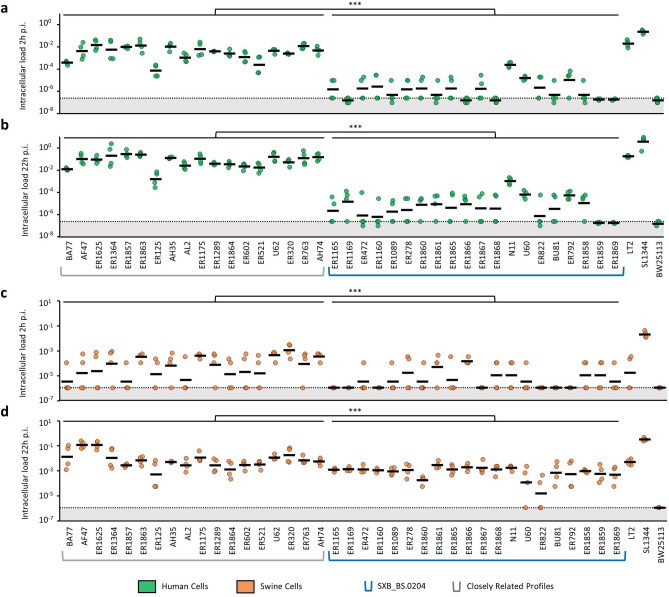
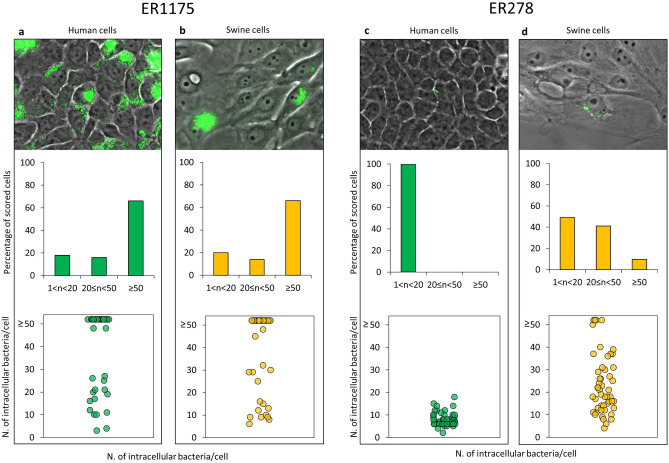
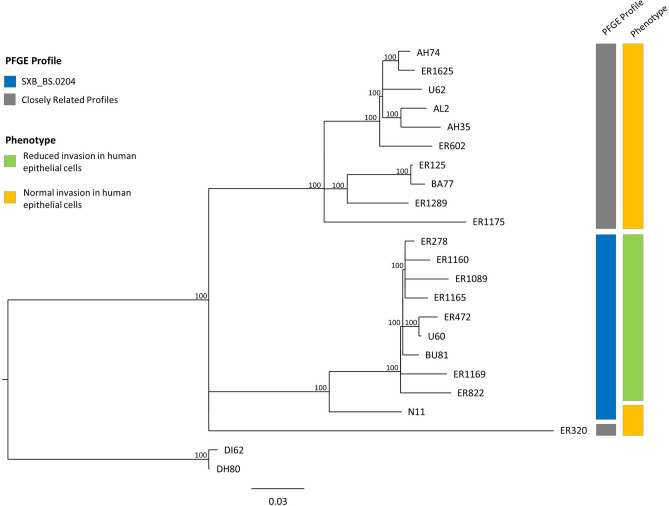
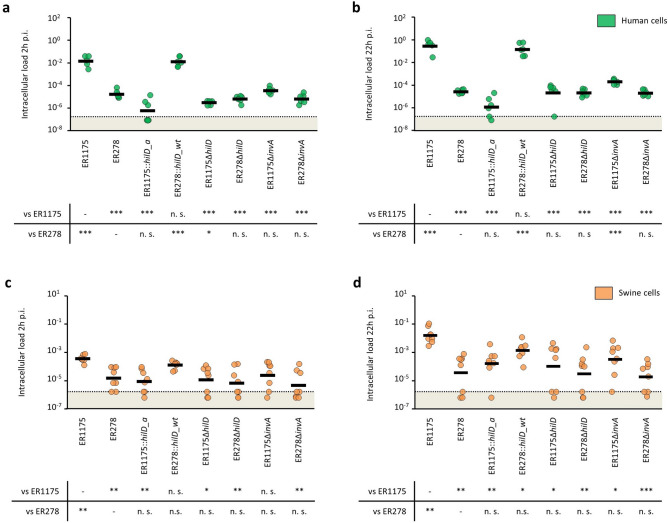
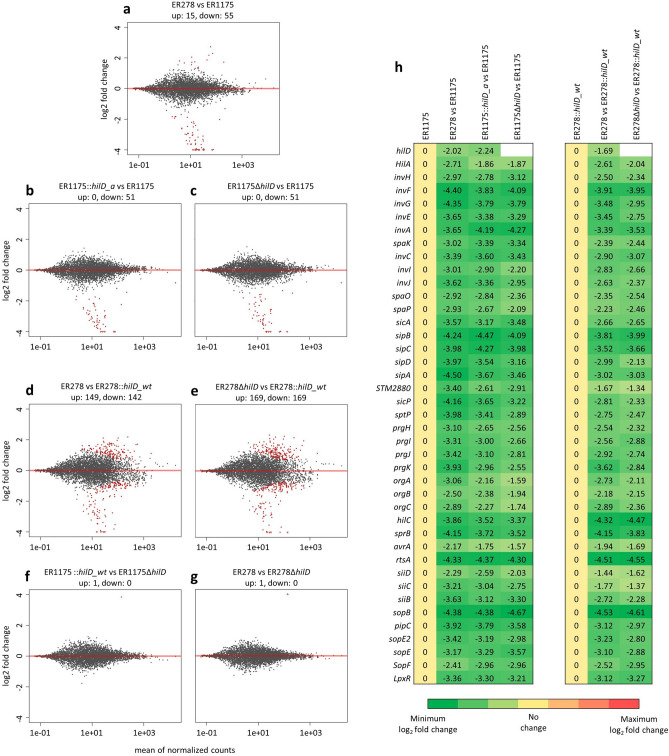
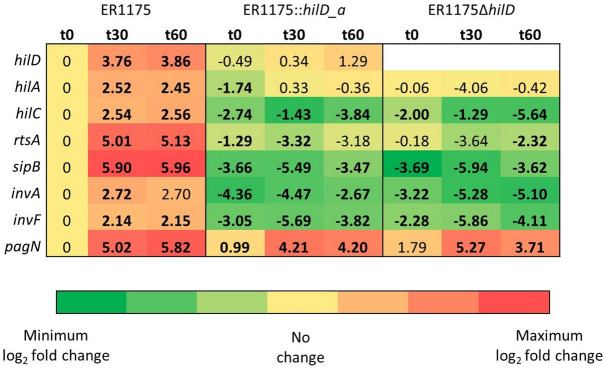
Salmonella enterica variants exhibit diverse host adaptation, outcome of infection, and associated risk to food safety. Analysis of the distribution of Salmonella enterica serovar Derby (S. Derby) subtypes in human and swine identified isolates with a distinct PFGE profile that were significantly under-represented in human infections, consistent with further host adaptation to swine. Here we show that isolates with this PFGE profile form a distinct phylogenetic sub-clade within S. Derby and exhibit a profound reduction in invasion of human epithelial cells, and a relatively small reduction in swine epithelial cells. A single missense mutation in hilD, that encodes the master-regulator of the Salmonella Pathogenicity Island 1 (SPI-1), was present in the adapted lineage. The missense mutation resulted in a loss of function of HilD that accounted for reduced invasion in human epithelial cells. The relatively small impact of the mutation on interaction with swine cells was consistent with an alternative mechanism of invasion in this pathogen-host combination.
肠炎沙门氏菌变种表现出不同的宿主适应性、感染结果以及对食品安全的相关风险。对人类和猪感染的肠炎沙门氏菌血清型德比(S. Derby)亚型的分布进行分析,发现具有独特 PFGE 图谱的分离株在人类感染中明显代表性不足,这与进一步适应猪宿主有关。在这里,我们表明,具有这种 PFGE 图谱的分离株在 S. Derby 内形成一个独特的系统发育亚群,并且在入侵人上皮细胞方面表现出明显的减少,而在猪上皮细胞中则相对减少。在适应的谱系中存在 hilD 的单个错义突变,该突变编码沙门氏菌致病性岛 1(SPI-1)的主调节因子。该错义突变导致 HilD 的功能丧失,这解释了人上皮细胞入侵减少的原因。该突变对与猪细胞相互作用的影响相对较小,与这种病原体-宿主组合中入侵的替代机制一致。