Onakpohor Anthony, Fakinle Bamidele Sunday, Sonibare Jacob Ademola, Oke Michael Abidemi, Akeredolu Funso Alaba
Environmental Engineering Research Laboratory, Department of Chemical Engineering, Obafemi Awolowo University, Ile - Ife, Nigeria.
Department of Chemical Engineering, Landmark University, Omu-Aran, Kwara State, Nigeria.
Heliyon. 2020 Nov 26;6(11):e05608. doi: 10.1016/j.heliyon.2020.e05608. eCollection 2020 Nov.
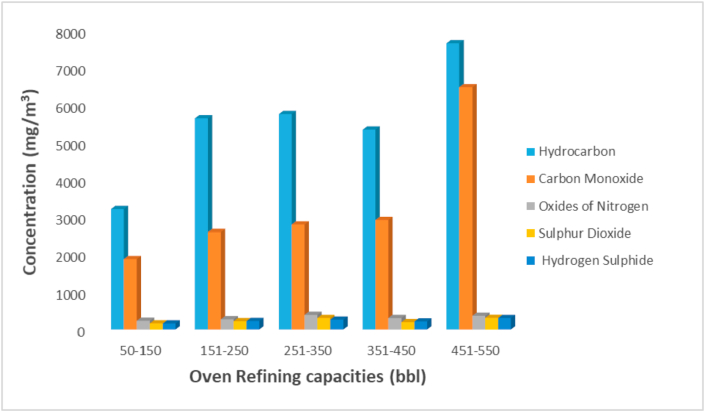
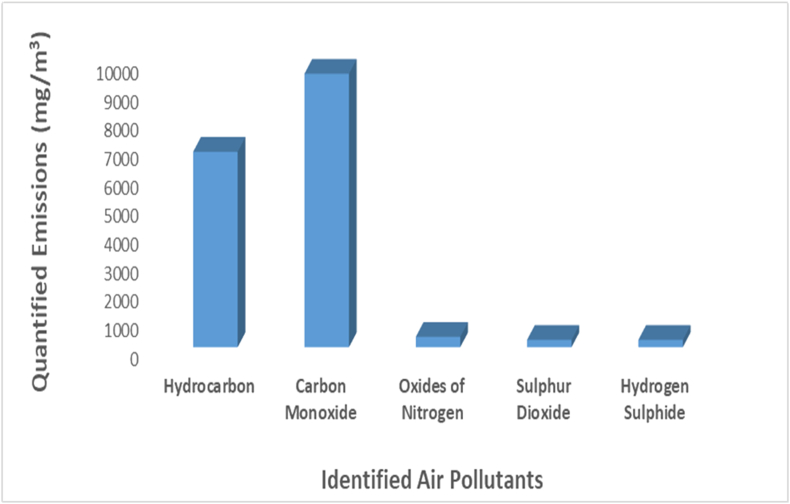
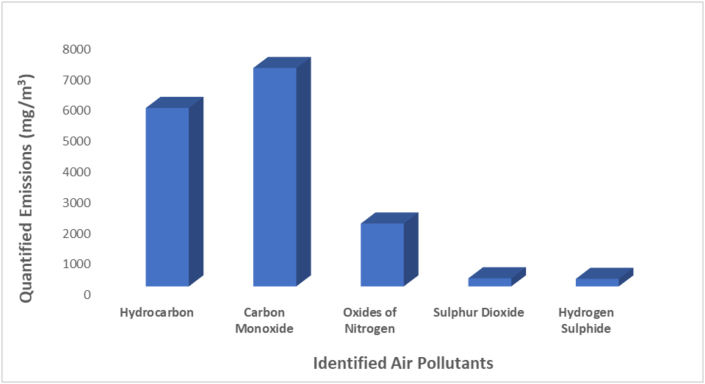
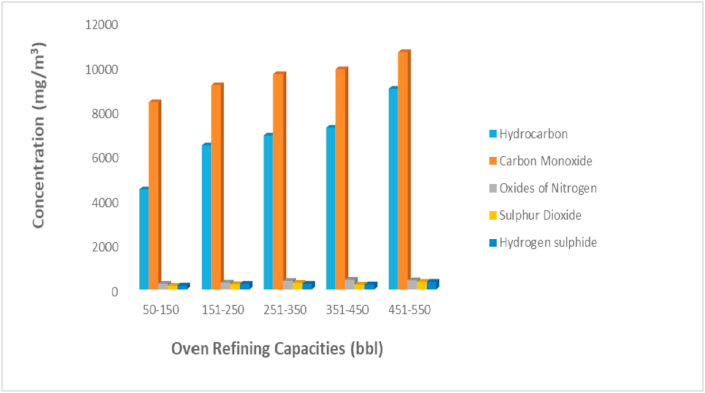
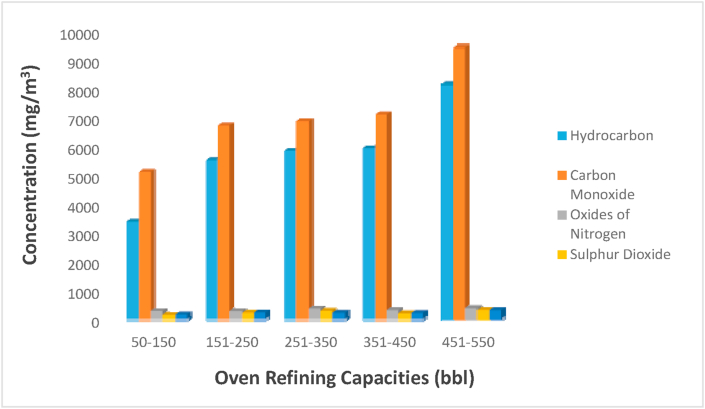
The increase in price of the available refined petroleum products for local consumption in Nigeria had led to the emergence of indigenous technology for petroleum refining in some parts of the Niger Delta region. This study, therefore characterized and quantified artisanal refineries' gaseous emissions for possible air pollutants based on various unit operations involved and evaluated their impacts. It measured the emissions directly from source using E8500 Portable Combustion Analyzer. It also categorized oven sizes/processing capacity of the refineries into various ranges in order to estimate emissions according to processing capacity. The result revealed that; pollutants emission varied significantly between the unit operations and increased with increase in processing capacity. When the emissions were compared with daily limits set by the Environmental Guidelines and Standard for Petroleum Industry in Nigeria (EGASPIN) 2002, the emissions (CO, NO, and SO) breached the available set limits. While with the Federal Environmental Protection Agency (FEPA), 1991 set limits for emissions from stationary source; HC and CO breached their limits. SO and HS breached their lower limits but were below the upper limit, while NOx emissions were found within its set limit. The study concluded that, Nigeria Artisanal Petroleum Refineries are sources of air pollution, as they impact the host environment.
尼日利亚当地消费的可用精炼石油产品价格上涨,导致尼日尔三角洲地区一些地方出现了本土石油精炼技术。因此,本研究根据手工炼油厂涉及的各种单元操作,对其气体排放进行了表征和量化,以确定可能的空气污染物,并评估了这些排放的影响。研究使用E8500便携式燃烧分析仪直接从源头测量排放。研究还将炼油厂的烤炉尺寸/加工能力分为不同范围,以便根据加工能力估算排放量。结果显示,各单元操作之间的污染物排放差异显著,且随着加工能力的增加而增加。当将这些排放与2002年尼日利亚石油工业环境指南和标准(EGASPIN)设定的每日限值进行比较时,排放物(一氧化碳、一氧化氮和二氧化硫)超出了既定限值。而按照联邦环境保护局(FEPA)1991年设定的固定源排放限值,碳氢化合物和一氧化碳超出了限值。二氧化硫和硫化氢低于其上限但超出了下限,而氮氧化物排放则在规定限值范围内。研究得出结论,尼日利亚的手工炼油厂是空气污染源,对所在环境产生了影响。