Department of Physiology and Pharmacology, Wake Forest School of Medicine, Winston-Salem, NC, USA.
Department of Psychology, Developmental Exposure Alcohol Research Center, Center for Developmental and Behavioral Neuroscience, Binghamton University - SUNY, Binghamton, NY, USA.
Handb Exp Pharmacol. 2022;271:351-377. doi: 10.1007/164_2020_421.
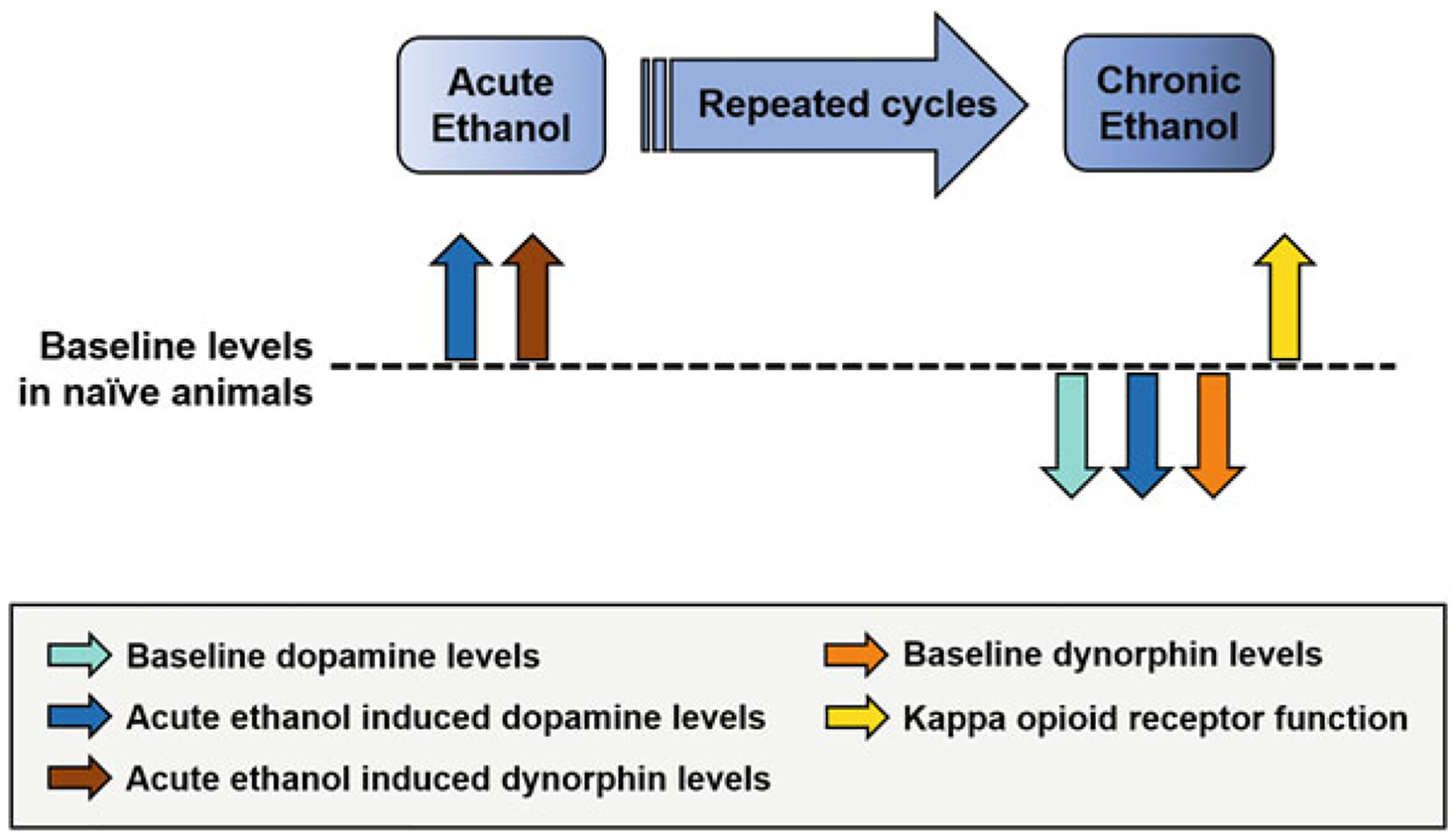
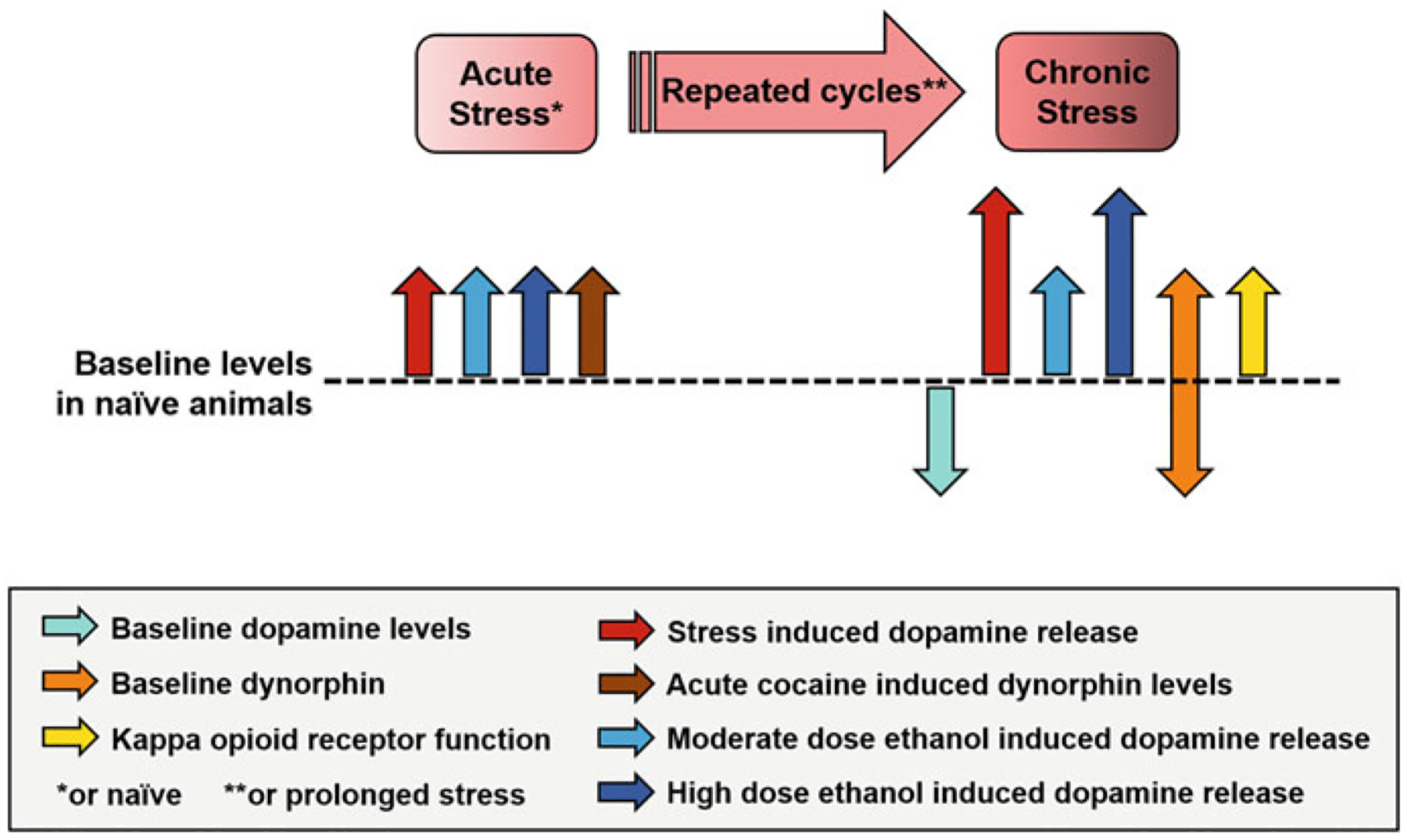
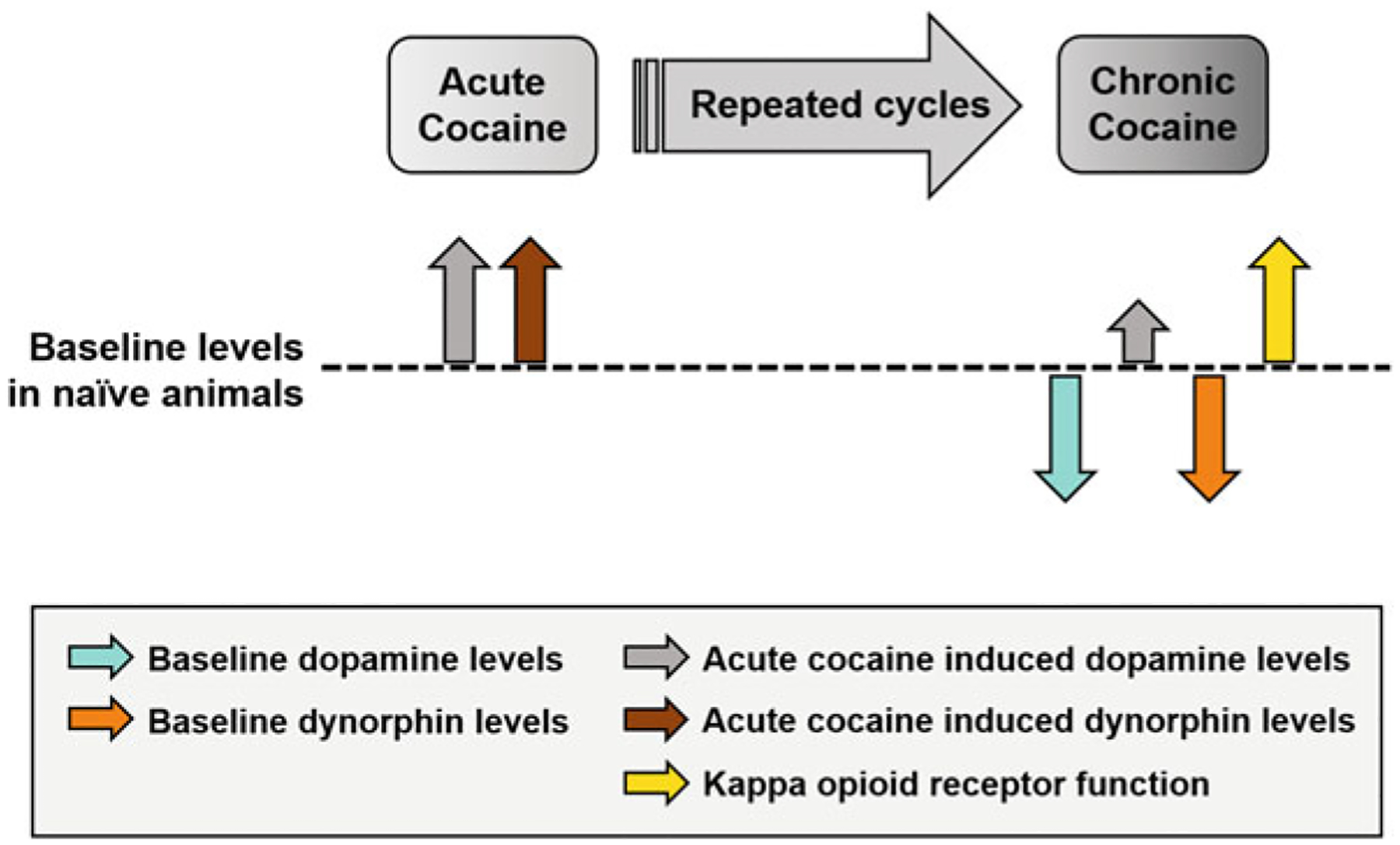
Drug addiction is a complex, persistent, and chronically relapsing neurological disorder exacerbated by acute and chronic stress. It is well known that the dynorphin/kappa opioid receptor (KOR) system regulates stress perception and responsivity, while the mesolimbic dopamine system plays a role in reward and reinforcement associated with alcohol and substance use disorders. Interestingly, the dopamine and dynorphin/KOR systems are highly integrated in mesolimbic areas, with KOR activation leading to inhibition of dopamine release, further altering the perception of reinforcing and aversive stimuli. Chronic or repeated exposure to stress or drugs potentiates KOR function ultimately contributing to a hypodopaminergic state. This hypodopaminergic state is one of the hallmarks of hyperkatifeia, defined as the hypersensitivity to emotional distress that is exacerbated during drug withdrawal and abstinence. The relationship between stress and drug addiction is bidirectional; repeated/chronic stress promotes pro-addictive behaviors, and repeated cycles of drug exposure and withdrawal, across various drug classes, produces stress. Neuroadaptations driven by this bidirectional relationship ultimately influence the perception of the reinforcing value of rewarding stimuli. In this chapter, we address the involvement of the dopamine and dynorphin/KOR systems and their interactions in shaping reinforcement value processing after drug and stress exposure, as well as a combinatorial impact of both drugs and stress.
药物成瘾是一种复杂的、持续的、慢性复发的神经系统疾病,会因急性和慢性应激而加重。众所周知,内啡肽/κ 阿片受体(KOR)系统调节应激感知和反应,而中脑边缘多巴胺系统在与酒精和物质使用障碍相关的奖励和强化中发挥作用。有趣的是,多巴胺和内啡肽/KOR 系统在中脑边缘区域高度整合,KOR 的激活导致多巴胺释放的抑制,进一步改变对强化和厌恶刺激的感知。慢性或反复暴露于应激或药物会增强 KOR 的功能,最终导致多巴胺能低下状态。这种多巴胺能低下状态是快感亢进的标志之一,快感亢进定义为对情绪困扰的过度敏感,这种过度敏感在药物戒断和禁欲期间加剧。应激和药物成瘾之间的关系是双向的;反复/慢性应激促进成瘾行为,而各种药物类别的反复药物暴露和戒断会产生应激。这种双向关系驱动的神经适应最终会影响对奖励刺激的强化价值的感知。在这一章中,我们将讨论多巴胺和内啡肽/KOR 系统及其相互作用在药物和应激暴露后塑造强化价值处理中的作用,以及药物和应激的组合影响。