Department of Dermatology, Union Hospital, Tongji Medical College, Huazhong University of Science and Technology (HUST), Wuhan 430022, China.
Department of Immunology, School of Medicine, UConn Health, Farmington, CT 06032, USA.
J Immunother Cancer. 2020 Dec;8(2). doi: 10.1136/jitc-2020-001593.
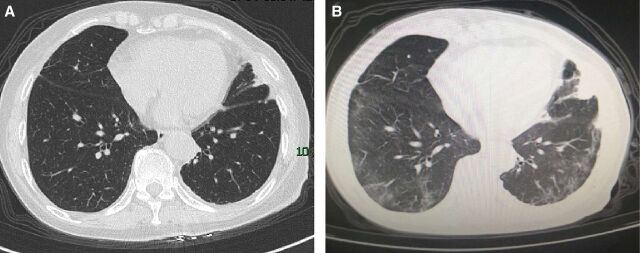
The COVID-19 outbreak caused by SARS-CoV-2 challenges the medical system by interfering with routine therapies for many patients with chronic diseases. In patients with cancer receiving immune checkpoint inhibitors (ICIs), difficulties also arise from the incomplete understanding of the intricate interplay between their routine treatment and pathogenesis of the novel virus. By referring to previous ICI-based investigations, we speculate that ICIs themselves are not linked to high-infection risks of respiratory diseases or inflammation-related adverse effects in patients with cancer. Moreover, ICI treatment may even enhance coronavirus clearance in some patients with malignant tumor by boosting antiviral T-cell responsiveness. However, the 'explosive' inflammation during COVID-19 in some ICI-treated patients with cancer was illustrated as exuberant immunopathological damage or even death. In case of the COVID-19 immunopathogenesis fueled by ICIs, we propose a regular monitor of pathogenic T-cell subsets and their exhaustion marker expression (eg, Th17 and interleukin (IL)-6-producing Th1 subsets with surface programmed death 1 expression) to guide the usage of ICI. Here we aimed to address these considerations, based on available literature and experience from our practice, that may assist with the decision-making of ICI administration during the pandemic.
由 SARS-CoV-2 引起的 COVID-19 疫情通过干扰许多慢性病患者的常规治疗方法对医疗系统提出了挑战。在接受免疫检查点抑制剂 (ICI) 治疗的癌症患者中,由于对其常规治疗与新型病毒发病机制之间复杂相互作用的不完全了解,也出现了困难。通过参考之前基于 ICI 的研究,我们推测 ICI 本身与呼吸道疾病的高感染风险或癌症患者炎症相关不良事件无关。此外,ICI 治疗甚至可能通过增强抗病毒 T 细胞反应来增强某些恶性肿瘤患者清除冠状病毒的能力。然而,一些接受 ICI 治疗的癌症患者在 COVID-19 期间出现的“爆发性”炎症被描述为过度的免疫病理损伤,甚至死亡。在由 ICI 引发的 COVID-19 免疫发病机制中,我们建议定期监测致病性 T 细胞亚群及其耗竭标志物的表达(例如,表面程序性死亡 1 表达的 Th17 和产生白细胞介素 (IL)-6 的 Th1 亚群),以指导 ICI 的使用。在这里,我们旨在根据现有文献和我们实践中的经验来解决这些问题,这些问题可能有助于在大流行期间做出 ICI 管理决策。