Departamento de Ingeniería Celular y Biocatálisis, Instituto de Biotecnología, Universidad Nacional Autónoma de México, Cuernavaca, Morelos, México.
Departamento de Medicina Molecular y Bioprocesos, Instituto de Biotecnología, Universidad Nacional Autónoma de México, Cuernavaca, Morelos, México.
J Biol Chem. 2021 Jan-Jun;296:100178. doi: 10.1074/jbc.RA120.015853. Epub 2020 Dec 17.
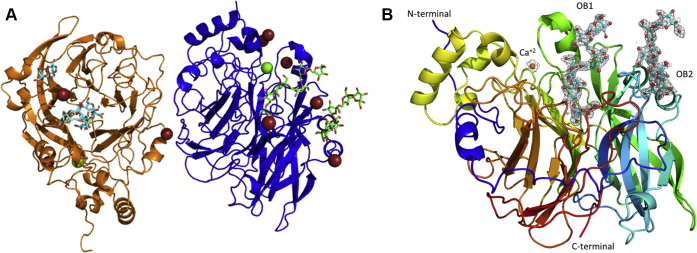
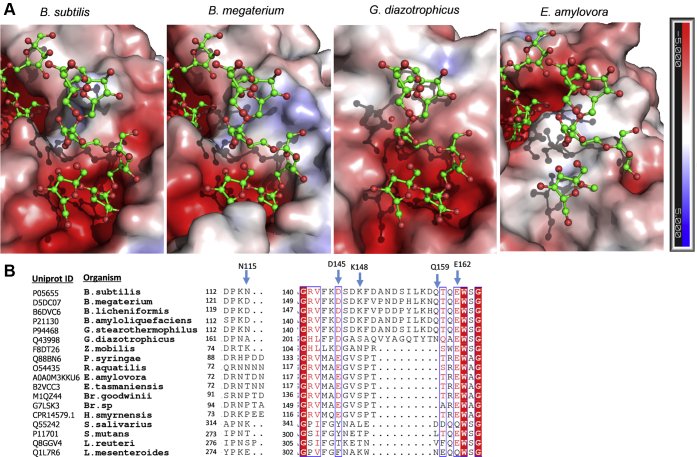
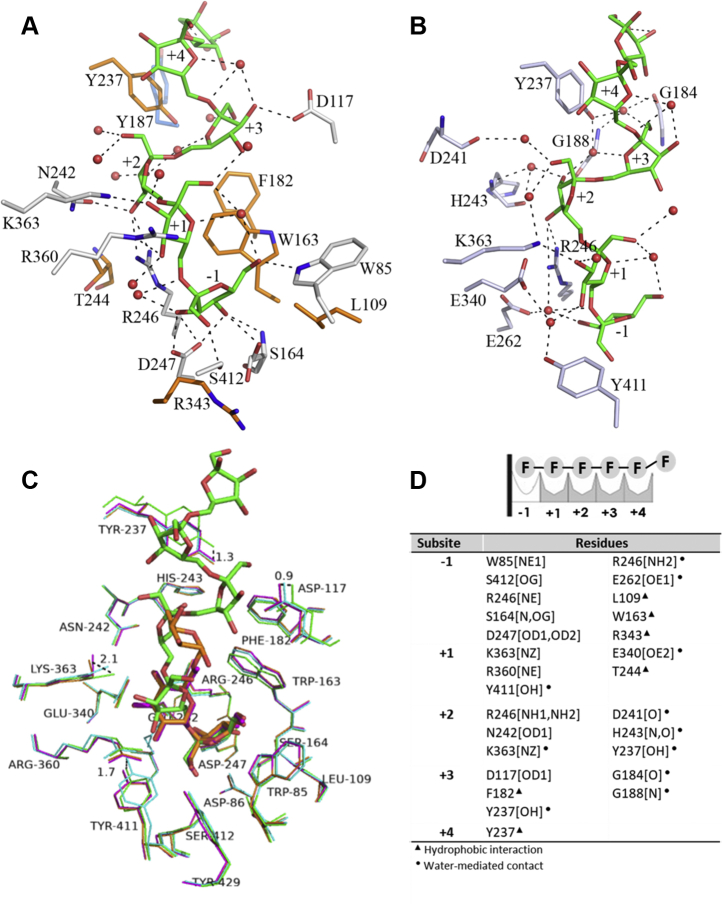
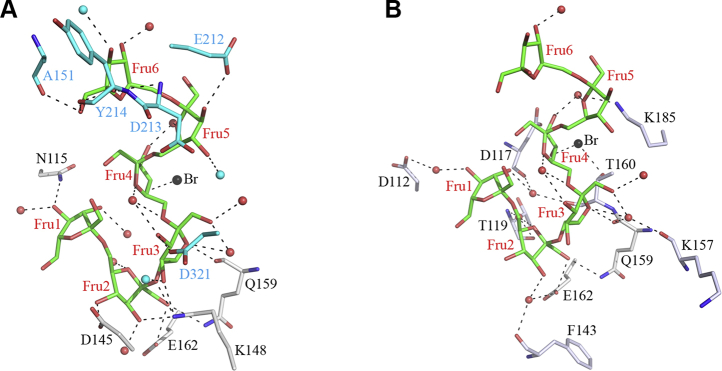
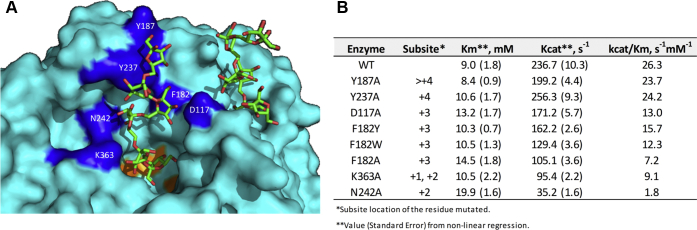
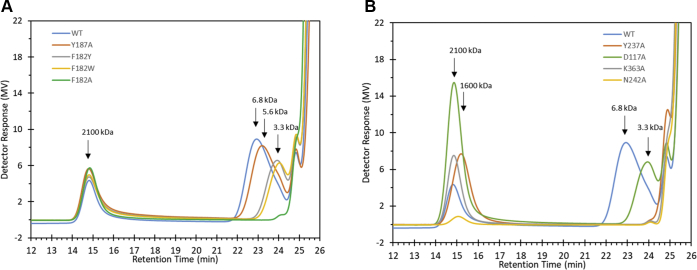
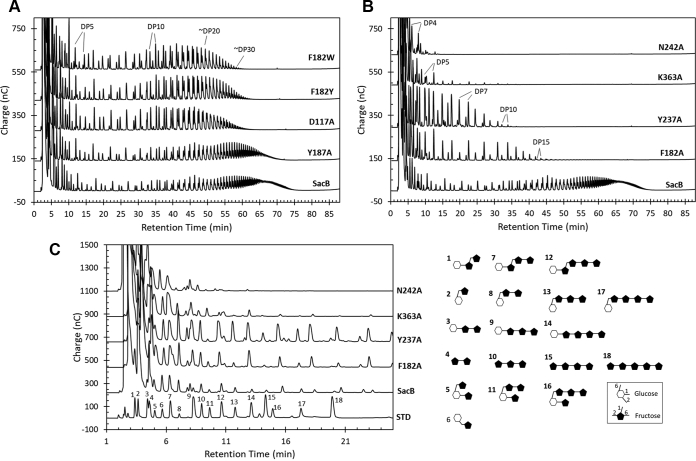
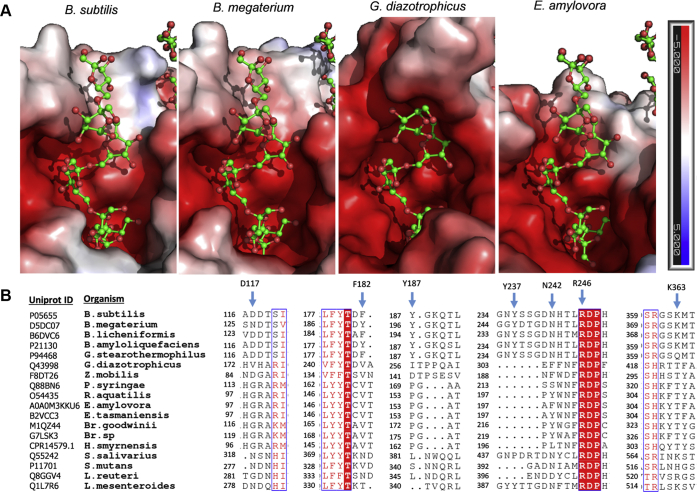
Levansucrases (LSs) synthesize levan, a β2-6-linked fructose polymer, by successively transferring the fructosyl moiety from sucrose to a growing acceptor molecule. Elucidation of the levan polymerization mechanism is important for using LSs in the production of size-defined products for application in the food and pharmaceutical industries. For a deeper understanding of the levan synthesis reaction, we determined the crystallographic structure of Bacillus subtilis LS (SacB) in complex with a levan-type fructooligosaccharide and utilized site-directed mutagenesis to identify residues involved in substrate binding. The presence of a levanhexaose molecule in the central catalytic cavity allowed us to identify five substrate-binding subsites (-1, +1, +2, +3, and +4). Mutants affecting residues belonging to the identified acceptor subsites showed similar substrate affinity (Km) values to the wildtype (WT) Km value but had a lower turnover number and transfructosylation/hydrolysis ratio. Of importance, compared with the WT, the variants progressively yielded smaller-sized low-molecular-weight levans, as the affected subsites that were closer to the catalytic site, but without affecting their ability to synthesized high-molecular-weight levans. Furthermore, an additional oligosaccharide-binding site 20 Å away from the catalytic pocket was identified, and its potential participation in the elongation mechanism is discussed. Our results clarify, for the first time, the interaction of the enzyme with an acceptor/product oligosaccharide and elucidate the molecular basis of the nonprocessive levan elongation mechanism of LSs.
蔗糖酶(LSs)通过将果糖基部分从蔗糖连续转移到不断增长的受体分子上来合成蔗果聚糖,即β2-6 连接的果糖聚合物。阐明蔗果聚糖聚合机制对于 LSs 在食品和制药工业中用于生产具有确定大小的产品具有重要意义。为了更深入地了解蔗果聚糖合成反应,我们确定了枯草芽孢杆菌 LS(SacB)与蔗果聚糖型低聚果糖复合物的晶体结构,并利用定点突变技术鉴定了参与底物结合的残基。在中央催化腔中存在蔗果六糖分子,使我们能够鉴定五个底物结合亚位点(-1、+1、+2、+3 和+4)。影响属于鉴定出的受体亚位点的残基的突变体与野生型(WT)Km 值具有相似的底物亲和力(Km)值,但周转数和转果糖基/水解比较低。重要的是,与 WT 相比,变体逐渐产生更小的低分子量蔗果聚糖,因为受影响的亚位点更接近催化位点,但不影响它们合成高分子量蔗果聚糖的能力。此外,还鉴定了一个距离催化口袋 20Å 的额外寡糖结合位点,并讨论了其在延伸机制中的潜在参与。我们的结果首次阐明了酶与受体/产物寡糖的相互作用,并阐明了 LSs 非连续蔗果聚糖延伸机制的分子基础。