Weissberger Gali H, Mosqueda Laura, Nguyen Annie L, Axelrod Jenna, Nguyen Caroline P, Boyle Patricia A, Spreng Nathan, Han S Duke
Department of Family Medicine, USC Keck School of Medicine, Alhambra, CA, United States.
Interdisciplinary Department of Social Sciences, Bar-Ilan University, Ramat Gan, Israel.
Front Aging Neurosci. 2020 Nov 12;12:583433. doi: 10.3389/fnagi.2020.583433. eCollection 2020.
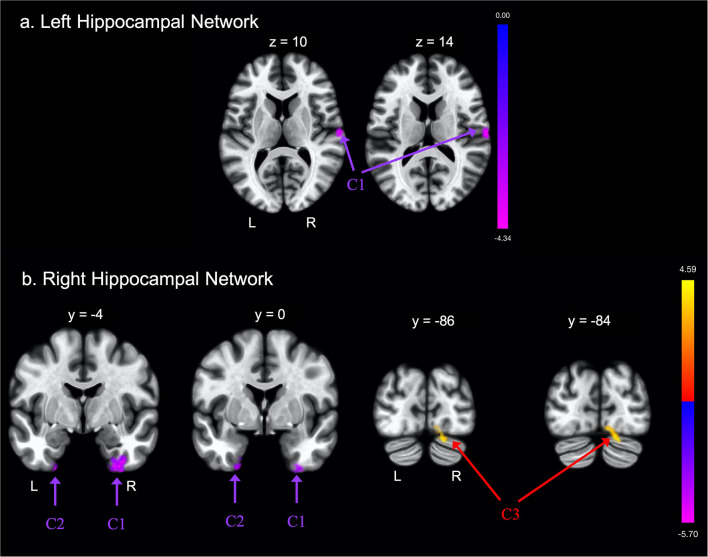
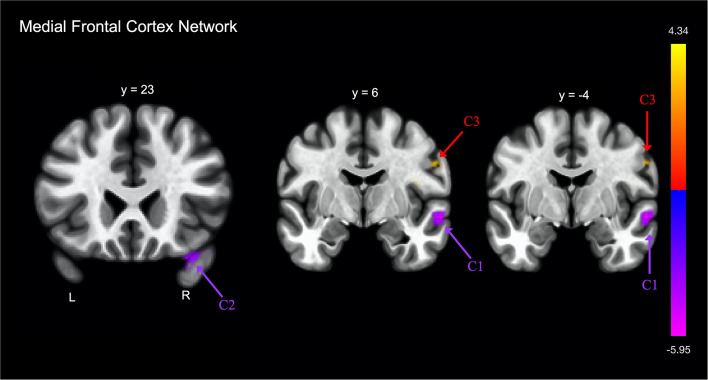
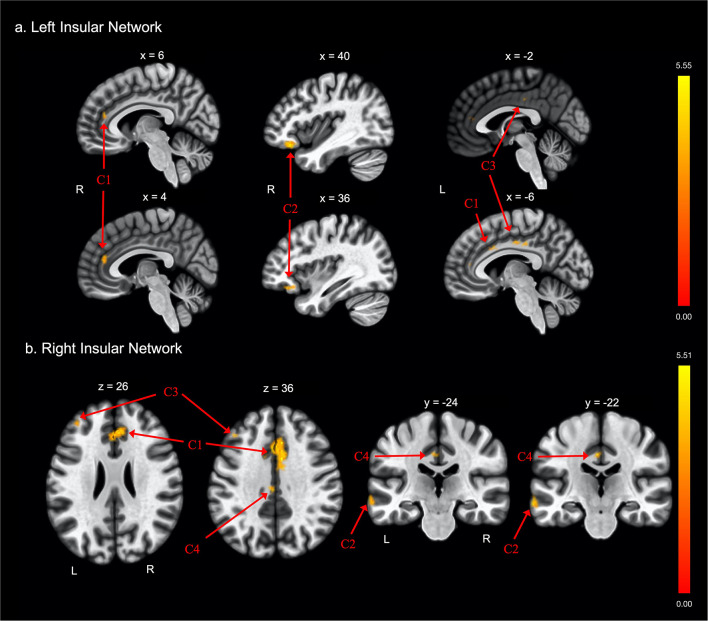
Financial exploitation (FE) in old age is devastating and common; however, the neural correlates of FE are poorly understood. Previous studies of FE in older adults have implicated declines in decision making and social cognition as two risk factors for FE in later life. Here we examined whether functional connectivity among brain regions implicated in decision making and social cognition differed for those with an experience of FE vs. those without. Participants included 16 older adults without cognitive impairment who reported FE (Mean age = 70.5, 62.5% female, Mean education = 16.0 years) and 16 demographically and cognitively matched adults who denied a history of FE (Mean age = 65.1, 37.5% female, Mean education = 15.1 years). Measures of whole-brain resting-state functional connectivity in the hippocampus, insula, and medial frontal cortex were derived for each group. Compared to the non-FE group, FE was associated with greater functional connectivity between the right hippocampus and bilateral temporal regions, and less functional connectivity between the right hippocampus and the right cerebellum and bilateral lingual gyri. The FE group showed less connectivity between the right and left insula and cingulate cortex, and between the right insula and regions of the left lateral temporal gyrus and dorsolateral prefrontal cortex. Finally, the FE group showed greater functional connectivity between the medial frontal cortex and the right lateral temporal gyrus and orbitofrontal cortex, and less functional connectivity with the right pre- and postcentral gyri. Results suggest that perceived FE in old age is associated with whole-brain functional connectivity differences involving the hippocampus, insula, and medial frontal cortex, consistent with models implicating age-associated changes in decision making and social cognition in FE.
老年期的经济剥削(FE)具有毁灭性且很常见;然而,人们对FE的神经关联了解甚少。先前针对老年人FE的研究表明,决策能力和社会认知能力下降是晚年FE的两个风险因素。在此,我们研究了有FE经历者与无FE经历者在决策和社会认知相关脑区之间的功能连接是否存在差异。参与者包括16名无认知障碍且报告有FE经历的老年人(平均年龄 = 70.5岁,62.5%为女性,平均受教育年限 = 16.0年)以及16名在人口统计学和认知方面匹配且否认有FE病史的成年人(平均年龄 = 65.1岁,37.5%为女性,平均受教育年限 = 15.1年)。为每组获取了海马体、脑岛和内侧前额叶皮质的全脑静息态功能连接测量值。与非FE组相比,FE与右侧海马体和双侧颞叶区域之间更强的功能连接以及右侧海马体与右侧小脑和双侧舌回之间较弱的功能连接有关。FE组在右侧和左侧脑岛与扣带回皮质之间,以及右侧脑岛与左侧颞中回和背外侧前额叶皮质区域之间的连接较少。最后,FE组在内侧前额叶皮质与右侧颞中回和眶额皮质之间表现出更强的功能连接,而与右侧中央前回和中央后回的功能连接较弱。结果表明,老年期感知到的FE与涉及海马体、脑岛和内侧前额叶皮质的全脑功能连接差异有关,这与在FE中涉及决策和社会认知方面与年龄相关变化的模型一致。