Charles Christopher J, Li Renee R, Yeung Teresa, Mazlan Stephane M Ibraham, Lai Ruenn Chai, de Kleijn Dominique P V, Lim Sai Kiang, Richards A Mark
Cardiovascular Research Institute (CVRI), National University Heart Centre, Singapore, Singapore.
Department of Surgery, Yong Loo Lin School of Medicine, National University of Singapore, Singapore, Singapore.
Front Cardiovasc Med. 2020 Nov 16;7:601990. doi: 10.3389/fcvm.2020.601990. eCollection 2020.
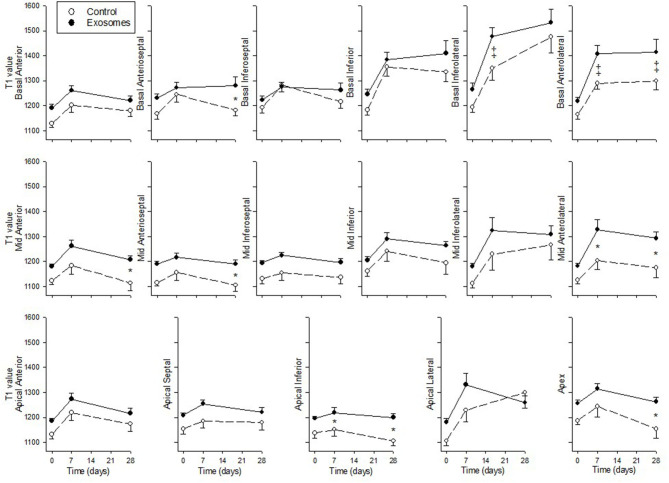
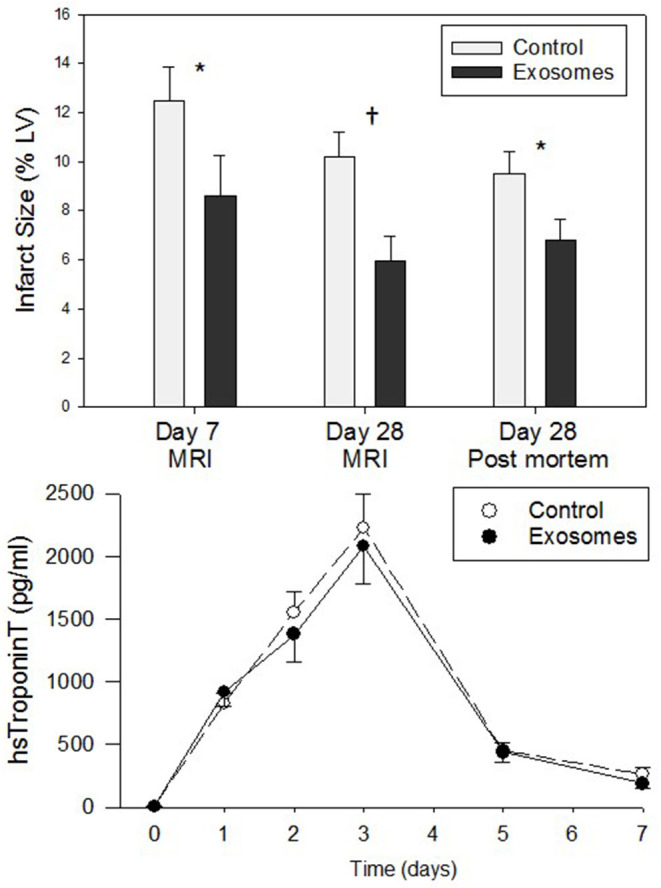
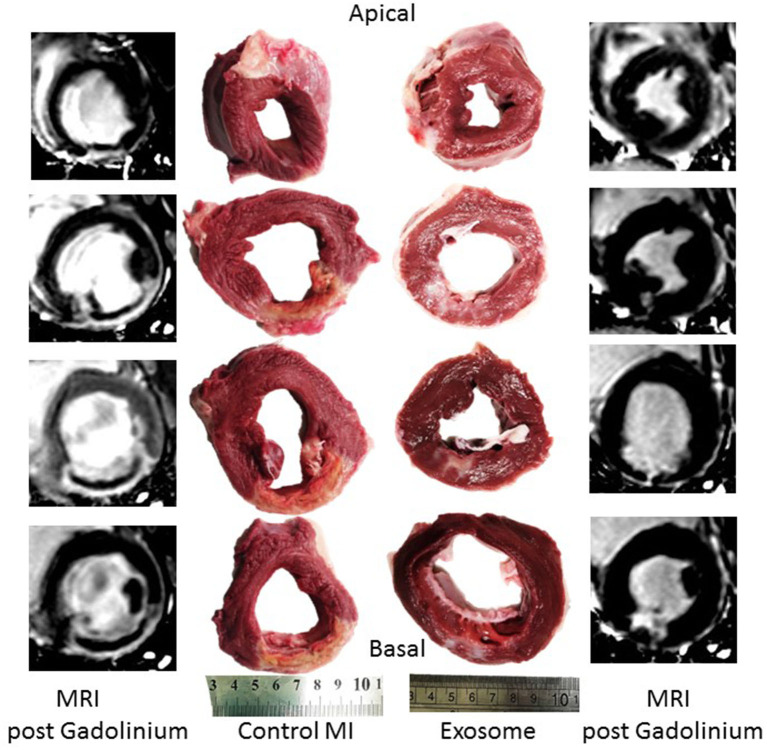
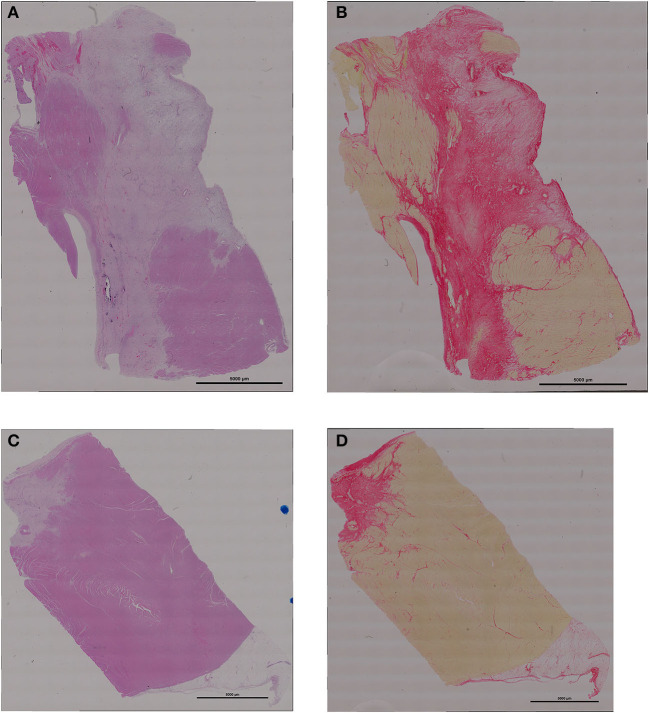
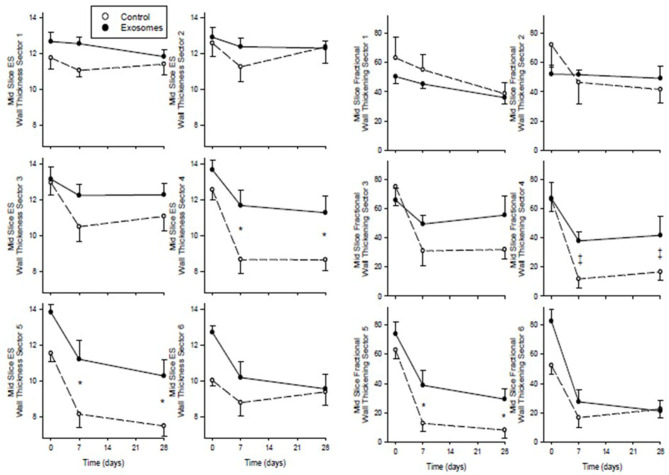
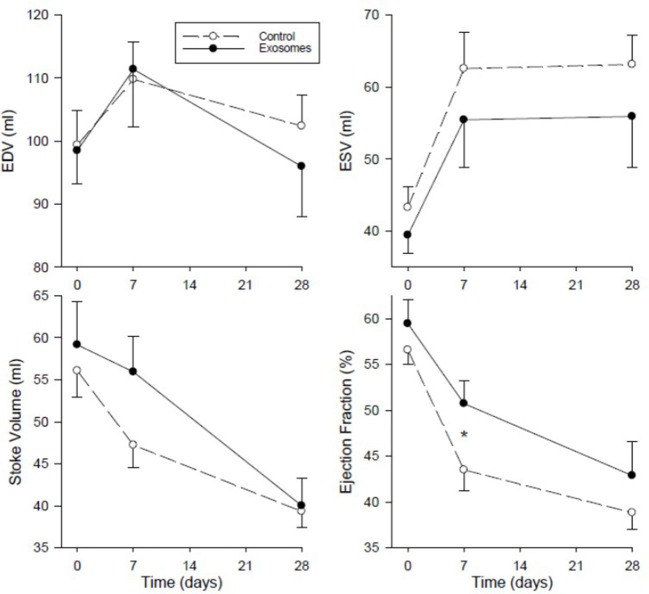
The observations that mesenchymal stem cells (MSCs) exert cardiac protection and repair via their secretome with the active component(s) identified as exosomes underpinned our test of the efficacy of MSC exosomes in a porcine model of myocardial infarction (MI) when administered systemically by the convenient method of intravenous (IV) bolus injection. Results show that 7 days of IV exosomes results in clear reduction (30-40%) of infarct size measured at both 7 and 28 days post-MI, despite near identical release of hs Troponin T. Together with reduced infarct size, exosome treatment reduced transmurality and lessened wall thinning in the infarct zone. Exosome treated pigs showed relative preservation of LV function with significant amelioration of falls in fractional wall thickening compared with control. However, global measures of LV function were less protected by exosome treatment. It is possible that greater preservation of global LV function may have been attenuated by increased cardiac fibrosis, as T1 values showed significant increase in the exosome pigs compared to control particularly in the infarct related segments. Taken together, these results show clear effects of IV exosomes administered over 7 days to reduce infarct size with relatively preserved cardiac function compared to control treated infarct pigs.
间充质干细胞(MSCs)通过其分泌组发挥心脏保护和修复作用,其中的活性成分被确定为外泌体,这一观察结果支持了我们在猪心肌梗死(MI)模型中通过方便的静脉推注法全身给药来测试MSC外泌体疗效的研究。结果表明,静脉注射外泌体7天可使心肌梗死后7天和28天测量的梗死面积明显减小(30%-40%),尽管高敏肌钙蛋白T的释放量几乎相同。除了梗死面积减小外,外泌体治疗还降低了透壁性,并减轻了梗死区域的心肌壁变薄。与对照组相比,接受外泌体治疗的猪左心室功能相对得以保留,室壁增厚分数下降得到显著改善。然而,外泌体治疗对左心室功能的整体指标保护作用较小。与对照组相比,外泌体治疗组猪的T1值显著升高,尤其是在梗死相关节段,这可能是由于心脏纤维化增加,导致左心室整体功能的更大程度保留受到了削弱。综上所述,这些结果表明,与对照组相比,连续7天静脉注射外泌体可明显减小梗死面积,并相对保留心脏功能。