Desai Rishi J, Varma Vijay R, Gerhard Tobias, Segal Jodi, Mahesri Mufaddal, Chin Kristyn, Nonnenmacher Edward, Gabbeta Avinash, Mammen Anup M, Varma Sudhir, Horton Daniel B, Kim Seoyoung C, Schneeweiss Sebastian, Thambisetty Madhav
Division of Pharmacoepidemiology and Pharmacoeconomics Department of Medicine Brigham and Women's Hospital and Harvard Medical School Boston Massachusetts USA.
Clinical and Translational Neuroscience Section Laboratory of Behavioral Neuroscience National Institute on Aging Baltimore Maryland USA.
Alzheimers Dement (N Y). 2020 Nov 26;6(1):e12095. doi: 10.1002/trc2.12095. eCollection 2020.
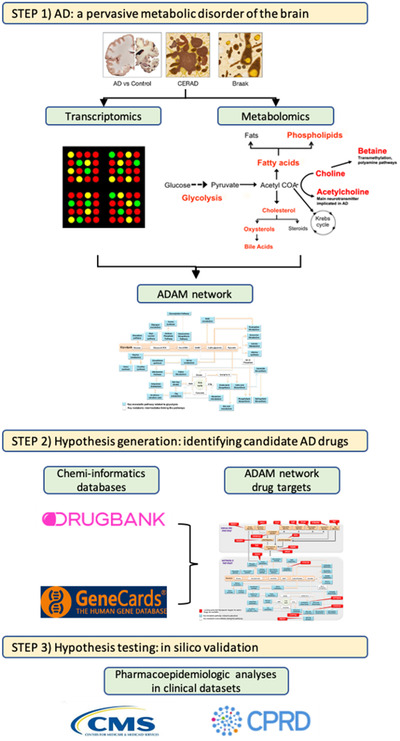
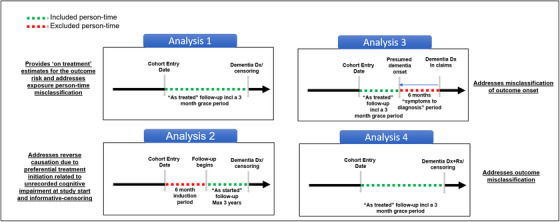
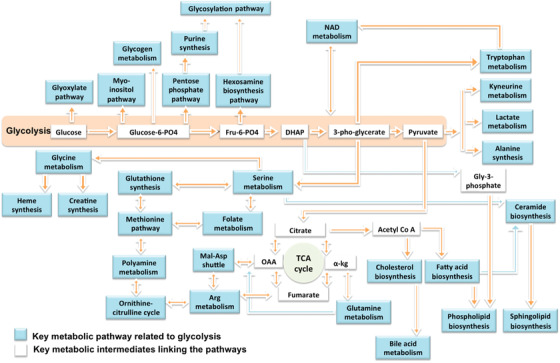
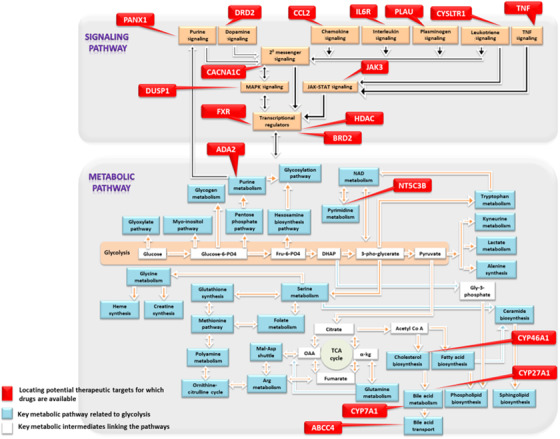
Drug discovery for disease-modifying therapies for Alzheimer's disease and related dementias (ADRD) based on the traditional paradigm of experimental animal models has been disappointing. We describe the rationale and design of the Drug Repurposing for Effective Alzheimer's Medicines (DREAM) study, an innovative multidisciplinary alternative to traditional drug discovery. First, we use a systems biology perspective in the "hypothesis generation" phase to identify metabolic abnormalities that may either precede or interact with the accumulation of ADRD neuropathology, accelerating the expression of clinical symptoms of the disease. Second, in the "hypothesis refinement" phase we propose use of large patient cohorts to test whether drugs approved for other indications that also target metabolic drivers of ADRD pathogenesis might alter the trajectory of the disease. We emphasize key challenges in population-based pharmacoepidemiologic studies aimed at quantifying the association between medication use and ADRD onset and outline robust causal inference principles to safeguard against common pitfalls. Candidate ADRD treatments emerging from this approach will hold promise as plausible disease-modifying therapies for evaluation in randomized controlled trials.
基于传统实验动物模型范式来发现用于治疗阿尔茨海默病及相关痴呆症(ADRD)的疾病修饰疗法一直令人失望。我们描述了“有效阿尔茨海默病药物的药物重新利用”(DREAM)研究的基本原理和设计,这是一种创新的多学科方法,可替代传统的药物发现方式。首先,我们在“假设生成”阶段采用系统生物学视角,以识别可能先于ADRD神经病理学积累或与之相互作用的代谢异常,从而加速疾病临床症状的表达。其次,在“假设细化”阶段,我们提议使用大型患者队列来测试那些已被批准用于其他适应症、同时也靶向ADRD发病机制代谢驱动因素的药物是否可能改变疾病进程。我们强调了基于人群的药物流行病学研究中的关键挑战,这些研究旨在量化药物使用与ADRD发病之间的关联,并概述了稳健的因果推断原则,以防范常见的陷阱。通过这种方法产生的ADRD候选治疗方法有望成为在随机对照试验中进行评估的合理疾病修饰疗法。