Al Dahhan Noor Z, Kirby John R, Brien Donald C, Gupta Rina, Harrison Allyson, Munoz Douglas P
Centre for Neuroscience Studies, Queen's University, Kingston, ON K7L 3N6, Canada.
Faculty of Education, Queen's University, Kingston, ON K7M 5R7, Canada.
Brain Commun. 2020 Oct 17;2(2):fcaa173. doi: 10.1093/braincomms/fcaa173. eCollection 2020.
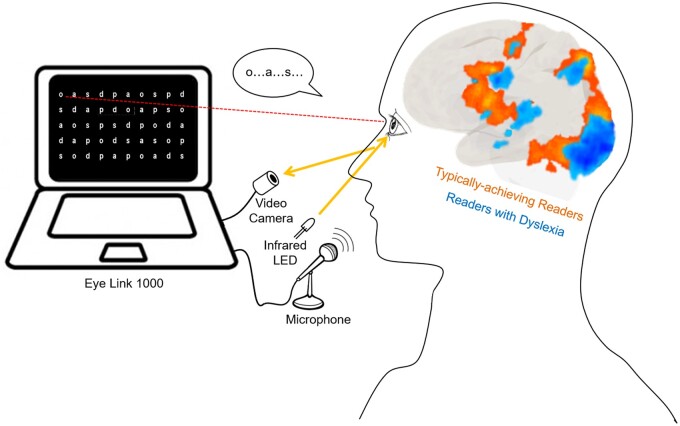
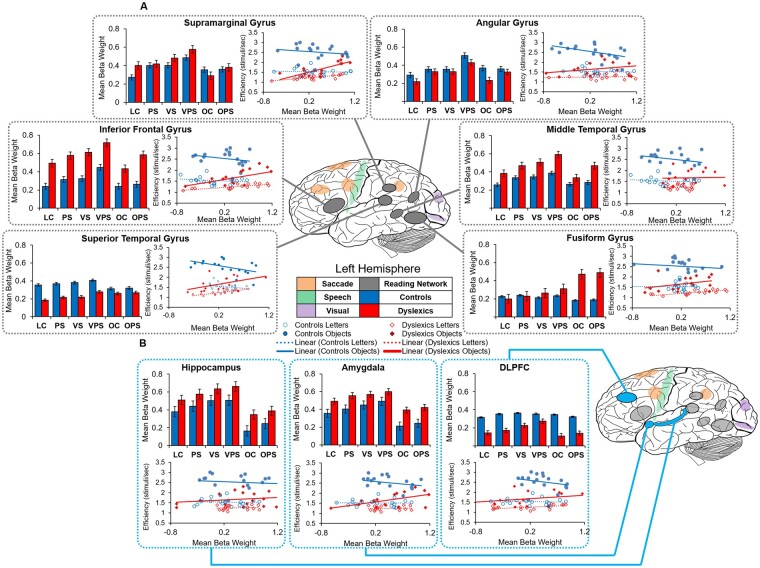
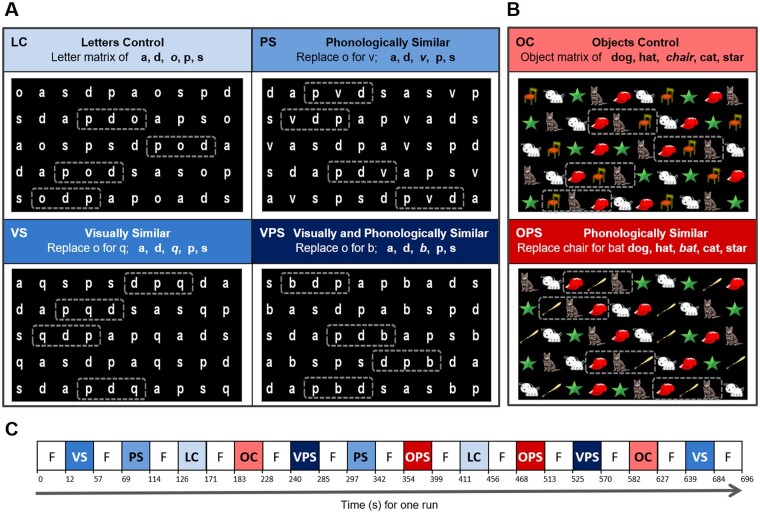
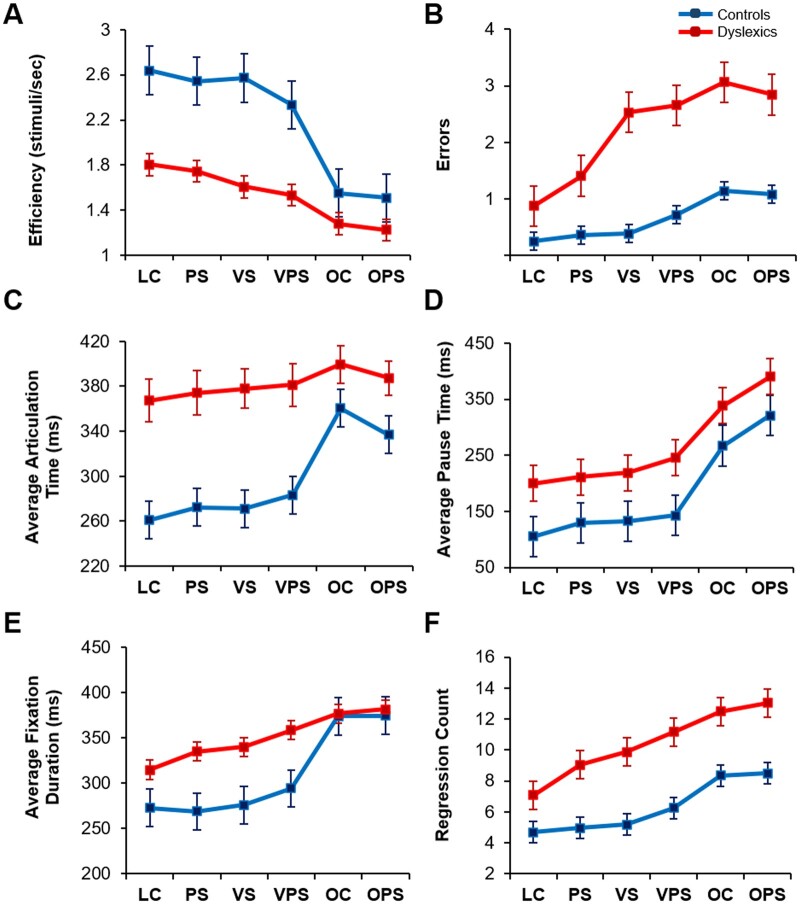
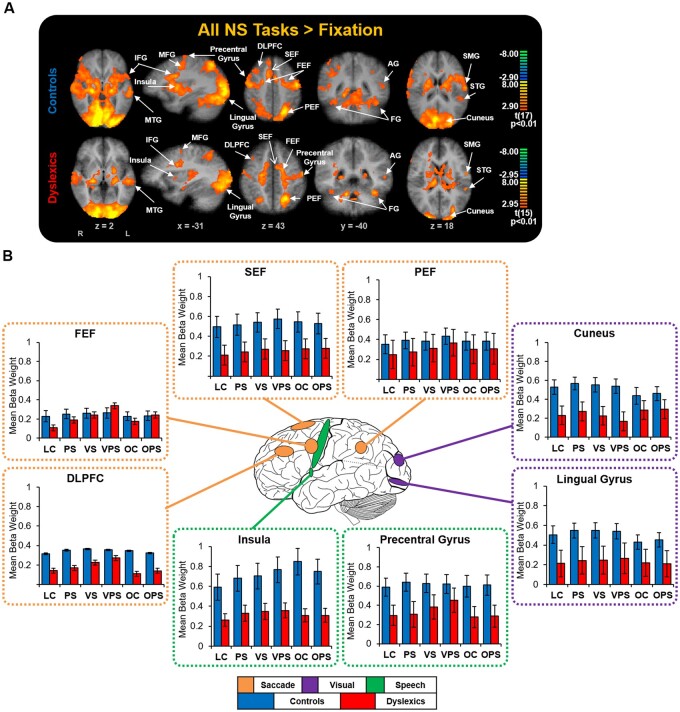
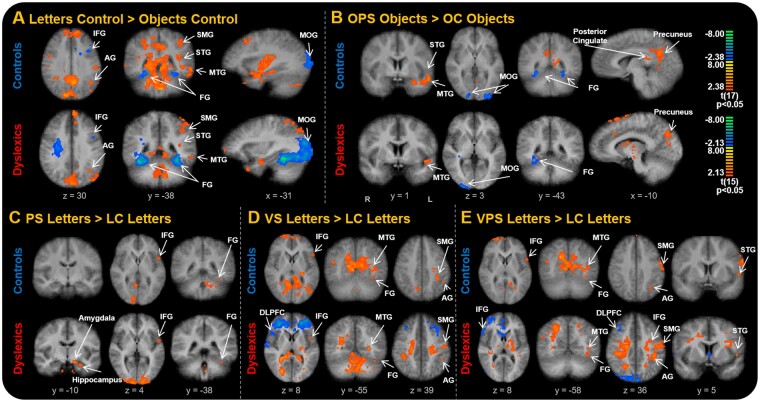
We examined the naming speed performance of 18 typically achieving and 16 dyslexic adults while simultaneously recording eye movements, articulations and fMRI data. Naming speed tasks, which require participants to name a list of letters or objects, have been proposed as a proxy for reading and are thought to recruit similar reading networks in the left hemisphere of the brain as more complex reading tasks. We employed letter and object naming speed tasks, with task manipulations to make the stimuli more or less phonologically and/or visually similar. Compared to typically achieving readers, readers with dyslexia had a poorer behavioural naming speed task performance, longer fixation durations, more regressions and increased activation in areas of the reading network in the left-hemisphere. Whereas increased network activation was positively associated with performance in dyslexics, it was negatively related to performance in typically achieving readers. Readers with dyslexia had greater bilateral activation and recruited additional regions involved with memory, namely the amygdala and hippocampus; in contrast, the typically achieving readers additionally activated the dorsolateral prefrontal cortex. Areas within the reading network were differentially activated by stimulus manipulations to the naming speed tasks. There was less efficient naming speed behavioural performance, longer fixation durations, more regressions and increased neural activity when letter stimuli were both phonologically and visually similar. Discussion focuses on the differences in activation within the reading network, how they are related to behavioural task differences, and how progress in furthering the understanding of the relationship between behavioural performance and brain activity can change the overall trajectories of children with reading difficulties by contributing to both early identification and remediation processes.
我们研究了18名发育正常的成年人和16名阅读障碍成年人的命名速度表现,同时记录他们的眼动、发音和功能磁共振成像(fMRI)数据。命名速度任务要求参与者说出一系列字母或物体的名称,该任务已被提议作为阅读的替代指标,并且被认为与更复杂的阅读任务一样,会在大脑左半球募集相似的阅读网络。我们采用了字母和物体命名速度任务,并通过任务操作使刺激在语音和/或视觉上或多或少地相似。与发育正常的读者相比,阅读障碍读者在行为命名速度任务中的表现较差,注视时间更长,回视更多,并且左半球阅读网络区域的激活增加。虽然网络激活增加与阅读障碍者的表现呈正相关,但与发育正常的读者的表现呈负相关。阅读障碍读者有更大的双侧激活,并募集了与记忆有关的额外区域,即杏仁核和海马体;相比之下,发育正常的读者还激活了背外侧前额叶皮层。阅读网络内的区域因对命名速度任务的刺激操作而有不同程度的激活。当字母刺激在语音和视觉上都相似时,命名速度行为表现的效率较低,注视时间更长,回视更多,神经活动增加。讨论集中在阅读网络内激活的差异、它们如何与行为任务差异相关,以及在进一步理解行为表现与大脑活动之间的关系方面取得的进展如何通过促进早期识别和补救过程来改变有阅读困难儿童的整体发展轨迹。