Edmond and Lily Safra Center for Brain Sciences (ELSC), Hebrew University, Jerusalem, Israel.
The Alexander Silberman Institute of Life Sciences, Hebrew University, Jerusalem, Israel.
PLoS Comput Biol. 2020 Dec 11;16(12):e1008497. doi: 10.1371/journal.pcbi.1008497. eCollection 2020 Dec.
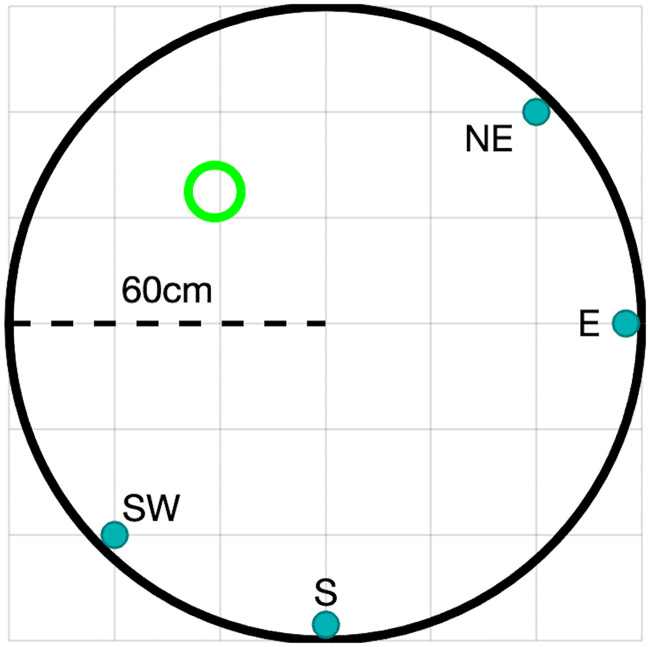
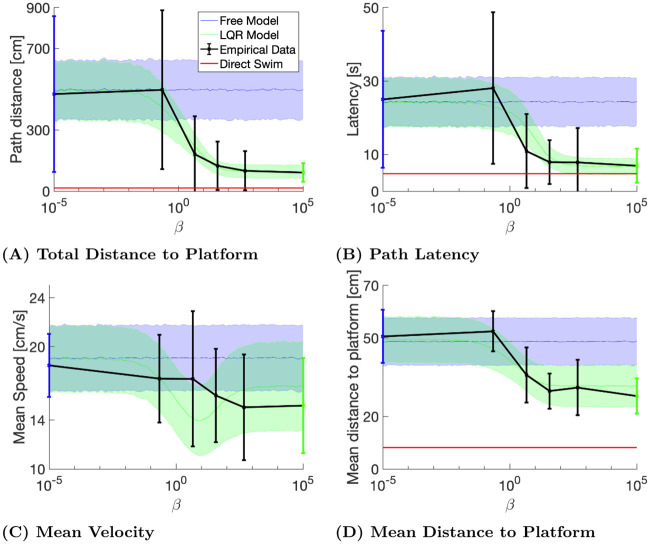
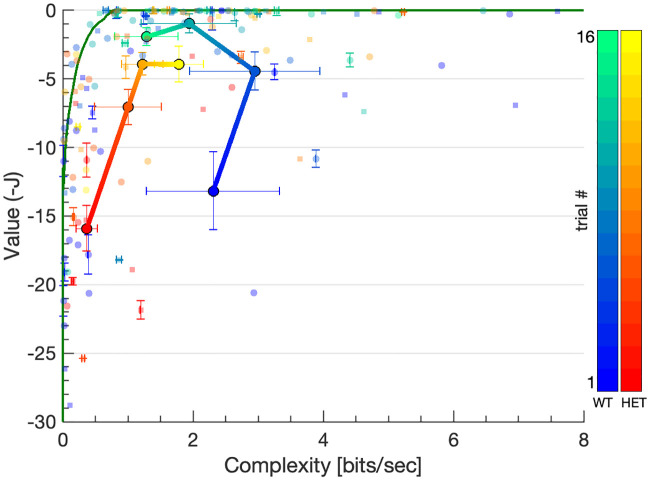
We introduce a novel methodology for describing animal behavior as a tradeoff between value and complexity, using the Morris Water Maze navigation task as a concrete example. We develop a dynamical system model of the Water Maze navigation task, solve its optimal control under varying complexity constraints, and analyze the learning process in terms of the value and complexity of swimming trajectories. The value of a trajectory is related to its energetic cost and is correlated with swimming time. Complexity is a novel learning metric which measures how unlikely is a trajectory to be generated by a naive animal. Our model is analytically tractable, provides good fit to observed behavior and reveals that the learning process is characterized by early value optimization followed by complexity reduction. Furthermore, complexity sensitively characterizes behavioral differences between mouse strains.
我们介绍了一种新的方法,用于描述动物行为,即将价值和复杂性作为权衡,以 Morris 水迷宫导航任务为例。我们开发了水迷宫导航任务的动力系统模型,在不断变化的复杂性约束下解决了其最优控制问题,并根据游泳轨迹的价值和复杂性来分析学习过程。轨迹的价值与它的能量成本有关,并与游泳时间相关。复杂性是一种新的学习指标,用于衡量一个轨迹被一个天真的动物产生的可能性。我们的模型是可分析的,与观察到的行为拟合良好,并揭示了学习过程的特点是早期的价值优化,然后是复杂性降低。此外,复杂性敏感地描述了不同小鼠品系之间的行为差异。