Department of Clinical Sciences, Swedish University of Agricultural Sciences, Uppsala, Sweden.
Research Group for Animal Health Technology, Khon Kaen University, Khon Kaen, Thailand.
PLoS One. 2020 Dec 11;15(12):e0243099. doi: 10.1371/journal.pone.0243099. eCollection 2020.
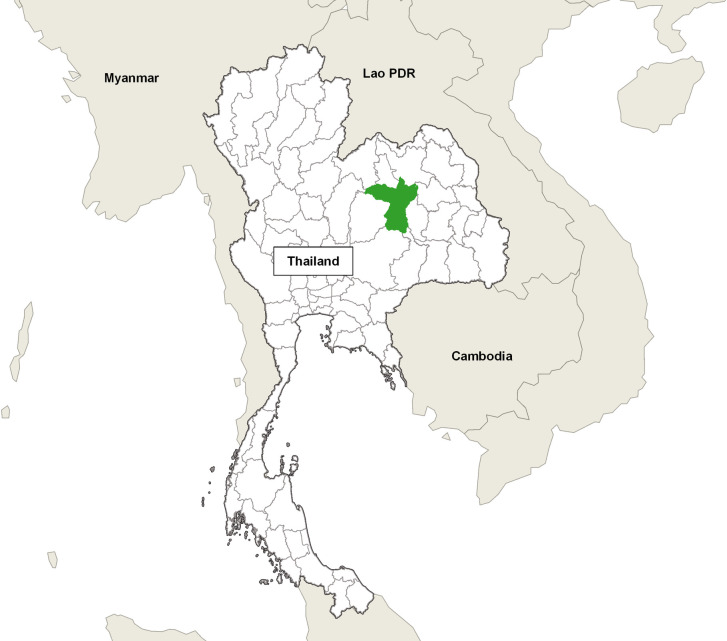
Understanding the patterns and drivers of antibiotic use in livestock is crucial for tailoring efficient incentives for responsible use of antibiotics. Here we compared routines for antibiotic use between pig farms of two different levels of intensification in Khon Kaen province in Thailand. Among the 113 family-owned small-scale farms (up to 50 sows) interviewed did 76% get advice from the pharmacy about how to use the antibiotics and 84% used it primarily for treating disease. Among the 51 medium-scale-farms (100-500 sows) belonging to two companies did 100% get advice about antibiotic use from the company's veterinarian (P<0.0001) and 94% used antibiotics mostly as disease preventive measure (P<0.0001). In 2 small scale farms 3rd generation cephalosporins, tylosin or colistin were used; antibiotics belonging to the group of highest priority critically important antimicrobials for human medicine. Enrofloxacin, belonging to the same group of antimicrobials, was used in 33% of the small-scale and 41% of the medium-scale farms. In the latter farms, the companies supplied 3-4 antibiotics belonging to different classes and those were the only antibiotics used in the farms. The median and mean estimated expenditure on antibiotics per sow was 4.8 USD (IQR = 5.8) for small-scale farms and 7 USD and 3.4 USD for the medium-scale farms belonging to the two respective companies. Our observations suggest to target the following areas when pig farming transitions from small-scale to medium-scale: (i) strengthening access to professional animal health services for all farmers, (ii) review of the competence and role of veterinary pharmacies in selling antibiotics and (iii) adjustment of farming company animal health protocols towards more medically rational use of antibiotics.
了解畜牧业中抗生素使用的模式和驱动因素对于制定负责任使用抗生素的有效激励措施至关重要。在这里,我们比较了泰国孔敬省两个不同集约化水平的猪场的抗生素使用常规。在接受采访的 113 家家庭所有的小型农场(最多 50 头母猪)中,有 76%的农场从药店获得了关于如何使用抗生素的建议,84%的农场主要将抗生素用于治疗疾病。在属于两家公司的 51 家中型农场(100-500 头母猪)中,100%的农场从公司兽医那里获得了关于抗生素使用的建议(P<0.0001),94%的农场主要将抗生素用作疾病预防措施(P<0.0001)。在 2 家小型农场中使用了第三代头孢菌素、泰乐菌素或黏菌素;这些抗生素属于人类医学中最重要的高度优先关键抗菌药物组。恩诺沙星,属于同一组的抗菌药物,在 33%的小型农场和 41%的中型农场中使用。在后一种农场中,公司供应了 3-4 种属于不同类别的抗生素,这些是农场中唯一使用的抗生素。每头母猪的抗生素估计支出中位数和平均值分别为小型农场 4.8 美元(IQR=5.8)和两家公司各自所属的中型农场 7 美元和 3.4 美元。我们的观察结果表明,从小规模向中等规模过渡时,应针对以下领域:(i)加强所有农民获得专业动物健康服务的机会,(ii)审查兽医药店在销售抗生素方面的能力和作用,以及(iii)调整养殖公司的动物健康方案,以更合理地使用抗生素。