Department of Neuroscience, University of Texas at Dallas, Dallas, Texas; Center for Advanced Pain Studies, University of Texas at Dallas, Dallas, Texas.
Department of Endodontics, University of Texas Health Science Center at San Antonio, San Antonio, Texas.
Biol Psychiatry. 2022 Jan 1;91(1):129-140. doi: 10.1016/j.biopsych.2020.09.022. Epub 2020 Oct 5.
There are clinically relevant sex differences in acute and chronic pain mechanisms, but we are only beginning to understand their mechanistic basis. Transcriptome analyses of rodent whole dorsal root ganglion (DRG) have revealed sex differences, mostly in immune cells. We examined the transcriptome and translatome of the mouse DRG with the goal of identifying sex differences.
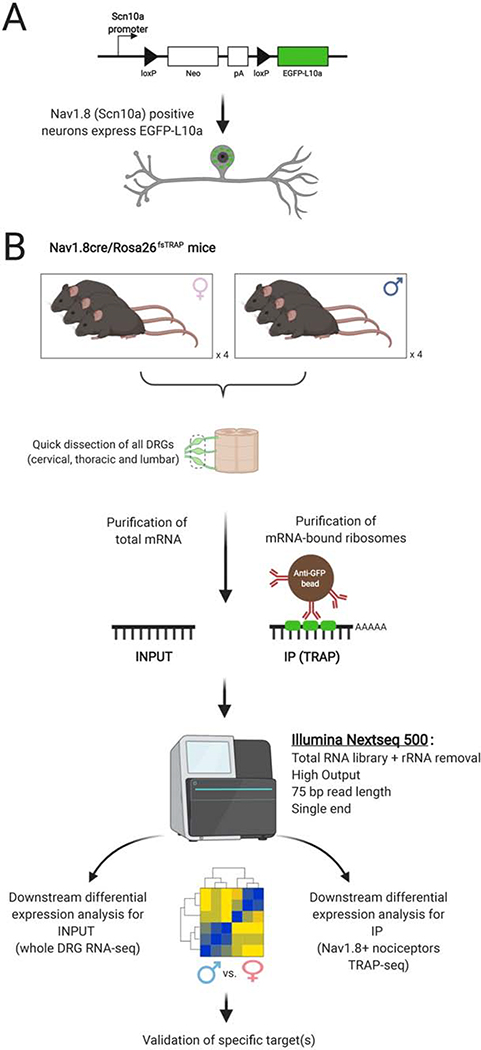
We used translating ribosome affinity purification sequencing and behavioral pharmacology to test the hypothesis that in Nav1.8-positive neurons, most of which are nociceptors, translatomes would differ by sex.
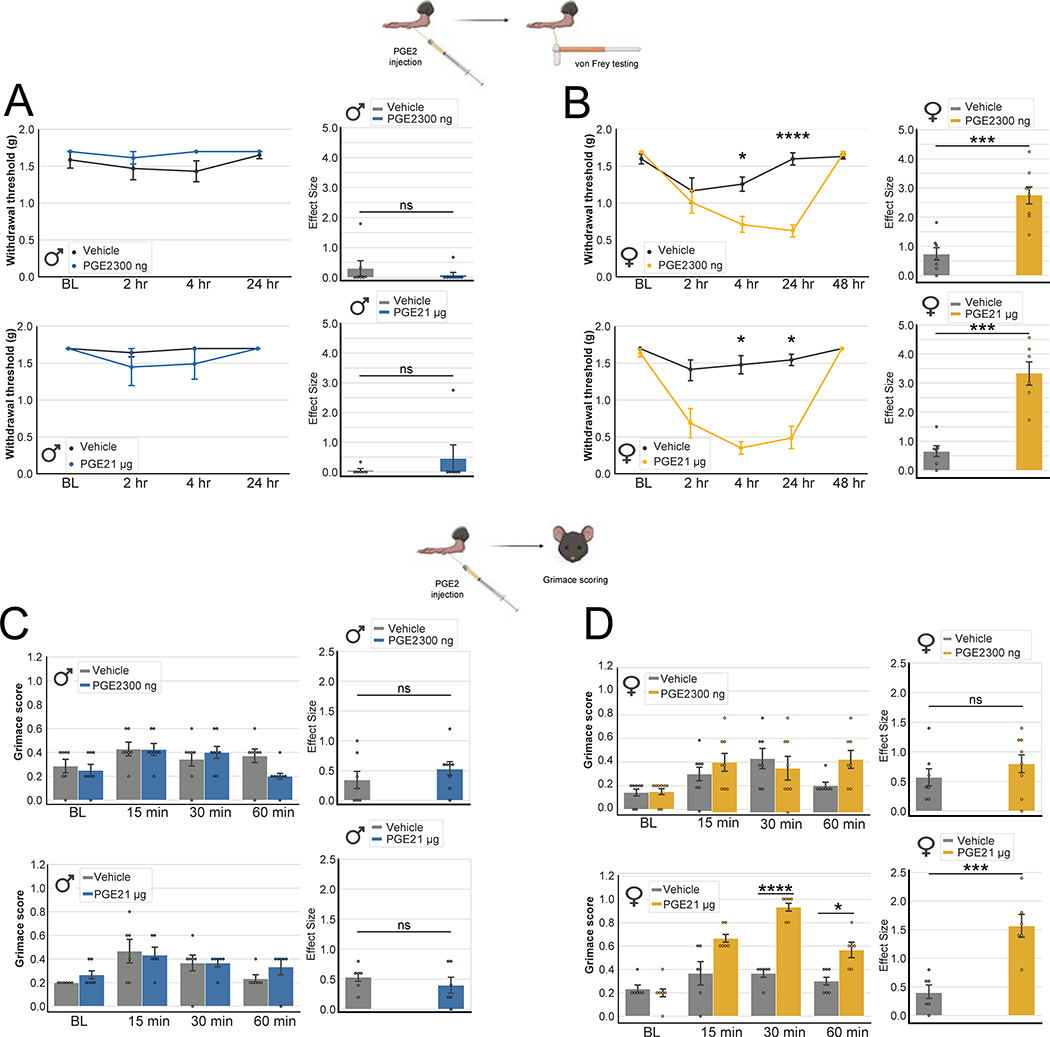
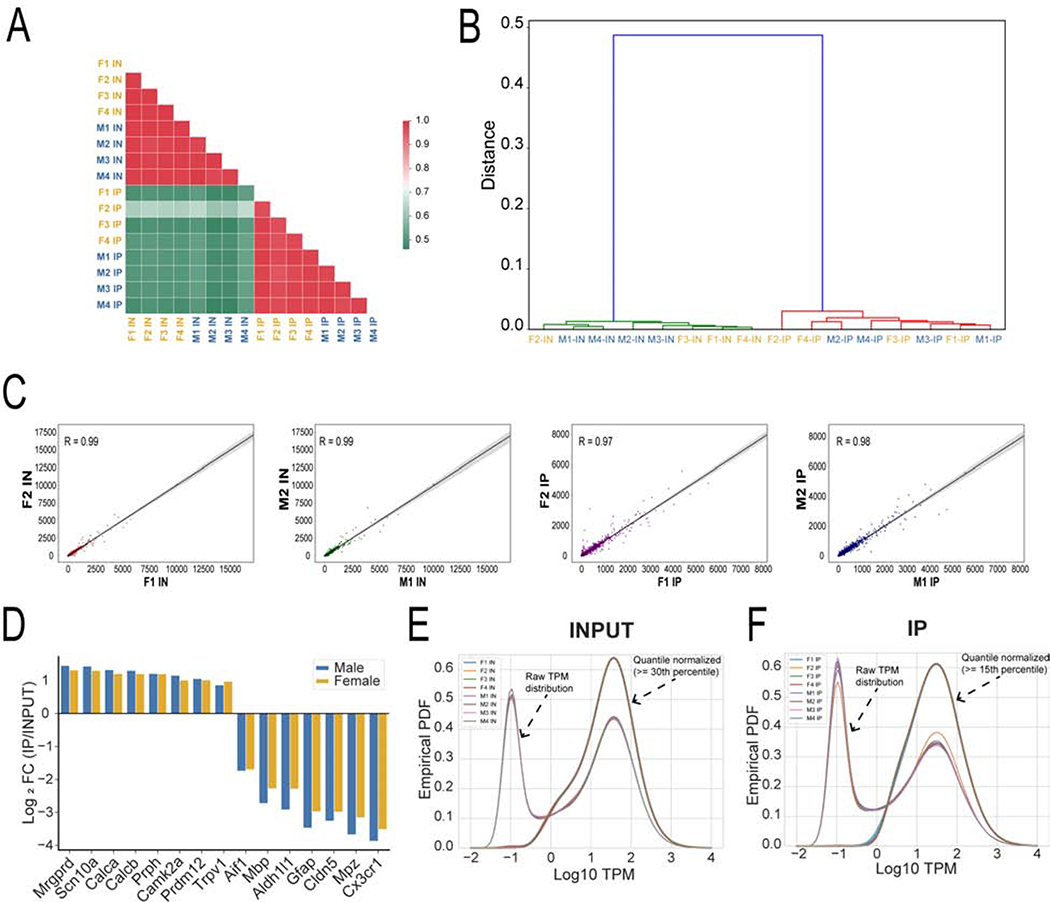
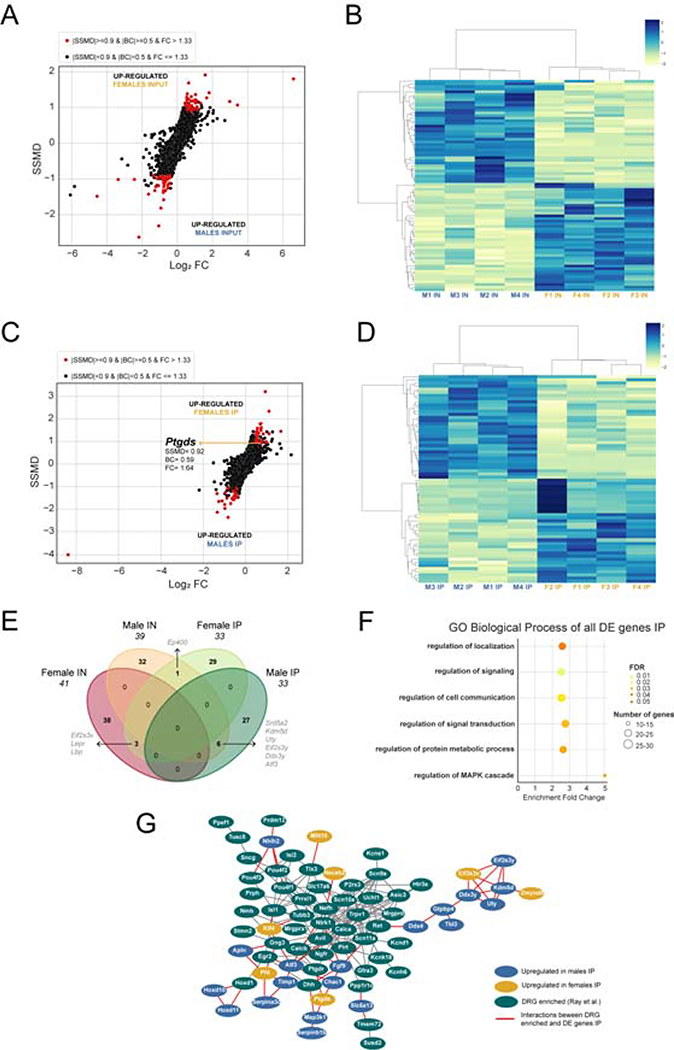
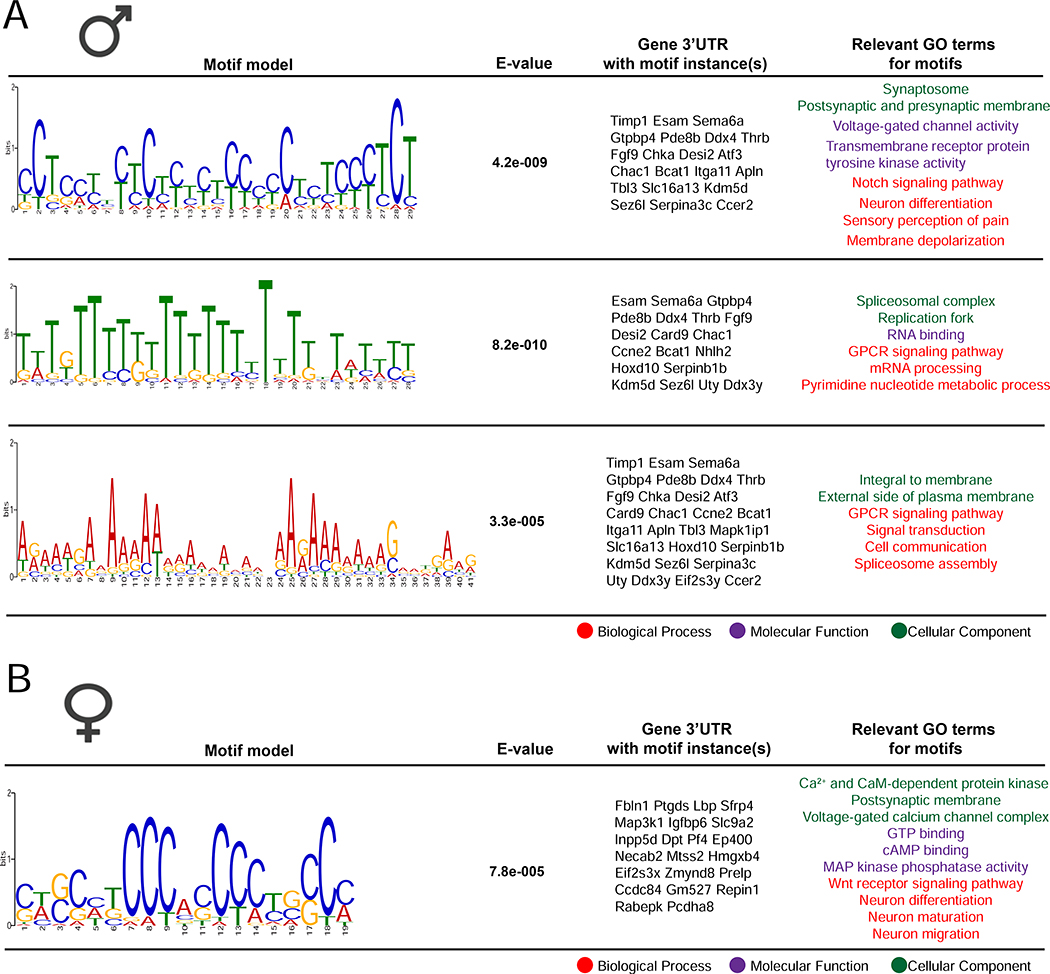
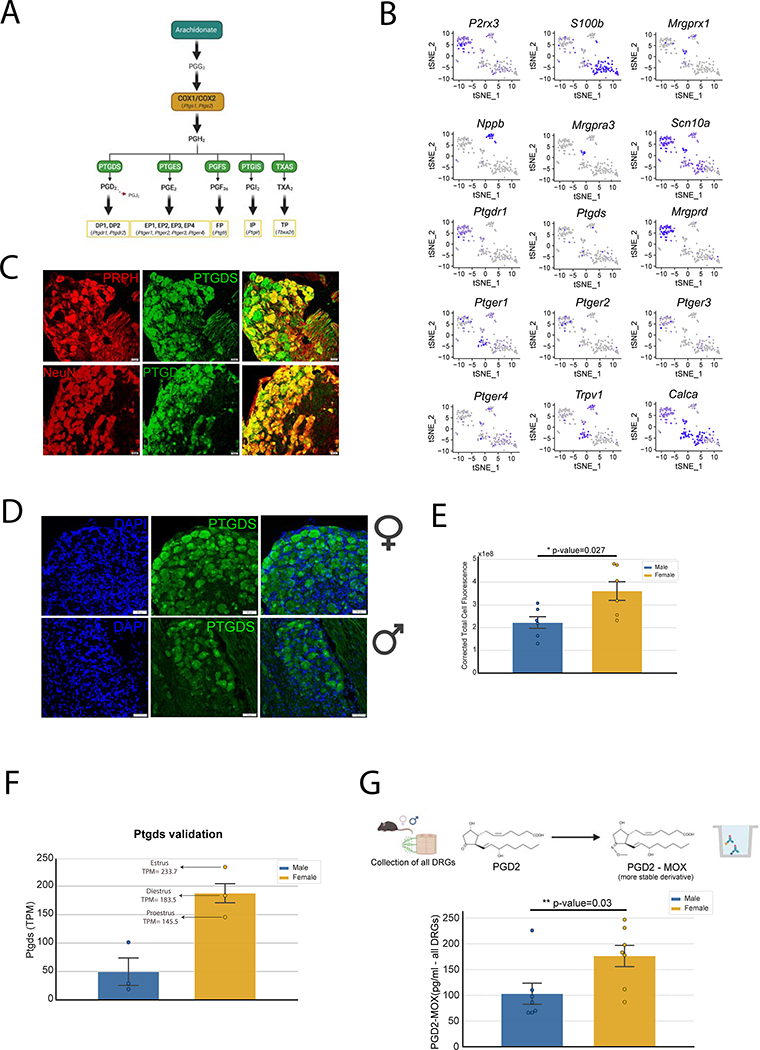
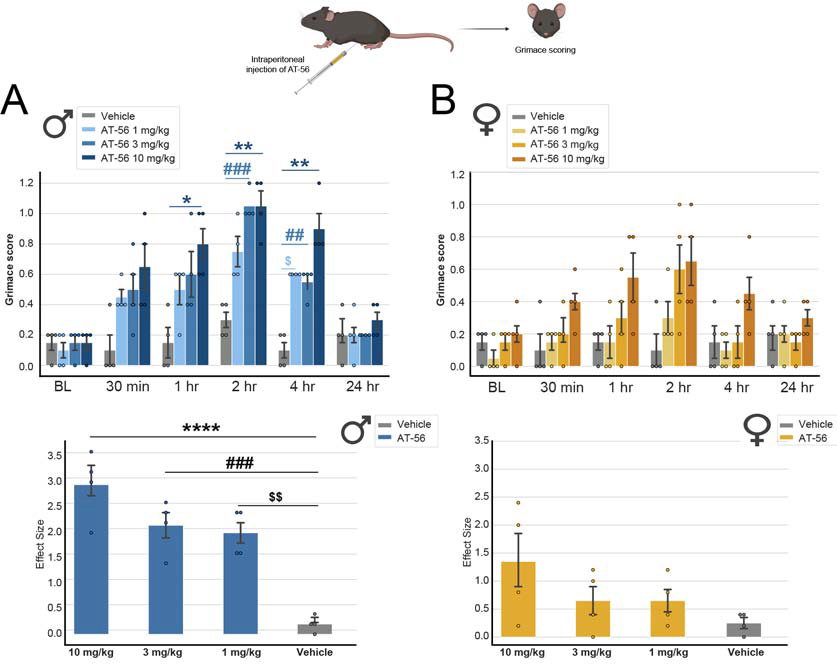
We found 80 genes with sex differential expression in the whole DRG transcriptome and 66 genes whose messenger RNAs were sex differentially actively translated (translatome). We also identified different motifs in the 3' untranslated region of messenger RNAs that were sex differentially translated. In further validation studies, we focused on Ptgds, which was increased in the translatome of female mice. The messenger RNA encodes the prostaglandin PGD synthesizing enzyme. We observed increased PTGDS protein and PGD in female mouse DRG. The PTGDS inhibitor AT-56 caused intense pain behaviors in male mice but was only effective at high doses in female mice. Conversely, female mice responded more robustly to another major prostaglandin, PGE, than did male mice. PTGDS protein expression was also higher in female cortical neurons, suggesting that DRG findings may be generalizable to other nervous system structures.
Our results demonstrate sex differences in nociceptor-enriched translatomes and reveal unexpected sex differences in one of the oldest known nociceptive signaling molecule families, the prostaglandins.
急性和慢性疼痛机制存在有临床意义的性别差异,但我们才刚刚开始了解其机制基础。对啮齿动物整个背根神经节(DRG)的转录组分析显示出性别差异,这些差异主要存在于免疫细胞中。我们检查了小鼠 DRG 的转录组和翻译组,以确定性别差异。
我们使用翻译核糖体亲和纯化测序和行为药理学来检验以下假设,即在 Nav1.8 阳性神经元(大多数为伤害感受器)中,翻译组会因性别而异。
我们在整个 DRG 转录组中发现了 80 个具有性别差异表达的基因,在信使 RNA 中发现了 66 个性别差异翻译的基因(翻译组)。我们还鉴定了信使 RNA 的 3'非翻译区中性别差异翻译的不同基序。在进一步的验证研究中,我们专注于 Ptgds,它在雌性小鼠的翻译组中增加。信使 RNA 编码前列腺素 PGD 合成酶。我们观察到雌性小鼠 DRG 中的 PTGDS 蛋白和 PGD 增加。PGDDS 抑制剂 AT-56 使雄性小鼠产生强烈的疼痛行为,但仅在雌性小鼠中高剂量有效。相反,雌性小鼠对另一种主要的前列腺素 PGE 的反应比雄性小鼠更强烈。PGDDS 蛋白表达在雌性皮质神经元中也更高,这表明 DRG 的发现可能适用于其他神经系统结构。
我们的结果表明伤害感受器丰富的翻译组存在性别差异,并揭示了已知最早的痛觉信号分子家族之一前列腺素中意想不到的性别差异。