Department of Thoracic Surgery, Affiliated Haikou Hospital of Xiangya Medical College, Central South University, Haikou, Hainan, China.
Department of Pathology, Affiliated Haikou Hospital of Xiangya Medical College, Central South University, Haikou, Hainan, China.
Cancer Med. 2021 Feb;10(3):806-823. doi: 10.1002/cam4.3655. Epub 2020 Dec 12.
TP53 mutation, one of the most frequent mutations in early-stage lung adenocarcinoma (LUAD), triggers a series of alterations in the immune landscape, progression, and clinical outcome of early-stage LUAD. Our study was designed to unravel the effects of TP53 mutation on the immunophenotype of early-stage LUAD and formulate a TP53-associated immune prognostic model (IPM) that can estimate prognosis in early-stage LUAD patients.
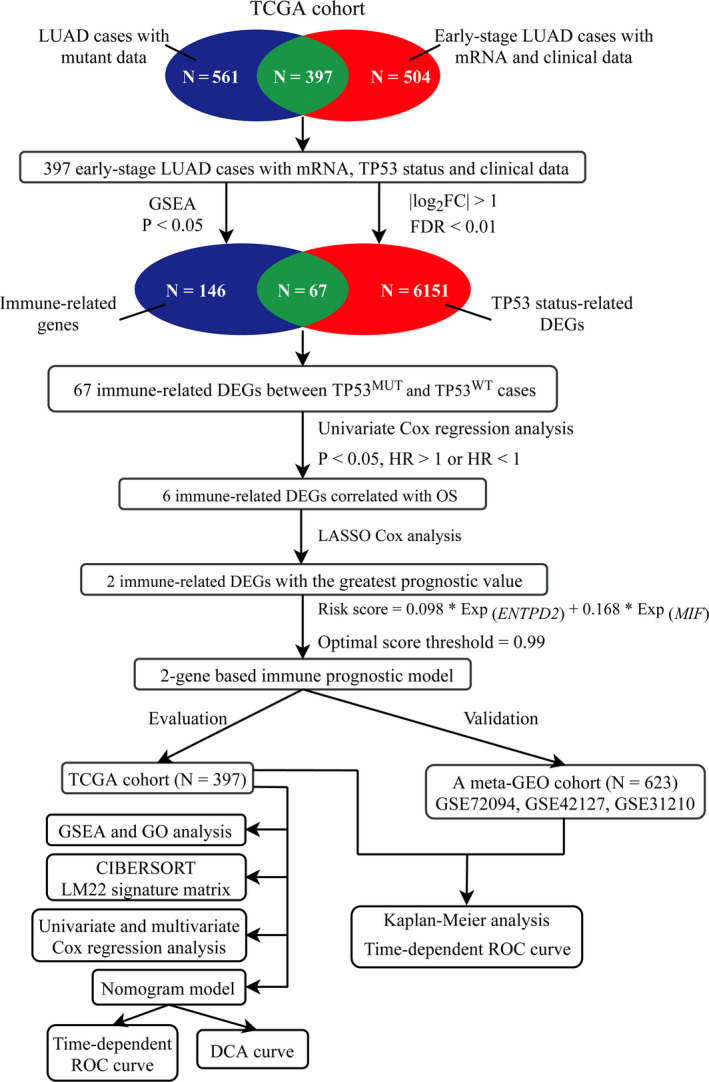
Immune-associated differentially expressed genes (DEGs) between TP53 mutated (TP53 ) and TP53 wild-type (TP53 ) early-stage LUAD were comprehensively analyzed. Univariate Cox analysis and least absolute shrinkage and selection operator (LASSO) analysis identified the prognostic immune-associated DEGs. We constructed and validated an IPM based on the TCGA and a meta-GEO composed of GSE72094, GSE42127, and GSE31210, respectively. The CIBERSORT algorithm was analyzed for assessing the percentage of immune cell types. A nomogram model was established for clinical application.
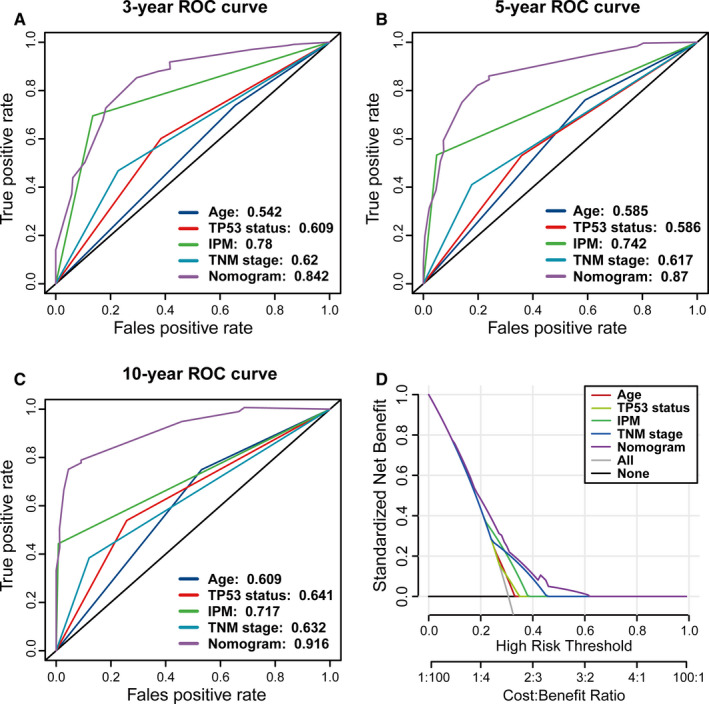
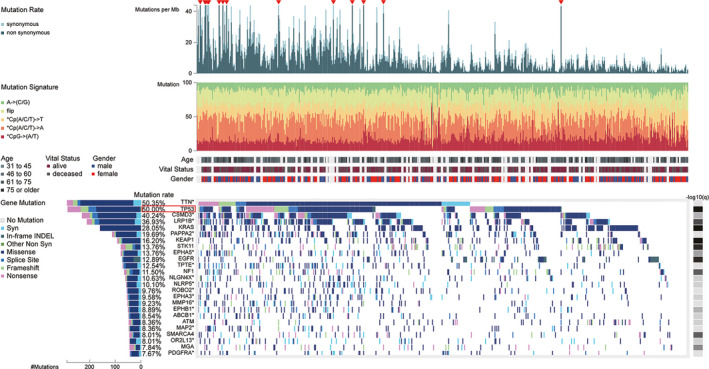
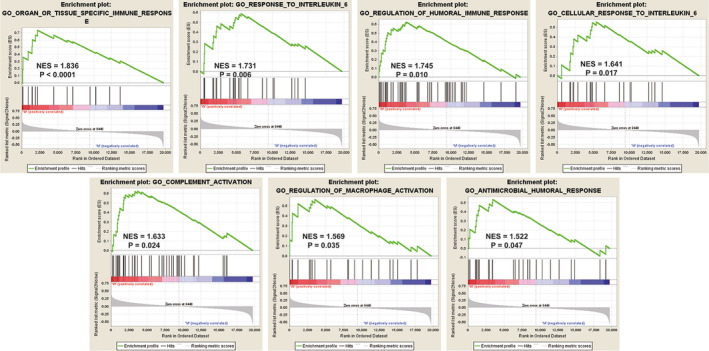
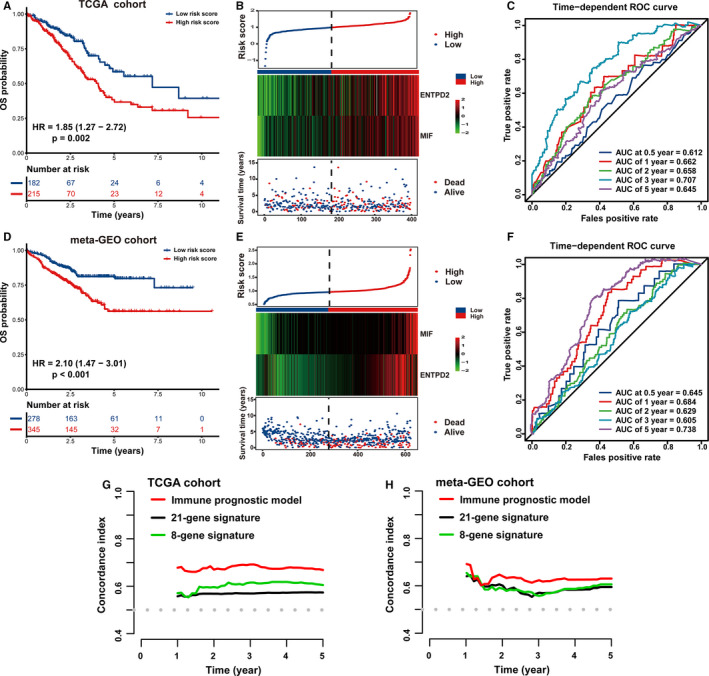
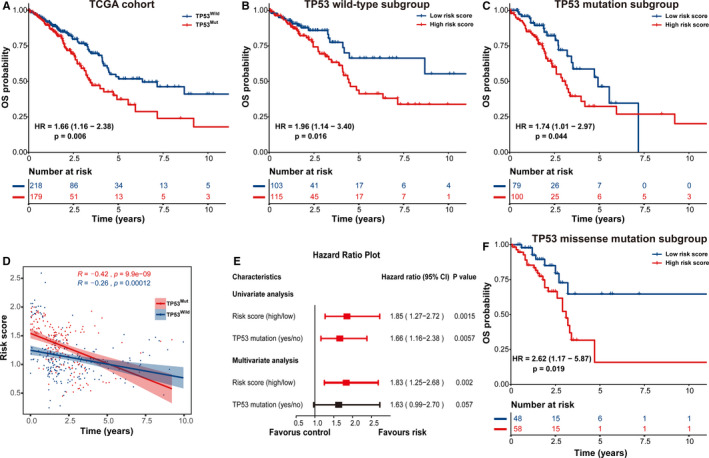
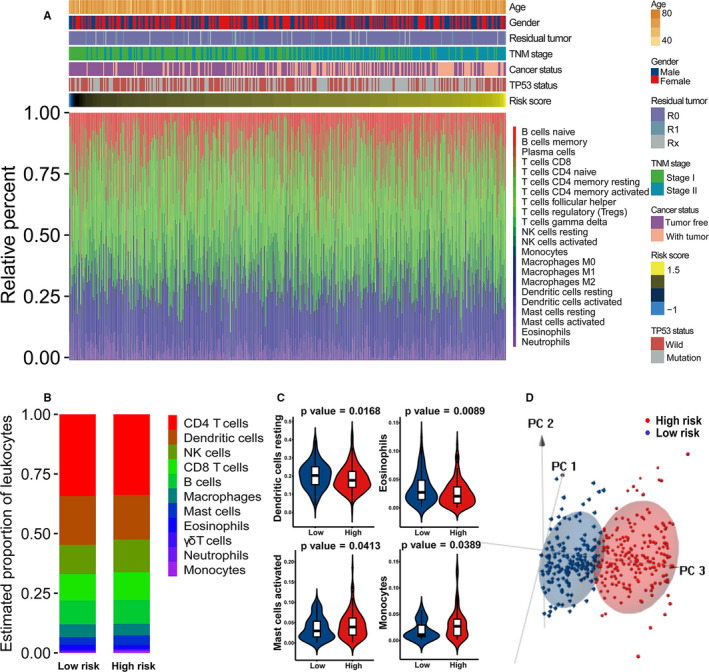
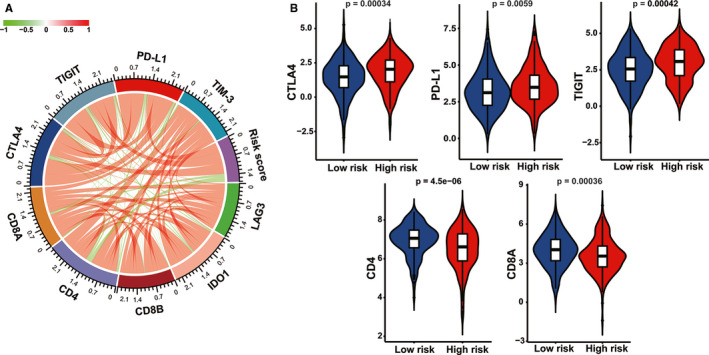
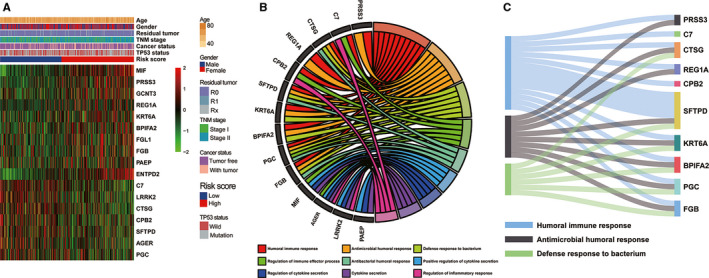
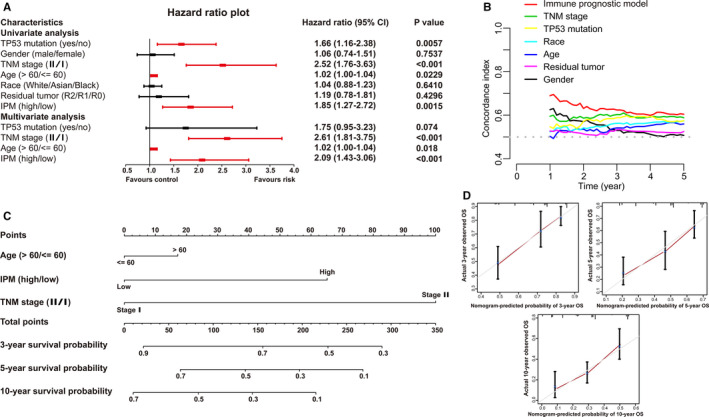
TP53 mutation occurred in approximately 50.00% of LUAD patients, stimulating a weakened immune response in early-stage LUAD. Sixty-seven immune-associated DEGs were determined between TP53 and TP53 cohort. An IPM consisting of two prognostic immune-associated DEGs (risk score = 0.098 * ENTPD2 expression + 0.168 * MIF expression) was developed through 397 cases in the TCGA and further validated based on 623 patients in a meta-GEO. The IPM stratified patients into low or high risk of undesirable survival and was identified as an independent prognostic indicator in multivariate analysis (HR = 2.09, 95% CI: 1.43-3.06, p < 0.001). Increased expressions of PD-L1, CTLA-4, and TIGIT were revealed in the high-risk group. Prognostic nomogram incorporating the IPM and other clinicopathological parameters (TNM stage and age) achieved optimal predictive accuracy and clinical utility.
The IPM based on TP53 status is a reliable and robust immune signature to identify early-stage LUAD patients with high risk of unfavorable survival.
TP53 突变是早期肺腺癌(LUAD)中最常见的突变之一,它会引发一系列免疫景观、进展和早期 LUAD 临床结局的改变。我们的研究旨在揭示 TP53 突变对早期 LUAD 免疫表型的影响,并制定一个可估计早期 LUAD 患者预后的 TP53 相关免疫预后模型(IPM)。
全面分析了 TP53 突变(TP53 )和 TP53 野生型(TP53 )早期 LUAD 之间的免疫相关差异表达基因(DEG)。单因素 Cox 分析和最小绝对收缩和选择算子(LASSO)分析确定了预后相关的免疫 DEG。我们分别基于 TCGA 和由 GSE72094、GSE42127 和 GSE31210 组成的 meta-GEO 构建和验证了一个 IPM。CIBERSORT 算法用于评估免疫细胞类型的百分比。建立了一个列线图模型用于临床应用。
TP53 突变发生在大约 50.00%的 LUAD 患者中,刺激早期 LUAD 免疫反应减弱。在 TP53 和 TP53 队列之间确定了 67 个免疫相关的 DEG。一个由两个预后相关免疫 DEG(风险评分=0.098ENTPD2 表达+0.168MIF 表达)组成的 IPM 通过 TCGA 中的 397 例病例得到发展,并在 meta-GEO 中的 623 例患者中进一步验证。该 IPM 将患者分为不良生存的低风险或高风险,并在多因素分析中被确定为独立的预后指标(HR=2.09,95%CI:1.43-3.06,p<0.001)。在高危组中发现 PD-L1、CTLA-4 和 TIGIT 的表达增加。纳入 IPM 和其他临床病理参数(TNM 分期和年龄)的预后列线图达到了最佳的预测准确性和临床实用性。
基于 TP53 状态的 IPM 是一种可靠和强大的免疫特征,可以识别早期 LUAD 患者中具有不良生存高风险的患者。