Wu Liusheng, Liu Qi, Ruan Xin, Luan Xinyu, Zhong Yanfeng, Liu Jixian, Yan Jun, Li Xiaoqiang
Beijing Tsinghua Changgung Hospital, School of Clinical Medicine, Tsinghua University, Beijing 100084, China.
Department of Graduate School, Anhui Medical University, Hefei 230032, China.
Biomedicines. 2023 Jun 29;11(7):1861. doi: 10.3390/biomedicines11071861.
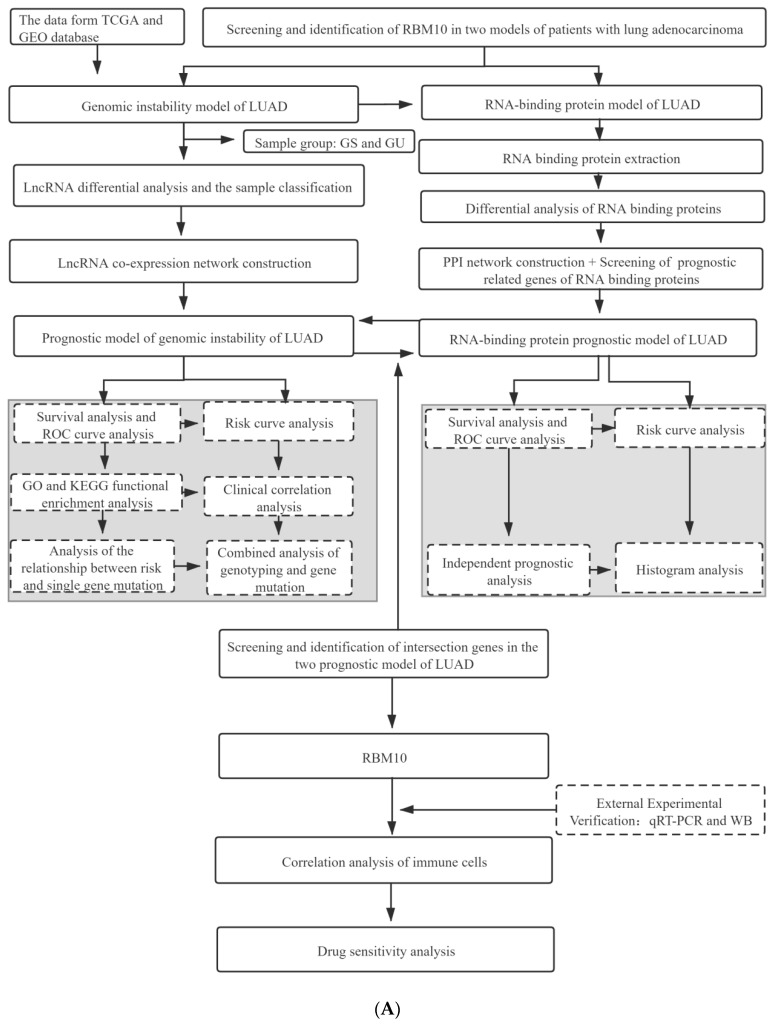
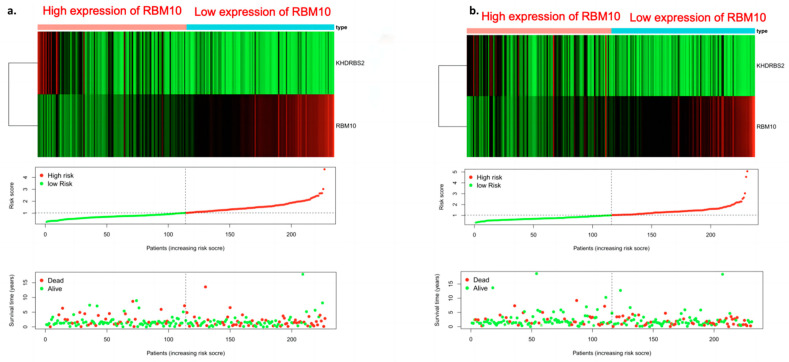
The RNA-binding protein RBM10 can regulate apoptosis during the proliferation and migration of pancreatic cancer, endometrial cancer, and osteosarcoma cells; however, the molecular mechanism underlying lung adenocarcinoma is rarely reported. Recent studies have detected multiple truncated and missense mutations in RBM10 in lung adenocarcinoma, but the role of RBM10 in lung adenocarcinoma is unclear. This study mainly explored the immune regulation mechanism of RBM10 in the development of lung adenocarcinoma and its influence on sensitivity to targeted therapy drugs.
The transcriptome data of CGAP were used to analyze the RNA-seq data of lung adenocarcinoma patients from different subgroups by using the CIBERSORT algorithm to infer the relative proportion of various immune infiltrating cells, and Spearman correlation analysis was performed to determine the gene expression and immune cell content. In addition, this study utilized drug trial data from the GDSC database. The IC50 estimates for each specific targeted therapy were obtained by using a regression method, and the regression and prediction accuracy were tested via ten cross-validations with the GDSC training set. An immunohistochemical test was performed on the samples of 20 patients with lung adenocarcinoma in the subcomponent analysis of immune cells, and the protein expression of RBM10 in lung adenocarcinoma tissues was verified by cellular immunofluorescence assays. Nucleic acids were extracted at low temperatures, and qRT-PCR was used to verify the expression levels of the mRNA of RBM10 in lung adenocarcinoma tissues and normal tissues ( < 0.05).
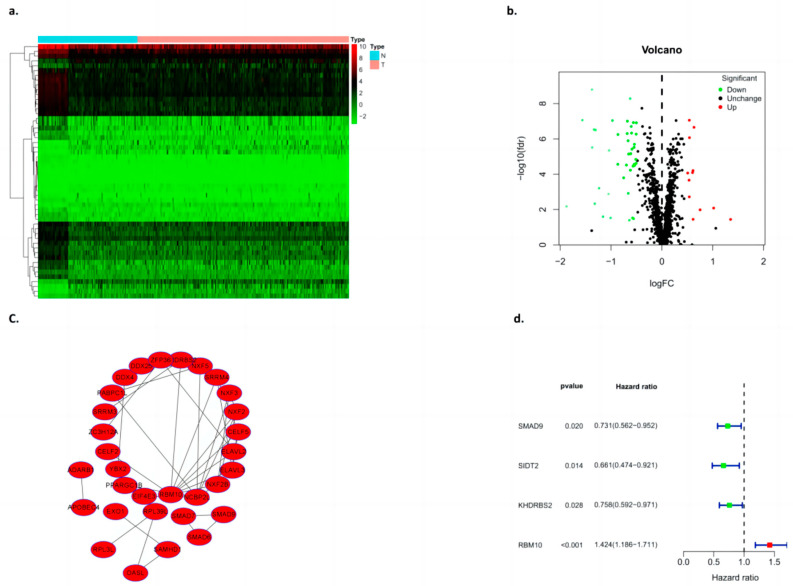
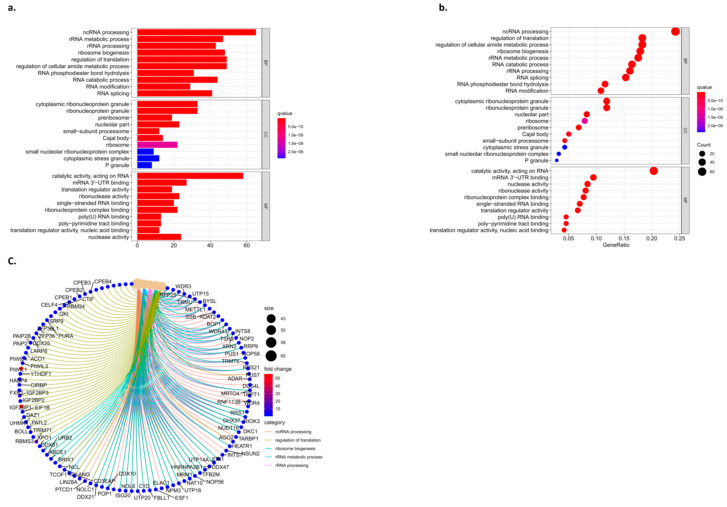
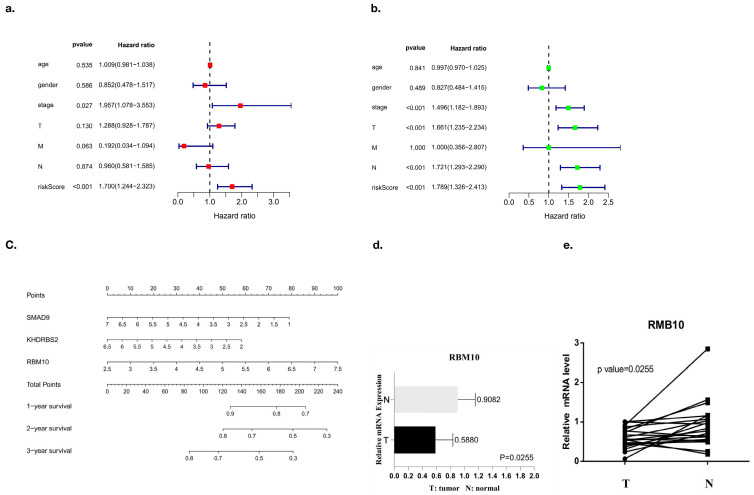
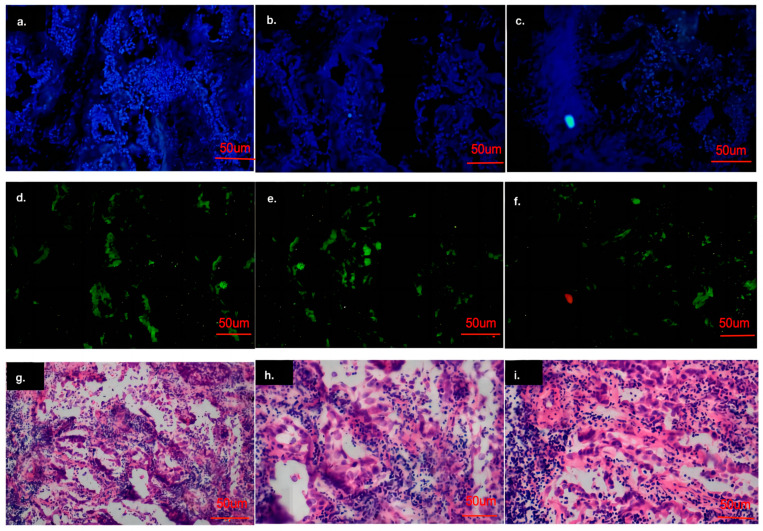
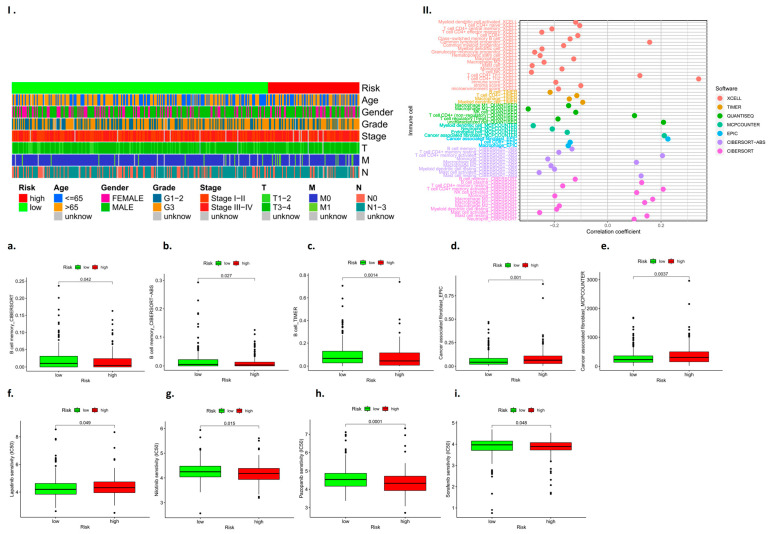
After screening and inclusion using a machine language, the results showed that RBM10 was significantly highly expressed in the lung adenocarcinoma tissues. The related signaling pathways were mainly concentrated in ncRNA processing, rRNA metabolic processes, ribosome biogenesis, and the regulation of translation. The qRT-PCR for 20 lung adenocarcinoma tissues showed that the expression of RBM10 in these tissues was significantly different from that in normal tissues ( = 0.0255). Immunohistochemistry analysis and cell immunofluorescence staining also confirmed that RBM10 was involved in the immune regulation of lung adenocarcinoma tissues, and the number of immune cell aggregations was significantly higher than that of the control group. RBM10 regulates B cell memory-CIBERSORT ( = 0.042) and B cell memory-CIBERSOTRT-abs ( = 0.027), cancer-associated fibroblast-EPIC ( = 0.001), cancer-associated fibroblast- MCPCounter ( = 0.0037), etc. The risk score was significantly associated with the sensitivity of patients to lapatinib ( = 0.049), nilotinib ( = 0.015), pazopanib ( = 0.001), and sorafenib ( = 0.048).
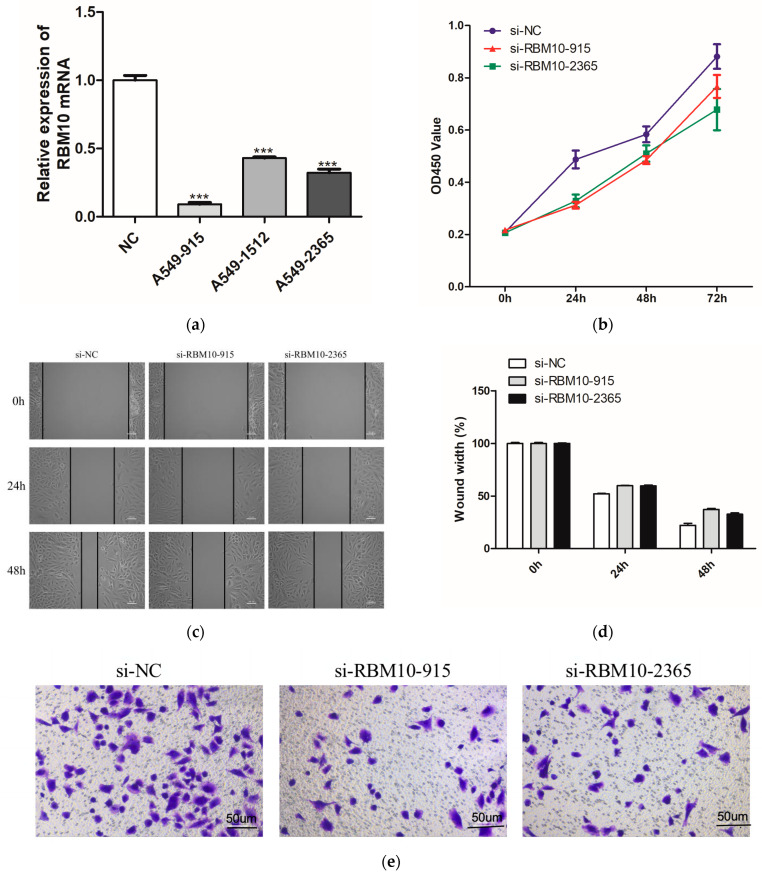
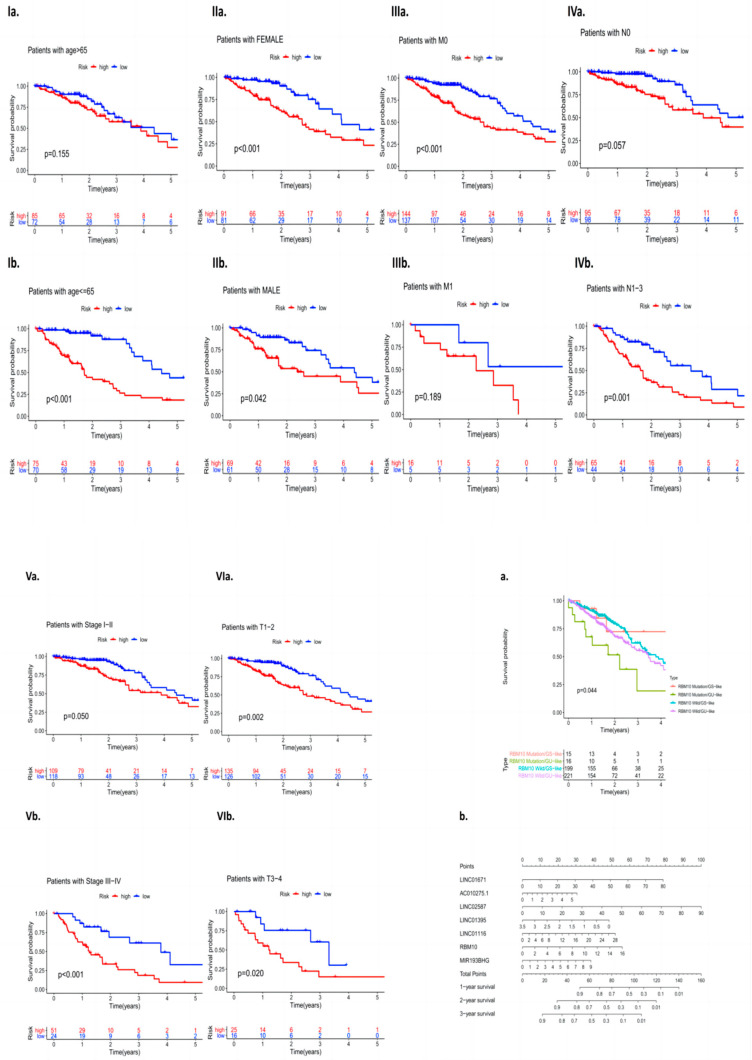
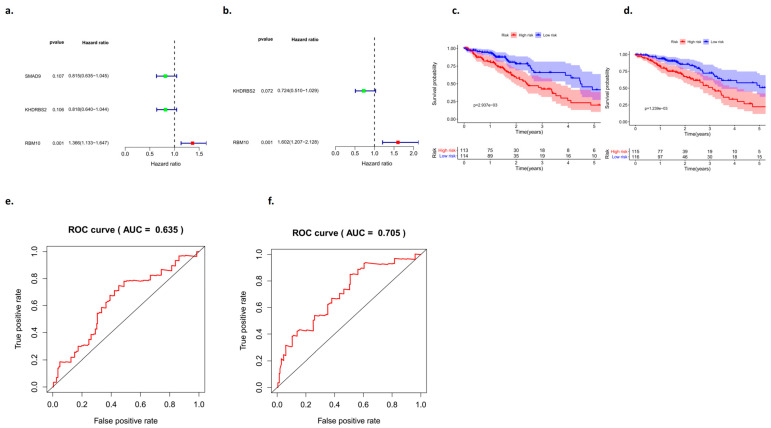
RBM10 can inhibit the proliferation and invasion of lung adenocarcinoma cells through negative regulation and promote the apoptosis of lung adenocarcinoma cells through immunomodulatory mechanisms. The expression level of RBM10 affects the efficacy of targeted drug therapy and the survival prognosis of lung adenocarcinoma patients, which has a certain guiding significance for the clinical treatment of these patients.
RNA结合蛋白RBM10可在胰腺癌、子宫内膜癌和骨肉瘤细胞的增殖与迁移过程中调节细胞凋亡;然而,肺腺癌潜在的分子机制鲜有报道。近期研究在肺腺癌中检测到RBM10存在多个截短和错义突变,但RBM10在肺腺癌中的作用尚不清楚。本研究主要探讨RBM10在肺腺癌发生发展中的免疫调节机制及其对靶向治疗药物敏感性的影响。
利用CGAP的转录组数据,采用CIBERSORT算法分析不同亚组肺腺癌患者的RNA测序数据,以推断各种免疫浸润细胞的相对比例,并进行Spearman相关性分析以确定基因表达与免疫细胞含量的关系。此外,本研究利用了GDSC数据库中的药物试验数据。通过回归方法获得每种特定靶向治疗的IC50估计值,并使用GDSC训练集进行十次交叉验证来测试回归和预测准确性。在免疫细胞亚成分分析中,对20例肺腺癌患者的样本进行免疫组织化学检测,并通过细胞免疫荧光测定法验证肺腺癌组织中RBM10的蛋白表达。在低温下提取核酸,采用qRT-PCR验证肺腺癌组织和正常组织中RBM10的mRNA表达水平(<0.05)。
经机器学习筛选纳入后,结果显示RBM10在肺腺癌组织中显著高表达。相关信号通路主要集中在非编码RNA加工、rRNA代谢过程、核糖体生物发生及翻译调控。对20例肺腺癌组织进行的qRT-PCR结果显示,这些组织中RBM10的表达与正常组织有显著差异(=0.0255)。免疫组织化学分析和细胞免疫荧光染色也证实RBM10参与肺腺癌组织的免疫调节,免疫细胞聚集数量显著高于对照组。RBM10调节B细胞记忆-CIBERSORT(=0.042)和B细胞记忆-CIBERSOTRT-abs(=0.027)、癌症相关成纤维细胞-EPIC(=0.001)、癌症相关成纤维细胞-MCPCounter(=0.0037)等。风险评分与患者对拉帕替尼(=0.049)、尼洛替尼(=0. 015)、帕唑帕尼(=0.001)和索拉非尼(=0.048)的敏感性显著相关。
RBM10可通过负调控抑制肺腺癌细胞的增殖和侵袭,并通过免疫调节机制促进肺腺癌细胞凋亡。RBM10的表达水平影响靶向药物治疗的疗效及肺腺癌患者的生存预后,对这些患者的临床治疗具有一定的指导意义。