Department of Anatomy and Neurobiology, Program in Neuroscience, University of Maryland School of Medicine, 20 Penn Street, Baltimore, MD 21201, United States of America.
Department of Anatomy and Neurobiology, Program in Neuroscience, University of Maryland School of Medicine, 20 Penn Street, Baltimore, MD 21201, United States of America.
Pharmacol Biochem Behav. 2021 Jan;200:173077. doi: 10.1016/j.pbb.2020.173077. Epub 2020 Dec 11.
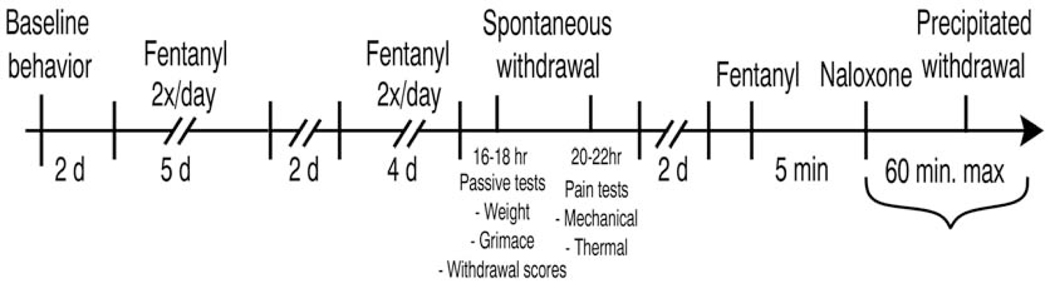
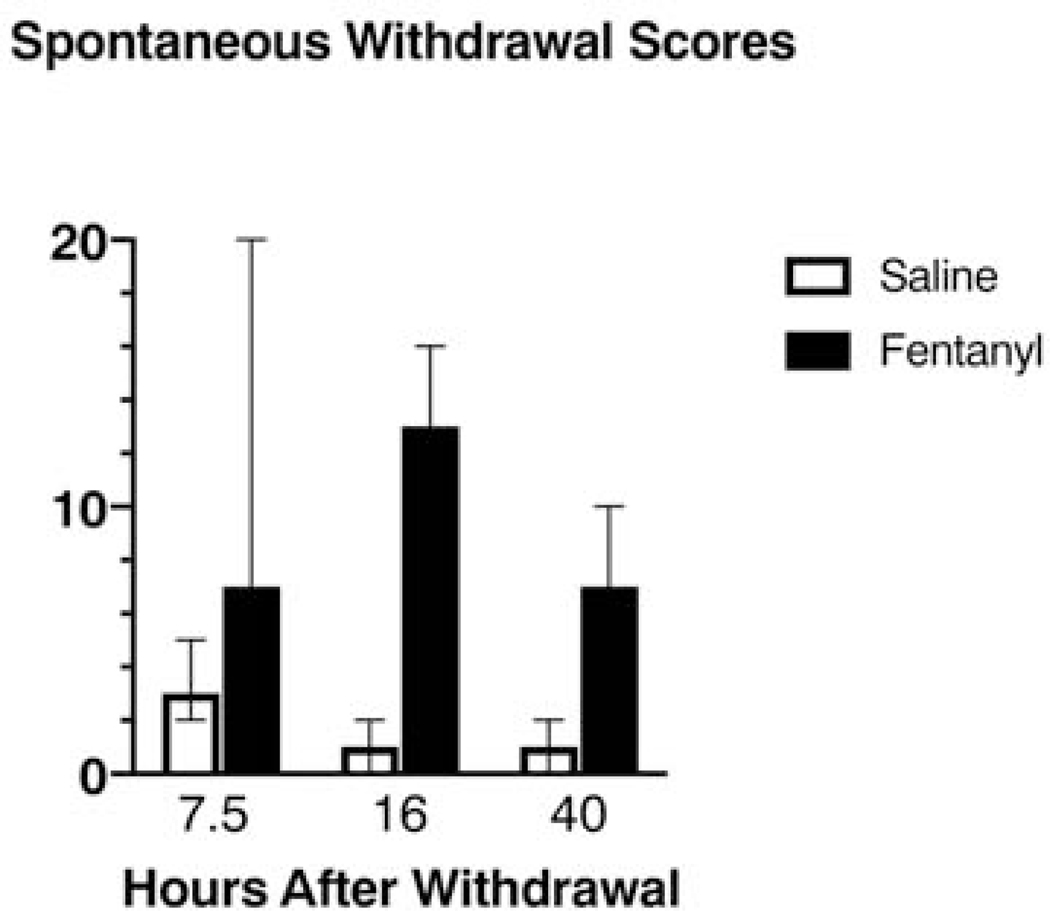
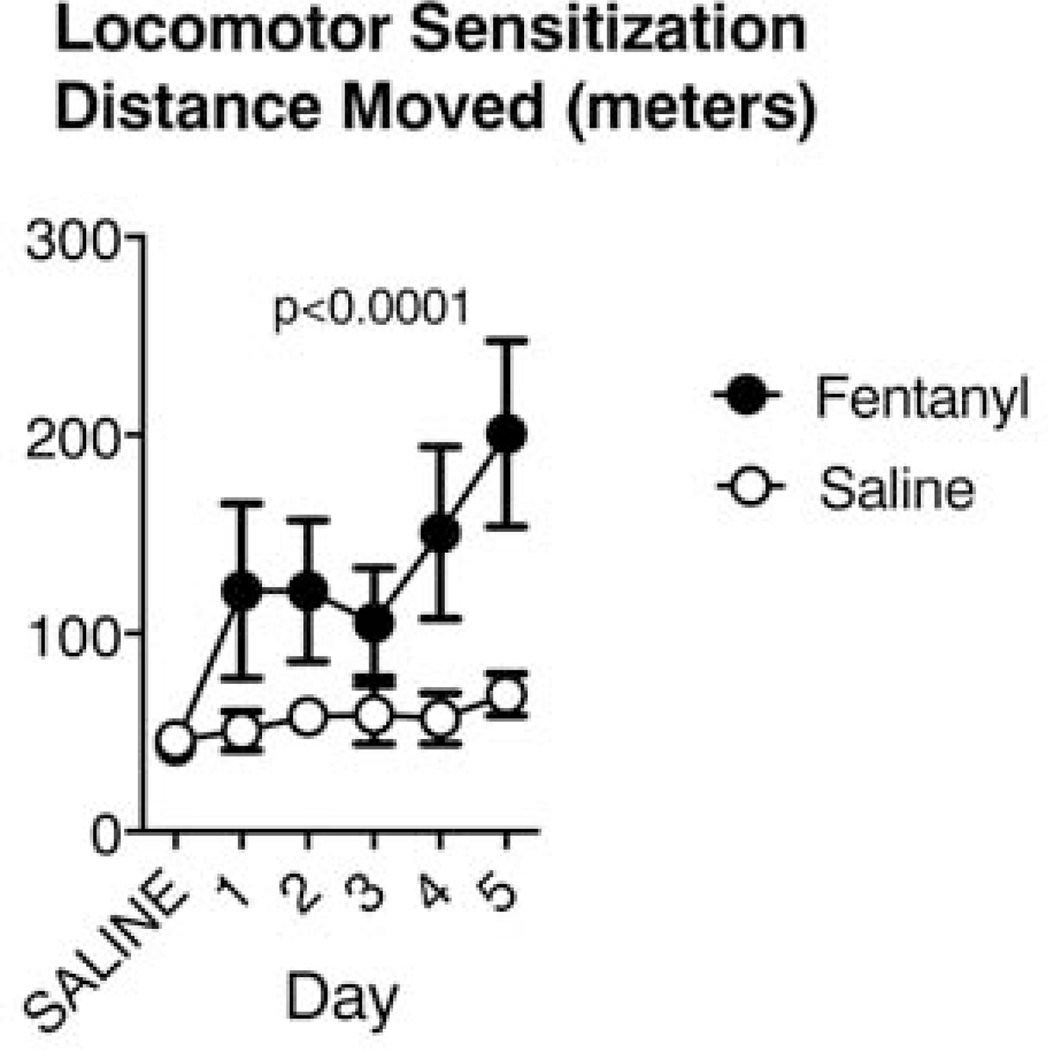
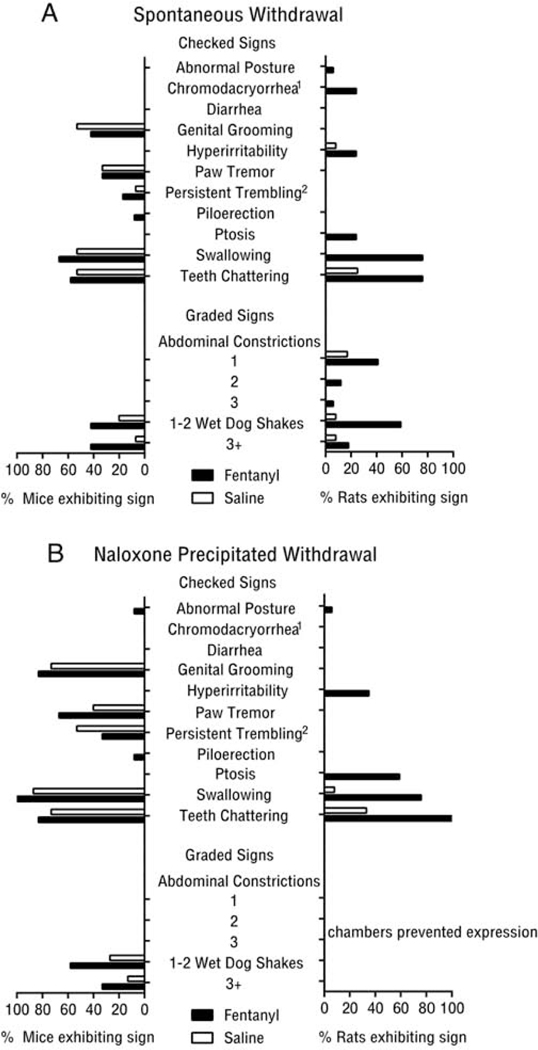
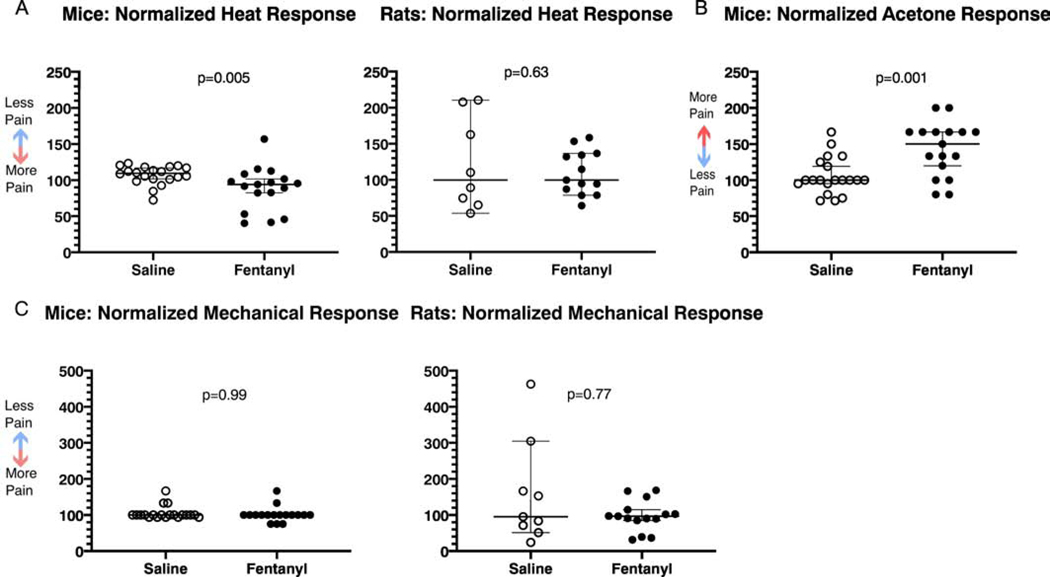
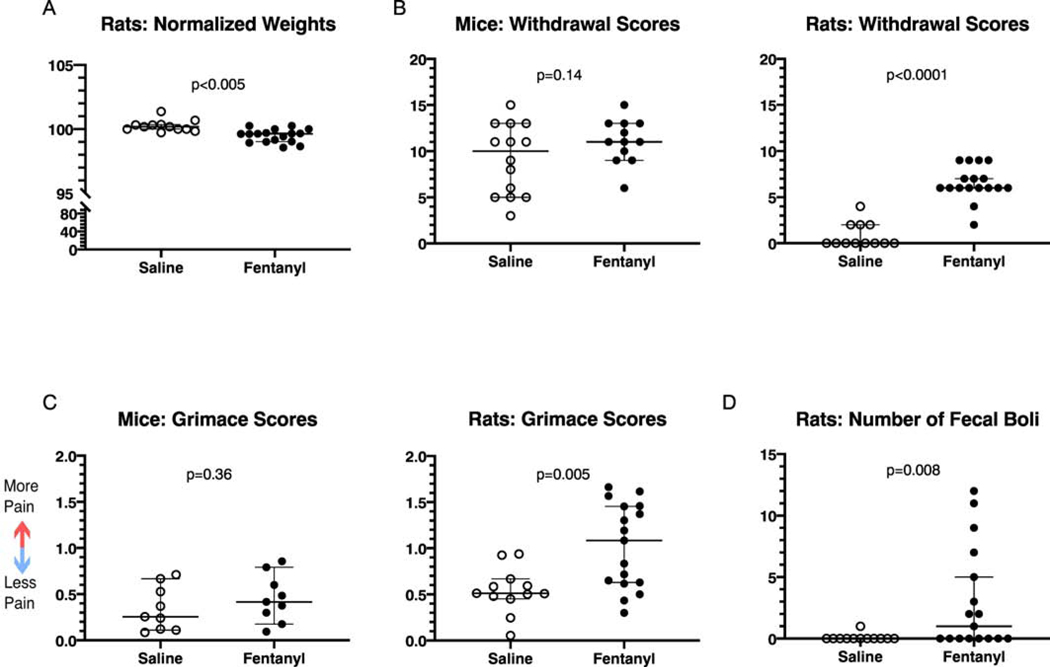
Opioid abuse has devastating effects on patients, their families, and society. Withdrawal symptoms are severely unpleasant, prolonged, and frequently hinder recovery or lead to relapse. The sharp increase in abuse and overdoses arising from the illicit use of potent and rapidly-acting synthetic opioids, such as fentanyl, highlights the urgency of understanding the withdrawal mechanisms related to these drugs. Progress is impeded by inconsistent reports on opioid withdrawal in different preclinical models. Here, using rats and mice of both sexes, we quantified withdrawal behaviors during spontaneous and naloxone-precipitated withdrawal, following two weeks of intermittent fentanyl exposure. We found that both mice and rats lost weight during exposure and showed increased signs of distress during spontaneous and naloxone precipitated withdrawal. However, these species differed in their expression of withdrawal associated pain, a key contributor to relapse in humans. Spontaneous or ongoing pain was preferentially expressed in rats in both withdrawal conditions, while no change was observed in mice. In contrast, withdrawal associated thermal hyperalgesia was found only in mice. These data suggest that rats and mice diverge in how they experience withdrawal and which aspects of the human condition they most accurately model. These differences highlight each species' strengths as model systems and can inform experimental design in studies of opioid withdrawal.
阿片类药物滥用对患者、他们的家庭和社会都有毁灭性的影响。戒断症状非常不愉快,持续时间长,而且经常阻碍康复或导致复发。非法使用强效和快速作用的合成阿片类药物(如芬太尼)导致滥用和过量的急剧增加,凸显了了解与这些药物相关的戒断机制的紧迫性。由于不同的临床前模型中对阿片类药物戒断的报告不一致,进展受到了阻碍。在这里,我们使用雄性和雌性大鼠和小鼠,在两周的间歇性芬太尼暴露后,量化了自发和纳洛酮诱发戒断期间的戒断行为。我们发现,暴露期间,小鼠和大鼠体重均减轻,并在自发和纳洛酮诱发戒断期间表现出更多的痛苦迹象。然而,这两个物种在与戒断相关的疼痛表达上存在差异,这是人类复发的一个关键因素。在两种戒断情况下,大鼠都表现出自发或持续的疼痛,而小鼠则没有变化。相比之下,在小鼠中仅发现与戒断相关的热痛觉过敏。这些数据表明,大鼠和小鼠在戒断时的体验以及它们最能模拟人类状况的哪些方面存在差异。这些差异突出了每个物种作为模型系统的优势,并可以为阿片类药物戒断研究中的实验设计提供信息。