Luo Chenxi, Huang Chenglong, Zhu Lijuan, Kong Li, Yuan Zhihang, Wen Lixin, Li Rongfang, Wu Jing, Yi Jine
Hunan Engineering Research Center of Livestock and Poultry Health Care, Colleges of Veterinary Medicine, Hunan Agricultural University, Changsha 410128, China.
Hunan Co-innovation Center of Animal Production Safety, Changsha 410128, China.
Toxins (Basel). 2020 Dec 13;12(12):794. doi: 10.3390/toxins12120794.
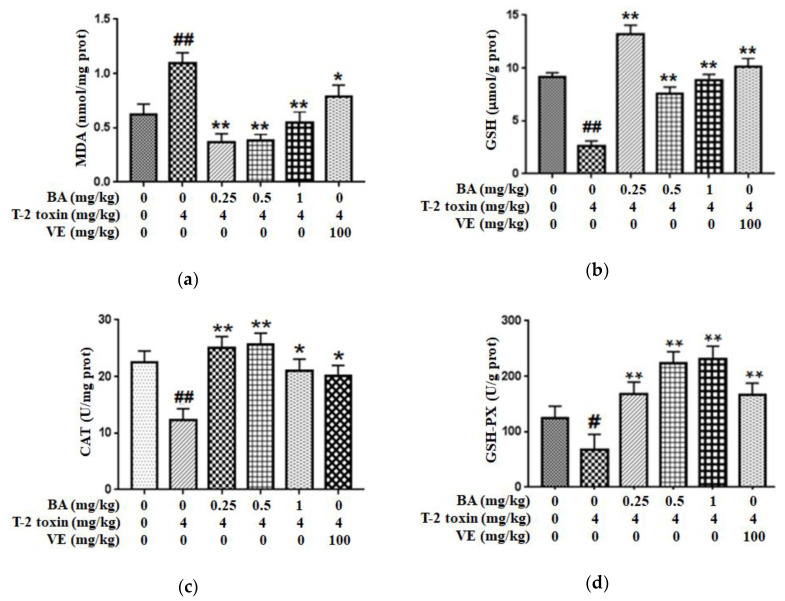
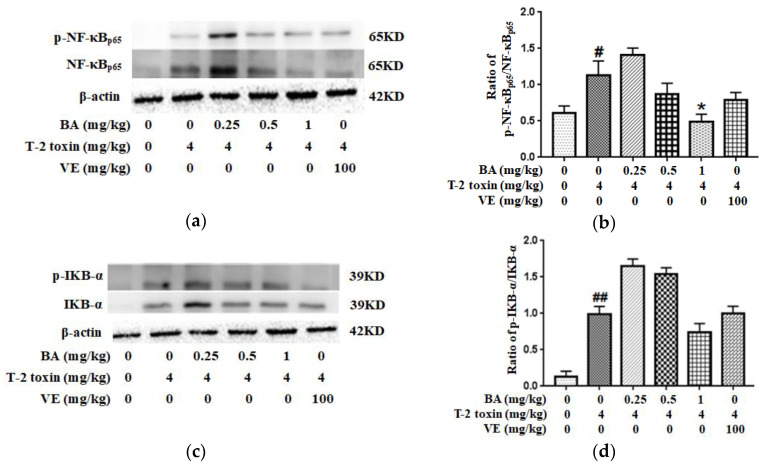
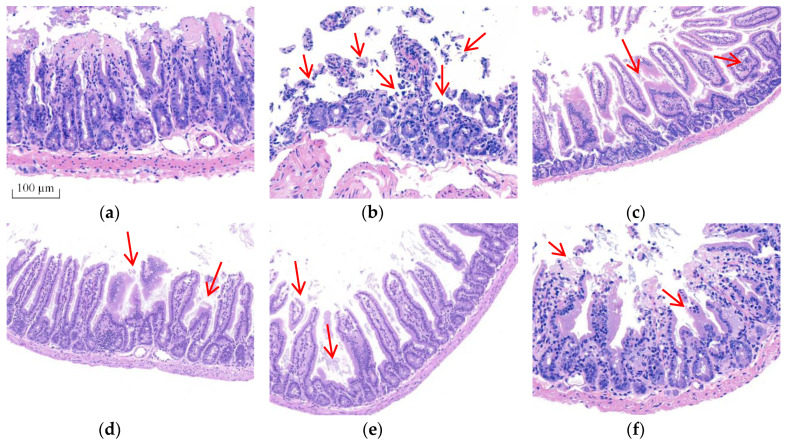
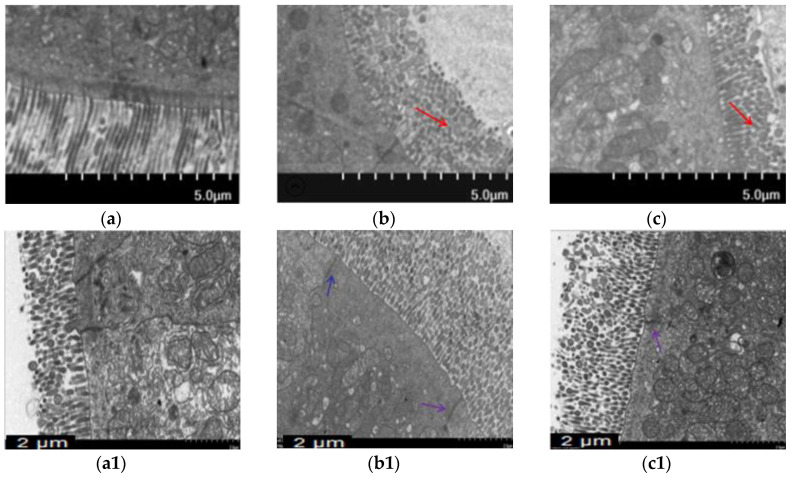
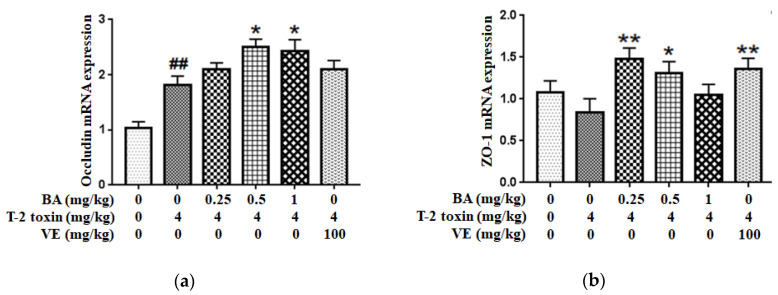
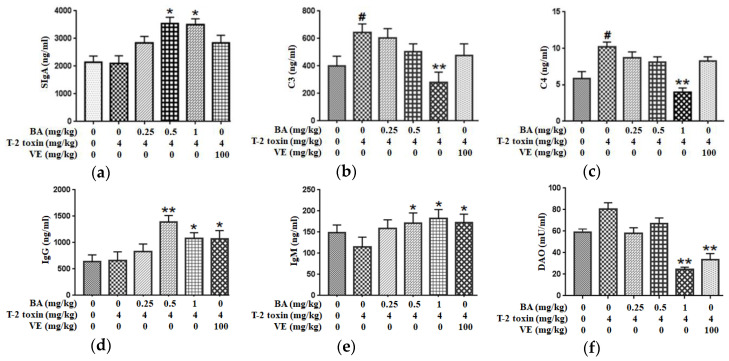
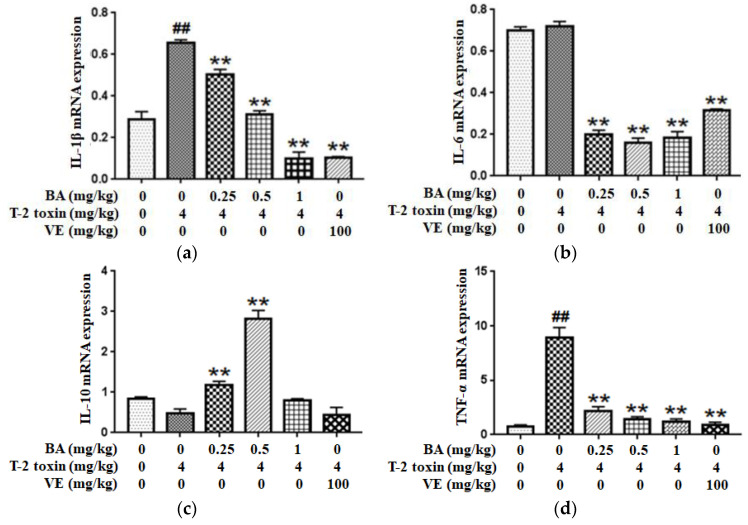
T-2 toxin, a trichothecene mycotoxin produced by , is widely distributed in crops and animal feed and frequently induces intestinal damage. Betulinic acid (BA), a plant-derived pentacyclic lupane-type triterpene, possesses potential immunomodulatory, antioxidant and anti-inflammatory biological properties. The current study aimed to explore the protective effect and molecular mechanisms of BA on intestinal mucosal impairment provoked by acute exposure to T-2 toxin. Mice were intragastrically administered BA (0.25, 0.5, or 1 mg/kg) daily for 2 weeks and then injected intraperitoneally with T-2 toxin (4 mg/kg) once to induce an intestinal impairment. BA pretreatment inhibited the loss of antioxidant capacity in the intestine of T-2 toxin-treated mice by elevating the levels of CAT, GSH-PX and GSH and reducing the accumulation of MDA. In addition, BA pretreatment alleviated the T-2 toxin-triggered intestinal immune barrier dysregulation by increasing the SIgA level in the intestine at dosages of 0.5 and 1 mg/kg, increasing IgG and IgM levels in serum at dosages of 0.5 and 1 mg/kg and restoring the intestinal C3 and C4 levels at a dosage of 1 mg/kg. BA administration at a dosage of 1 mg/kg also improved the intestinal chemical barrier by decreasing the serum level of DAO. Moreover, BA pretreatment improved the intestinal physical barrier via boosting the expression of ZO-1 and Occludin mRNAs and restoring the morphology of intestinal villi that was altered by T-2 toxin. Furthermore, treatment with 1 mg/kg BA downregulated the expression of p-NF-κB and p-IκB-α proteins in the intestine, while all doses of BA suppressed the pro-inflammatory cytokines expression of IL-1β, IL-6 and TNF-α mRNAs and increased the anti-inflammatory cytokine expression of IL-10 mRNA in the intestine of T-2 toxin-exposed mice. BA was proposed to exert a protective effect on intestinal mucosal disruption in T-2 toxin-stimulated mice by enhancing the intestinal antioxidant capacity, inhibiting the secretion of inflammatory cytokines and repairing intestinal mucosal barrier functions, which may be associated with BA-mediated inhibition of the NF-κB signaling pathway activation.
T-2毒素是由[某种物质]产生的一种单端孢霉烯族霉菌毒素,广泛分布于农作物和动物饲料中,常引起肠道损伤。桦木酸(BA)是一种植物来源的五环羽扇豆烷型三萜,具有潜在的免疫调节、抗氧化和抗炎生物学特性。本研究旨在探讨BA对急性暴露于T-2毒素所致肠道黏膜损伤的保护作用及其分子机制。小鼠连续2周每天灌胃给予BA(0.25、0.5或1mg/kg),然后腹腔注射一次T-2毒素(4mg/kg)以诱导肠道损伤。BA预处理通过提高CAT、GSH-PX和GSH水平并减少MDA积累,抑制了T-2毒素处理小鼠肠道抗氧化能力的丧失。此外,BA预处理通过在0.5和1mg/kg剂量下增加肠道中SIgA水平、在0.5和1mg/kg剂量下增加血清中IgG和IgM水平以及在1mg/kg剂量下恢复肠道C3和C4水平,减轻了T-2毒素引发的肠道免疫屏障失调。1mg/kg剂量的BA给药还通过降低血清DAO水平改善了肠道化学屏障。此外,BA预处理通过增强ZO-1和Occludin mRNA的表达并恢复被T-2毒素改变的肠绒毛形态,改善了肠道物理屏障。此外,1mg/kg BA处理下调了肠道中p-NF-κB和p-IκB-α蛋白的表达,而所有剂量的BA均抑制了T-2毒素暴露小鼠肠道中促炎细胞因子IL-1β、IL-6和TNF-α mRNA的表达,并增加了抗炎细胞因子IL-10 mRNA的表达。BA被认为通过增强肠道抗氧化能力、抑制炎性细胞因子分泌和修复肠道黏膜屏障功能,对T-2毒素刺激的小鼠肠道黏膜破坏发挥保护作用,这可能与BA介导的NF-κB信号通路激活抑制有关。