Department of Pharmaceutics, College of Pharmaceutical Sciences and Drug Manufacturing, Misr University for Science and Technology, Giza, Egypt.
Department of Pharmaceutics and Industrial Pharmacy, Faculty of Pharmacy, Cairo University, Cairo, Egypt.
Drug Deliv. 2021 Dec;28(1):1-9. doi: 10.1080/10717544.2020.1859000.
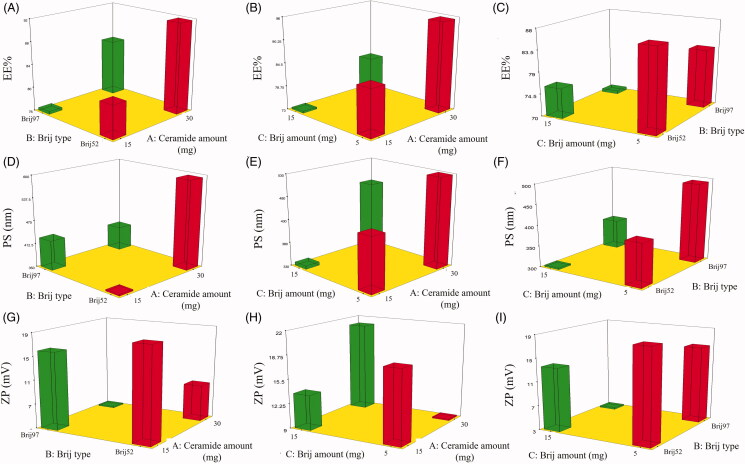
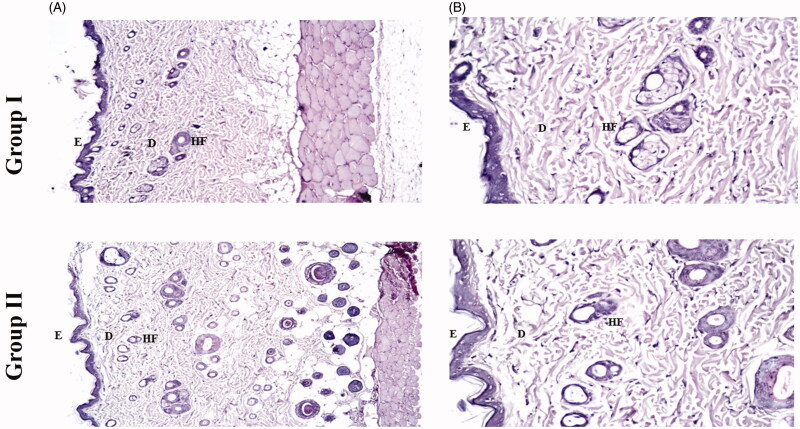
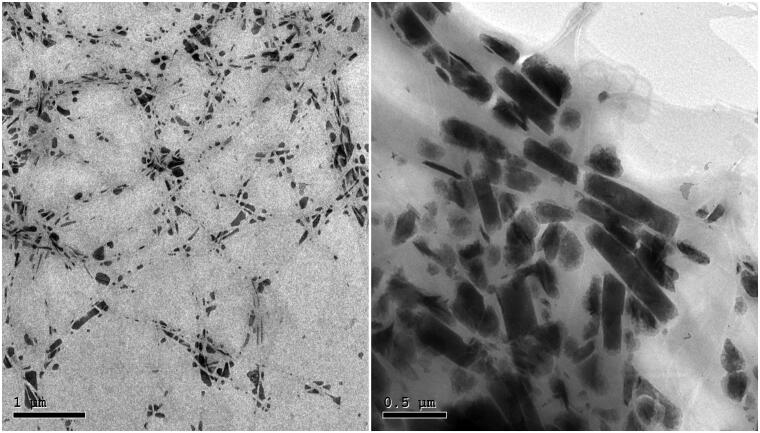
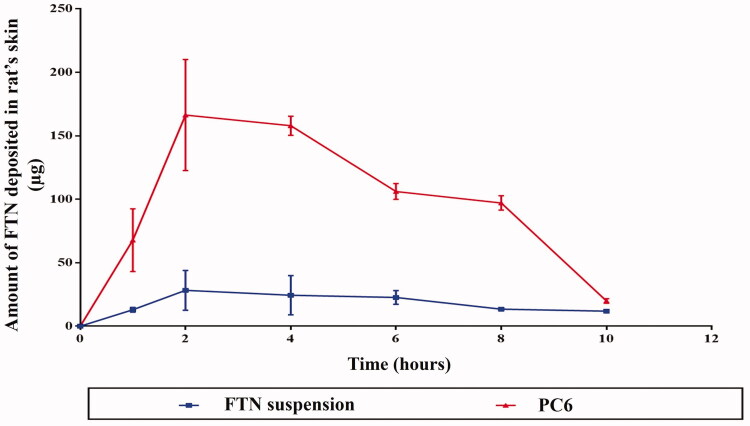
In this investigation, we focused on ceramide IIIB, a skin component whose depletion tends to augment multiple skin disorders and fungal infections. Ceramide IIIB was included into PEGylated surfactant-based vesicular phospholipid system to formulate 'PEGylated cerosomes' (PCs) loaded with fenticonazole nitrate (FTN). FTN is a potent antifungal agent adopted in the treatment of mixed mycotic and bacterial infections. The ceramide content of the vesicles may provide protective and regenerative skin activity whereas Brij; the PEGylated surfactant, can enhance drug deposition and skin hydration. Both components are expected to augment the topical effect of FTN. PCs were prepared by thin-film hydration technique. A 2 full-factorial design was applied to study the effect of ceramide amount (X), Brij type (X) and Brij amount (X) on the physicochemical properties of the formulated PCs namely; entrapment efficiency (EE%;Y), particle size (PS;Y), polydispersity index (PDI;Y) and zeta potential (ZP;Y). The optimal formula was selected for further dermatokinetic and histopathological study. The optimal FTN-loaded PC (PC6) showed nanosized cerosomes (551.60 nm) with high EE% (83.00%w/w), and an acceptable ZP value of 20.90 mV. Transmission electron micrographs of the optimal formula illustrated intertwined tubulation form deviated from the conventional spherical vesicles. Finally, the dermatokinetic study of PC6 showed higher drug concentration and localization of FTN in skin layers when compared with FTN suspension and the histopathological study confirmed its safety for topical application. The overall findings of our study verified the effectiveness of utilizing PEGylated cerosomes to augment the activity of FTN as a topical antifungal agent.
在这项研究中,我们专注于神经酰胺 IIIB,这是一种皮肤成分,其耗竭往往会加剧多种皮肤疾病和真菌感染。神经酰胺 IIIB 被纳入基于聚乙二醇化表面活性剂的囊泡磷脂体制备成载有硝酸芬替康唑(FTN)的“聚乙二醇化神经酰胺囊泡”(PCs)。FTN 是一种有效的抗真菌药物,用于治疗混合真菌和细菌感染。囊泡中的神经酰胺含量可能提供保护和再生皮肤活性,而 Brij;聚乙二醇化表面活性剂,可以增强药物沉积和皮肤保湿。这两个成分都有望增强 FTN 的局部效果。PCs 通过薄膜水化技术制备。应用 2 因素完全实验设计研究神经酰胺含量(X)、Brij 类型(X)和 Brij 用量(X)对所制备的 PCs 的理化性质的影响,即包封效率(EE%;Y)、粒径(PS;Y)、多分散指数(PDI;Y)和 Zeta 电位(ZP;Y)。选择最佳配方进行进一步的皮肤药代动力学和组织病理学研究。最佳载 FTN 的 PC(PC6)显示出纳米级的神经酰胺囊泡(551.60nm),具有高 EE%(83.00%w/w)和可接受的 ZP 值 20.90mV。最佳配方的透射电镜图像显示交织的管状结构偏离了常规的球形囊泡。最后,PC6 的皮肤药代动力学研究表明,与 FTN 混悬剂相比,FTN 在皮肤层中的浓度更高,定位更好,组织病理学研究证实其局部应用安全。我们的研究结果总体证实了利用聚乙二醇化神经酰胺来增强 FTN 作为局部抗真菌药物的活性的有效性。