Pedrazzani Ana Silvia, Quintiliano Murilo Henrique, Bolfe Franciele, Sans Elaine Cristina de Oliveira, Molento Carla Forte Maiolino
Animal Welfare Laboratory, Federal University of Paraná (LABEA), Curitiba, Brazil.
FAI Farms, Londrina, Brazil.
Front Vet Sci. 2020 Nov 25;7:606388. doi: 10.3389/fvets.2020.606388. eCollection 2020.
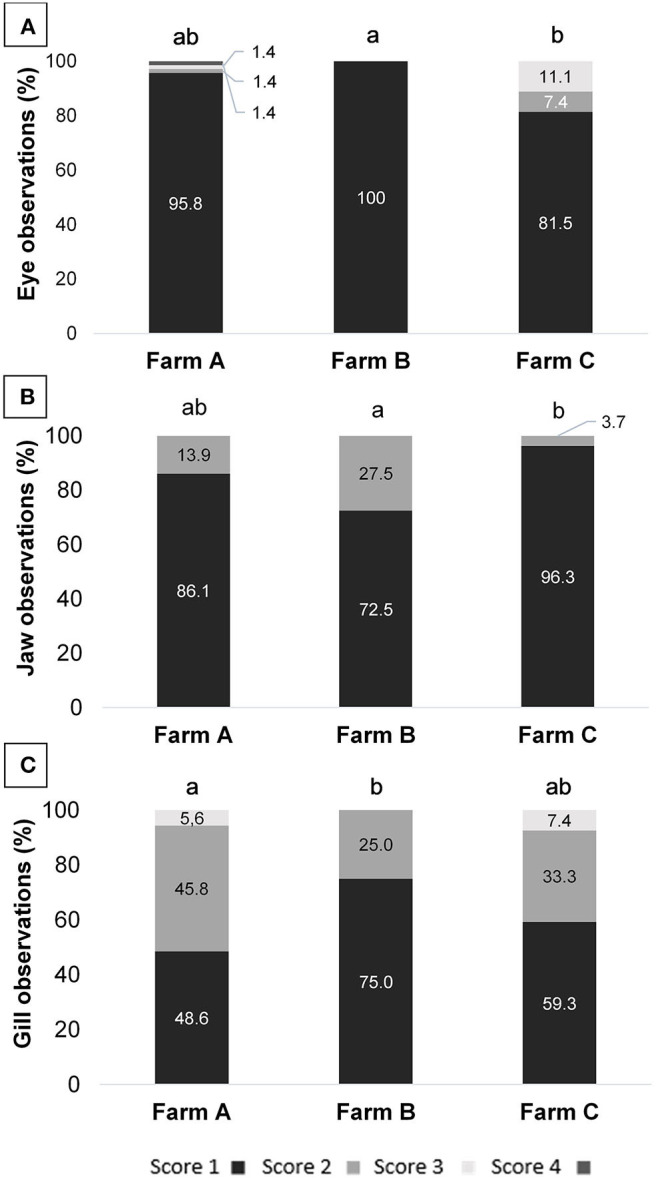
The aim of this study was to develop and test a tilapia on-farm welfare assessment protocol, based on Brazilian semi-intensive production systems. The study included two mains steps: the elaboration of tilapia welfare protocol and its on-field feasibility test. The protocol, including the potential indicators organized into health, environmental, nutritional, and behavioral categories, was tested on three farms. Skin, eyes, gills, jaws, fins, and vertebral spine were individually examined in 139 individual tilapias. Water physicochemical parameters and production system were considered. The overall nutritional status of individuals was assessed through body condition factor, feed conversion ratio, feed crude protein ratio, and feed ingestion behavior. During massive capture, signals of stress, level of crowding, and duration of air exposure were registered. Time required for loss of consciousness was evaluated by clinical reflexes and other behaviors during slaughter. Eye, jaw, and gill scores were different across farms (Kruskal-Wallis test, = 0.011; 0.015; 0.043, respectively), showing good discrimination power. Critical welfare points were extremely low dissolved oxygen in water, fin and skin lesions, prolonged air exposure during pre-slaughter handling and non-humane slaughter techniques, as decapitation or asphyxia. The protocol presents practical viability and it is an initial step for the development of a tilapia welfare strategy, where the prioritization of critical welfare points, implementation of corrective actions and monitoring of the results is part of a permanent welfare management system.
本研究的目的是基于巴西半集约化生产系统,开发并测试一种罗非鱼养殖场福利评估方案。该研究包括两个主要步骤:制定罗非鱼福利方案及其现场可行性测试。该方案包括组织为健康、环境、营养和行为类别的潜在指标,并在三个养殖场进行了测试。对139条罗非鱼个体分别检查了皮肤、眼睛、鳃、颌、鳍和脊椎。考虑了水的理化参数和生产系统。通过体况因子、饲料转化率、饲料粗蛋白比和饲料摄食行为评估个体的整体营养状况。在大规模捕捞过程中,记录了应激信号、拥挤程度和空气暴露时间。通过屠宰过程中的临床反射和其他行为评估失去意识所需的时间。不同养殖场的眼睛、颌和鳃的评分不同(Kruskal-Wallis检验,分别为 = 0.011;0.015;0.043),显示出良好的区分能力。关键福利点包括水中溶解氧极低、鳍和皮肤损伤、屠宰前处理过程中长时间空气暴露以及斩首或窒息等非人道屠宰技术。该方案具有实际可行性,是制定罗非鱼福利策略的第一步,其中关键福利点的优先级确定、纠正措施的实施和结果监测是永久性福利管理系统的一部分。