Pediatric Critical Care, Primary Children's Hospital and Department of Pediatrics, University of Utah, Salt Lake City, Utah;
Pediatric Critical Care, Departments of Pediatrics.
Pediatrics. 2021 Jan;147(1). doi: 10.1542/peds.2020-1434. Epub 2020 Dec 16.
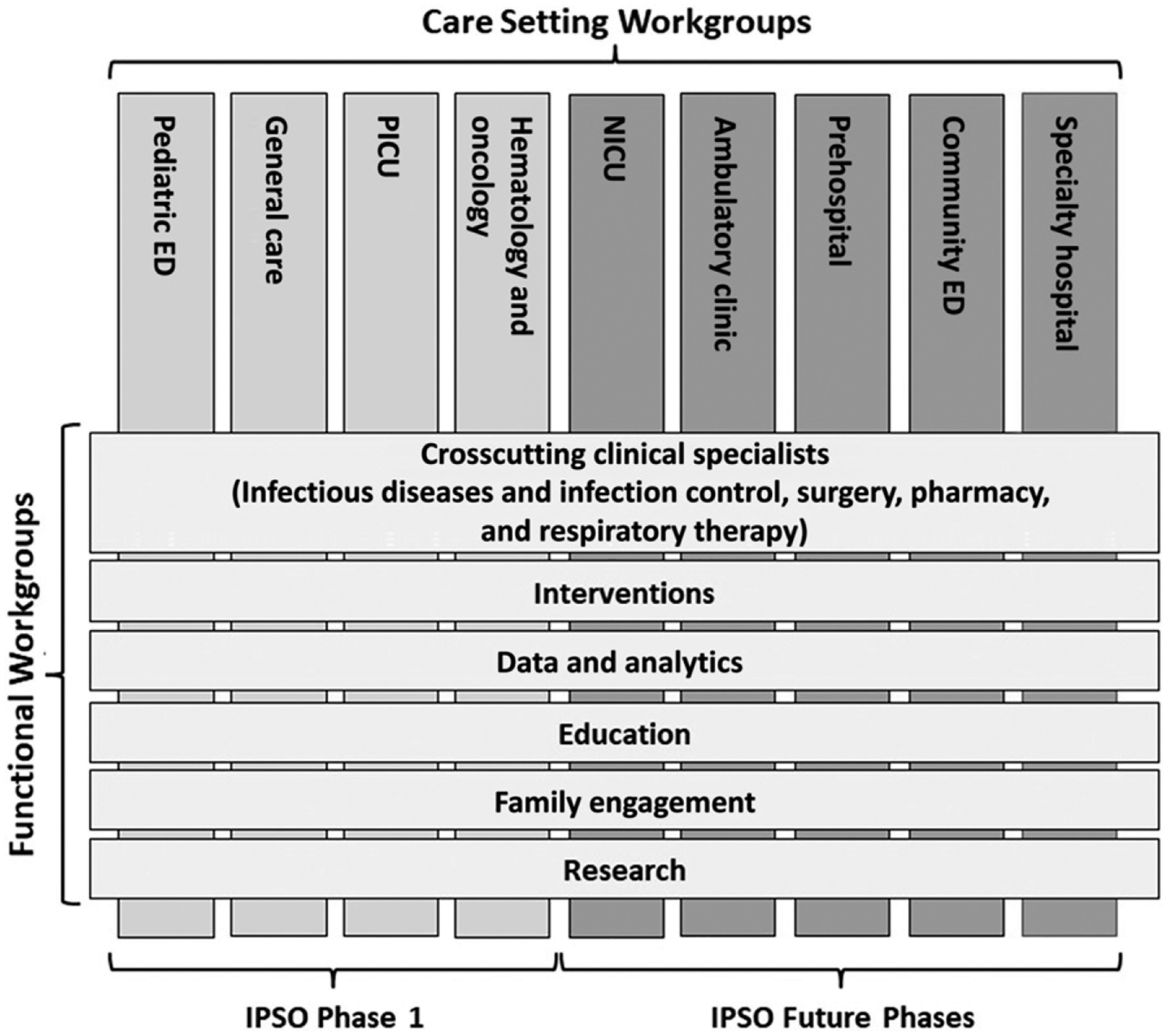
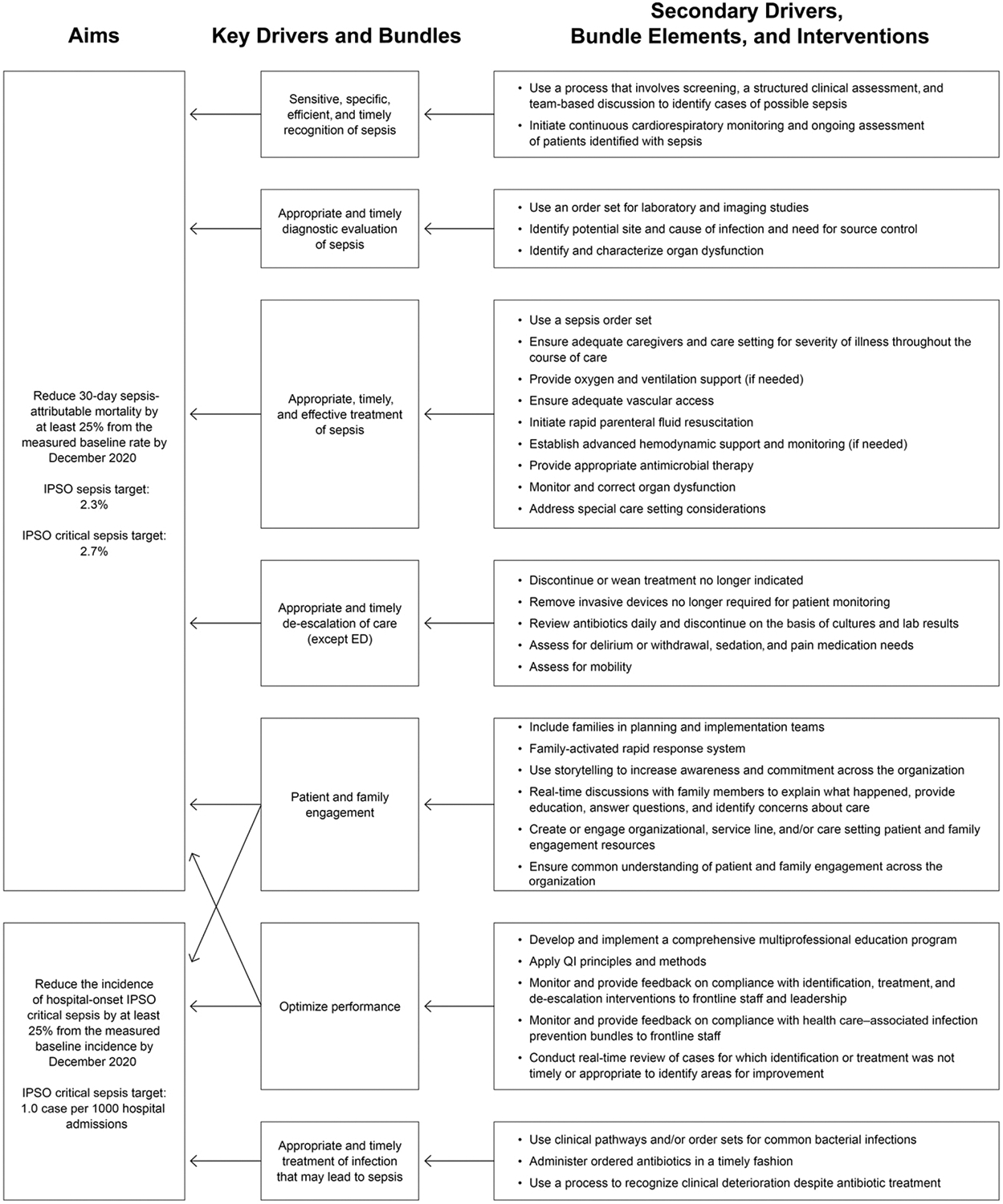
Pediatric sepsis is a major public health problem. Published treatment guidelines and several initiatives have increased adherence with guideline recommendations and have improved patient outcomes, but the gains are modest, and persistent gaps remain. The Children's Hospital Association Improving Pediatric Sepsis Outcomes (IPSO) collaborative seeks to improve sepsis outcomes in pediatric emergency departments, ICUs, general care units, and hematology/oncology units. We developed a multicenter quality improvement learning collaborative of US children's hospitals. We reviewed treatment guidelines and literature through 2 in-person meetings and multiple conference calls. We defined and analyzed baseline sepsis-attributable mortality and hospital-onset sepsis and developed a key driver diagram (KDD) on the basis of treatment guidelines, available evidence, and expert opinion. Fifty-six hospital-based teams are participating in IPSO; 100% of teams are engaged in educational and information-sharing activities. A baseline, sepsis-attributable mortality of 3.1% was determined, and the incidence of hospital-onset sepsis was 1.3 cases per 1000 hospital admissions. A KDD was developed with the aim of reducing both the sepsis-attributable mortality and the incidence of hospital-onset sepsis in children by 25% from baseline by December 2020. To accomplish these aims, the KDD primary drivers focus on improving the following: treatment of infection; recognition, diagnosis, and treatment of sepsis; de-escalation of unnecessary care; engagement of patients and families; and methods to optimize performance. IPSO aims to improve sepsis outcomes through collaborative learning and reliable implementation of evidence-based interventions.
儿科脓毒症是一个重大的公共卫生问题。已发布的治疗指南和多项举措提高了指南建议的依从性,并改善了患者的预后,但收效甚微,且仍存在持续的差距。儿科学会改善儿科脓毒症结局(IPSO)合作组织旨在改善儿科急诊科、重症监护病房、普通护理病房和血液科/肿瘤科的脓毒症结局。我们成立了一个由美国儿童医院组成的多中心质量改进学习合作组织。我们通过 2 次现场会议和多次电话会议审查了治疗指南和文献。我们根据治疗指南、现有证据和专家意见定义和分析了基线脓毒症相关死亡率和医院获得性脓毒症,并制定了关键驱动因素图(KDD)。56 家医院参与了 IPSO;所有团队都参与了教育和信息共享活动。确定了基线脓毒症相关死亡率为 3.1%,医院获得性脓毒症的发病率为每 1000 例住院患者中有 1.3 例。制定 KDD 的目的是到 2020 年 12 月,将儿童的脓毒症相关死亡率和医院获得性脓毒症的发病率从基线水平降低 25%。为了实现这些目标,KDD 的主要驱动因素侧重于改善以下方面:感染的治疗;脓毒症的识别、诊断和治疗;不必要的护理降级;患者和家属的参与;以及优化绩效的方法。IPSO 通过协作学习和可靠地实施基于证据的干预措施来改善脓毒症的结局。