Research Faculty of Engineering, Hokkaido University, Sapporo, 060-8628, Japan.
Forest Bio-Research Center, Forestry and Forest Products Research Institute, Forest Research and Management Organization, Hitachi, Ibaraki, 319-1301, Japan.
Sci Rep. 2020 Dec 16;10(1):22043. doi: 10.1038/s41598-020-78781-6.
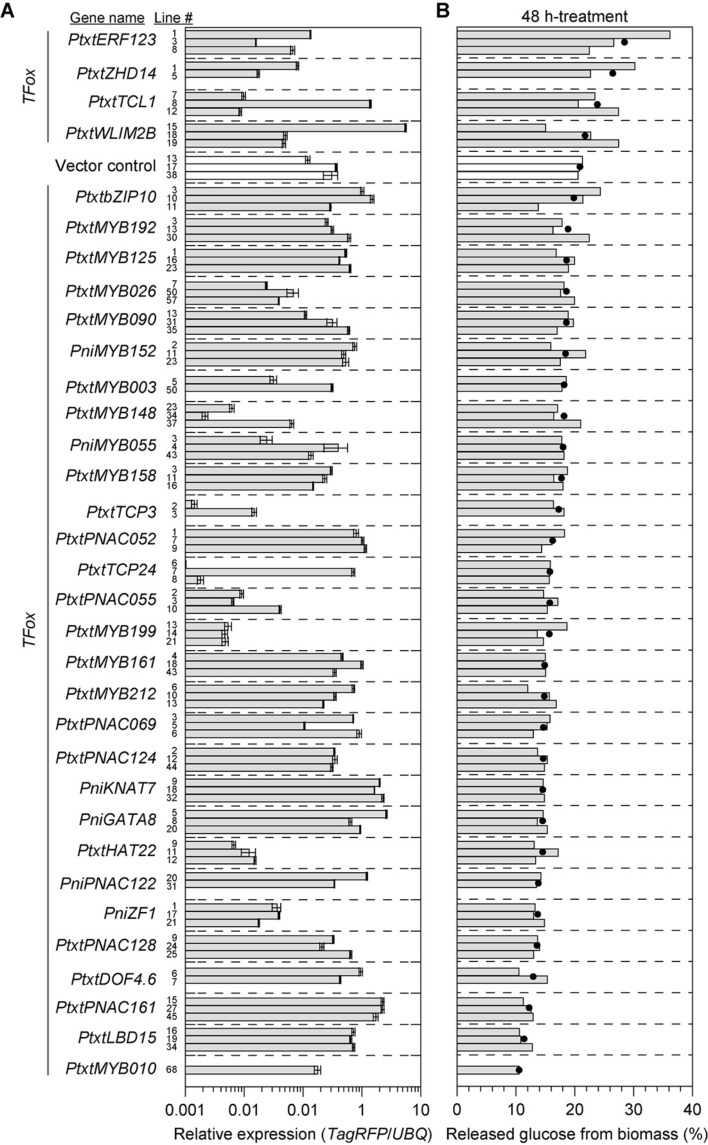
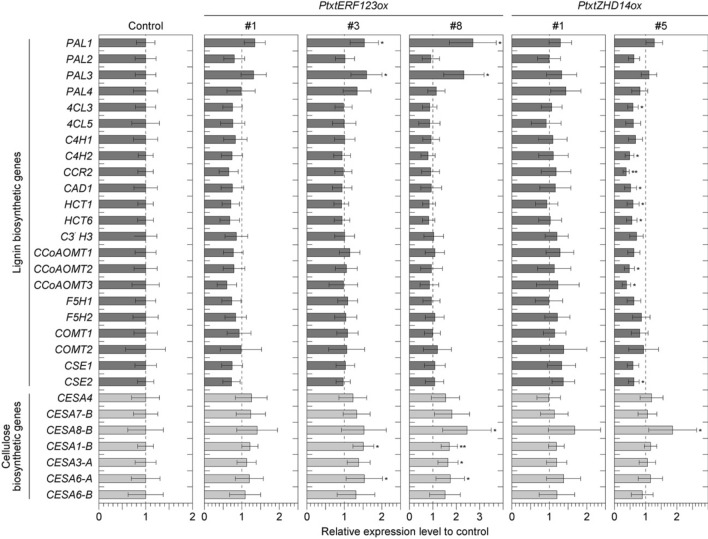
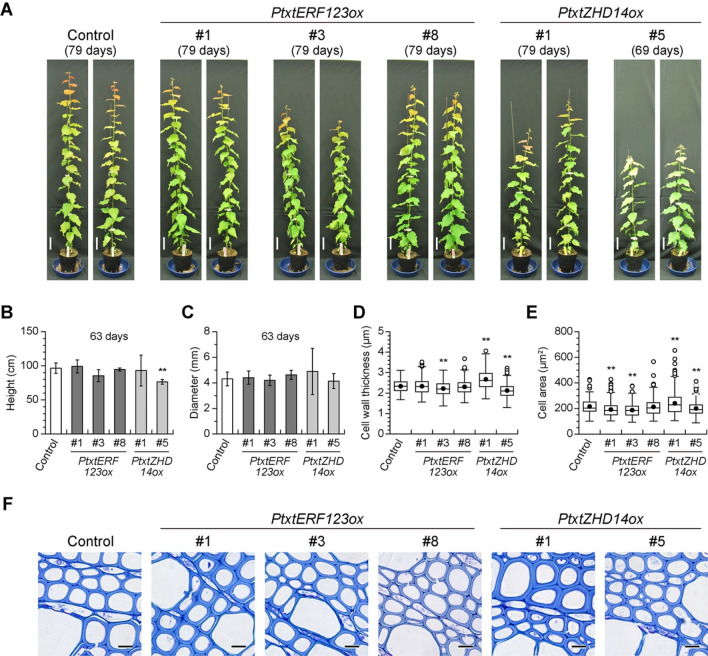
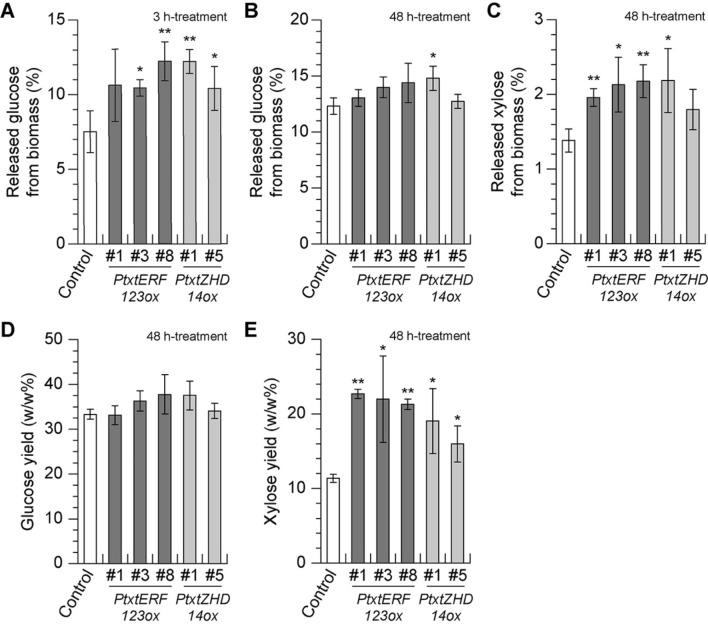
Developing an efficient deconstruction step of woody biomass for biorefinery has been drawing considerable attention since its xylem cell walls display highly recalcitrance nature. Here, we explored transcriptional factors (TFs) that reduce wood recalcitrance and improve saccharification efficiency in Populus species. First, 33 TF genes up-regulated during poplar wood formation were selected as potential regulators of xylem cell wall structure. The transgenic hybrid aspens (Populus tremula × Populus tremuloides) overexpressing each selected TF gene were screened for in vitro enzymatic saccharification. Of these, four transgenic seedlings overexpressing previously uncharacterized TF genes increased total glucan hydrolysis on average compared to control. The best performing lines overexpressing Pt × tERF123 and Pt × tZHD14 were further grown to form mature xylem in the greenhouse. Notably, the xylem cell walls exhibited significantly increased total xylan hydrolysis as well as initial hydrolysis rates of glucan. The increased saccharification of Pt × tERF123-overexpressing lines could reflect the improved balance of cell wall components, i.e., high cellulose and low xylan and lignin content, which could be caused by upregulation of cellulose synthase genes upon the expression of Pt × tERF123. Overall, we successfully identified Pt × tERF123 and Pt × tZHD14 as effective targets for reducing cell wall recalcitrance and improving the enzymatic degradation of woody plant biomass.
开发高效的木质生物质解构步骤一直受到相当多的关注,因为其木质部细胞壁显示出高度的抗降解性质。在这里,我们探索了降低杨树木质部抗性和提高糖化效率的转录因子(TFs)。首先,选择了 33 个在杨树木质部形成过程中上调的 TF 基因作为木质部细胞壁结构的潜在调节因子。过表达每个选定 TF 基因的转基因杂种白杨(Populus tremula × Populus tremuloides)被筛选用于体外酶糖化。其中,过表达先前未表征的 TF 基因的 4 个转基因苗平均总葡聚糖水解率提高。过表达 Pt × tERF123 和 Pt × tZHD14 的表现最好的品系进一步在温室中生长形成成熟的木质部。值得注意的是,木质部细胞壁表现出明显增加的总木聚糖水解以及葡聚糖的初始水解速率。Pt × tERF123 过表达系的糖化增加可能反映了细胞壁成分平衡的改善,即纤维素含量高,木聚糖和木质素含量低,这可能是由于 Pt × tERF123 的表达上调了纤维素合酶基因。总的来说,我们成功地鉴定了 Pt × tERF123 和 Pt × tZHD14 作为降低细胞壁抗性和提高木质植物生物质酶降解效率的有效靶点。