Perin Paola, Mabou Tagne Alex, Enrico Paolo, Marino Franca, Cosentino Marco, Pizzala Roberto, Boselli Cinzia
Department of Brain and Behavioural Sciences, University of Pavia, Pavia, Italy.
University of Insubria, Varese, Italy.
Front Neurol. 2020 Nov 23;11:505995. doi: 10.3389/fneur.2020.505995. eCollection 2020.
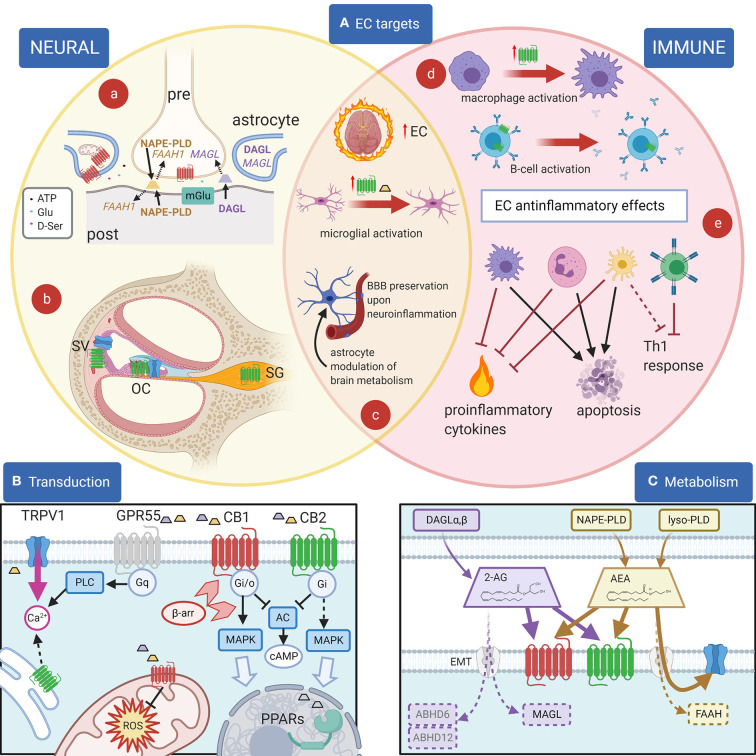
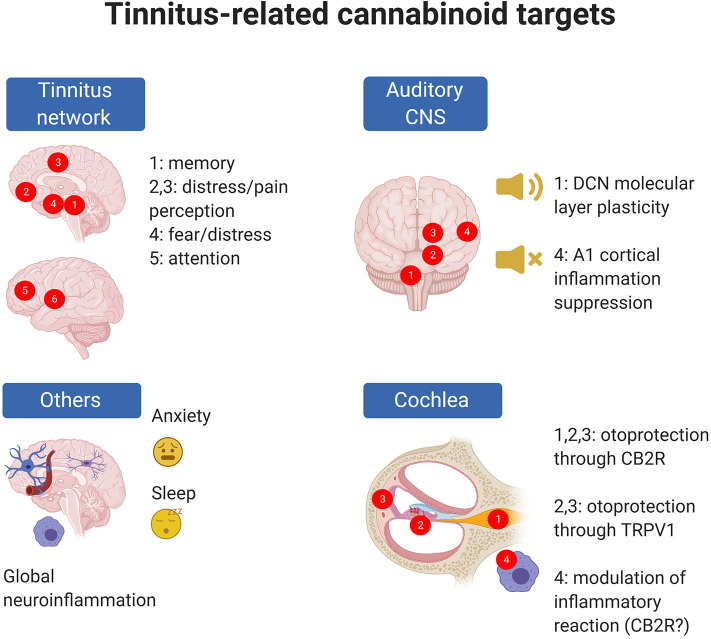
Cannabis has been used for centuries for recreational and therapeutic purposes. Whereas, the recreative uses are based on the psychotropic effect of some of its compounds, its therapeutic effects range over a wide spectrum of actions, most of which target the brain or the immune system. Several studies have found cannabinoid receptors in the auditory system, both at peripheral and central levels, thus raising the interest in cannabinoid signaling in hearing, and especially in tinnitus, which is affected also by anxiety, memory, and attention circuits where cannabinoid effects are well described. Available studies on animal models of tinnitus suggest that cannabinoids are not likely to be helpful in tinnitus treatment and could even be harmful. However, the pharmacology of cannabinoids is very complex, and most studies focused on neural CB1R-based responses. Cannabinoid effects on the immune system (where CB2Rs predominate) are increasingly recognized as essential in understanding nervous system pathological responses, and data on immune cannabinoid targets have emerged in the auditory system as well. In addition, nonclassical cannabinoid targets (such as TRP channels) appear to play an important role in the auditory system as well. This review will focus on neuroimmunological mechanisms for cannabinoid effects and their possible use as protective and therapeutic agents in the ear and auditory system, especially in tinnitus.
几个世纪以来,大麻一直被用于娱乐和治疗目的。然而,其娱乐用途基于某些化合物的精神作用,而其治疗作用则涵盖广泛的作用范围,其中大多数作用针对大脑或免疫系统。多项研究在听觉系统的外周和中枢水平均发现了大麻素受体,从而引发了人们对大麻素信号传导在听力方面,尤其是在耳鸣方面的兴趣,耳鸣还会受到焦虑、记忆和注意力回路的影响,而大麻素在这些回路中的作用已有充分描述。现有关于耳鸣动物模型的研究表明,大麻素不太可能有助于耳鸣治疗,甚至可能有害。然而,大麻素的药理学非常复杂,且大多数研究集中在基于神经CB1R的反应上。大麻素对免疫系统(其中CB2R占主导)的作用在理解神经系统病理反应中日益被认为至关重要,关于免疫大麻素靶点的数据也已在听觉系统中出现。此外,非经典大麻素靶点(如TRP通道)在听觉系统中似乎也发挥着重要作用。本综述将聚焦于大麻素作用的神经免疫机制及其在耳朵和听觉系统中作为保护和治疗剂的可能用途,尤其是在耳鸣方面。