Won Hyung-Sun, Yang Miyoung, Kim Yeon-Dong
Department of Anatomy, Wonkwang University School of Medicine, Iksan, Korea.
Jesaeng-Euise Clinical Anatomy Center, Wonkwang University School of Medicine, Iksan, Korea.
Anesth Pain Med (Seoul). 2020 Jan 31;15(1):8-18. doi: 10.17085/apm.2020.15.1.8.
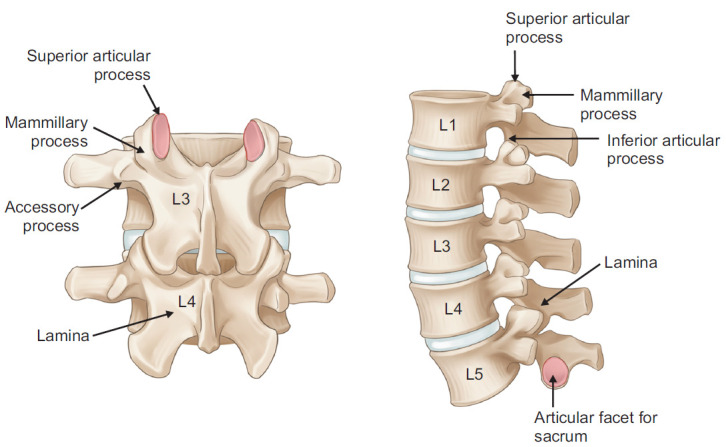
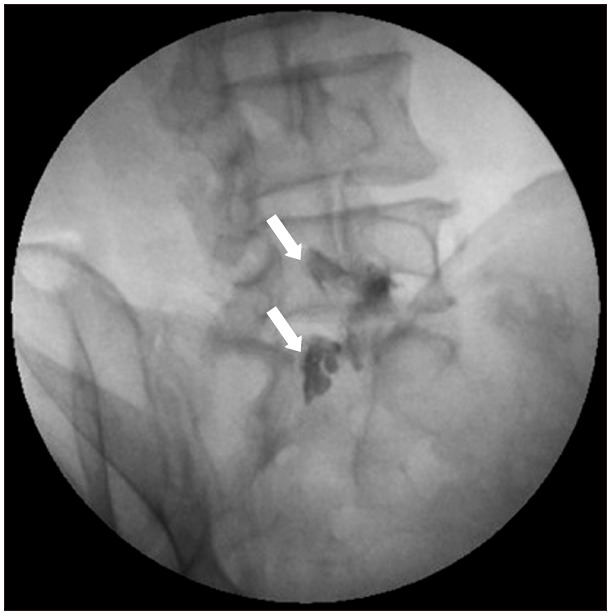
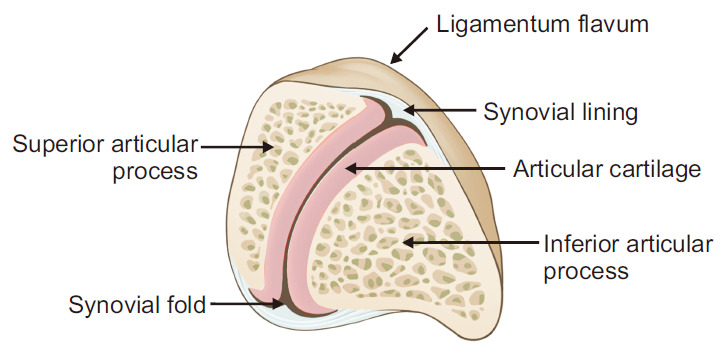
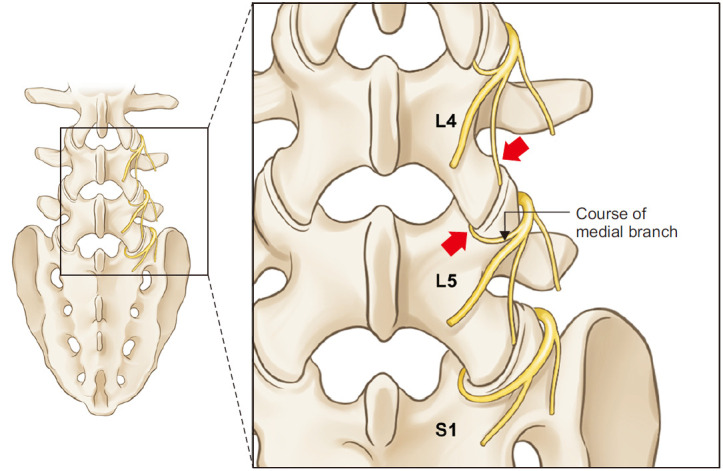
Lumbar facet joints have been implicated in chronic low back pain in up to 45% of patients with low back pain (LBP). Facet joint pain diagnosis and management are always challenging for pain physicians. Facet joint pain is not diagnosed by specific demographic features, pain characteristics, or physical findings, even though electrodiagnostic studies and imaging modalities are available. Although comparative local anesthetics or placebo saline injections can be used, diagnostic blocks are the only reliable diagnostic measures according to the current literature. Treatment of chronic LBP arising due to facet joint includes intraarticular injections, medial branch blocks, and radiofrequency neurotomy. However, the evidence of their clinical efficacy is continuously under scrutiny. Pain physicians must have a detailed understanding of the spinal anatomy in order to perform safe and effective interventional procedures. This review outlines the important aspects of spinal anatomy as they relate to interventional pain management related to facet joint injections. Additionally, we provide a comprehensive review of the procedure and clinical evidence.
在高达45%的腰痛(LBP)患者中,腰椎小关节被认为与慢性腰痛有关。小关节疼痛的诊断和管理对疼痛科医生来说一直具有挑战性。尽管有电诊断研究和成像方式,但小关节疼痛无法通过特定的人口统计学特征、疼痛特点或体格检查结果来诊断。虽然可以使用比较性局部麻醉剂或安慰剂盐水注射,但根据当前文献,诊断性阻滞是唯一可靠的诊断措施。因小关节引起的慢性腰痛的治疗包括关节内注射、内侧支阻滞和射频神经切断术。然而,它们的临床疗效证据一直受到审视。疼痛科医生必须对脊柱解剖结构有详细的了解,以便进行安全有效的介入操作。本综述概述了与小关节注射相关的介入性疼痛管理所涉及的脊柱解剖学的重要方面。此外,我们还对该操作和临床证据进行了全面综述。