Young Julie K, Coppock D Layne, Baggio Jacopo A, Rood Kerry A, Yirga Gidey
USDA-National Wildlife Research Center, Predator Research Facility, Millville, UT 84326, USA.
Department of Environment and Society, Quinney College of Natural Resources, Utah State University, 5215 Old Main Hill, Logan, UT 84322, USA.
Animals (Basel). 2020 Dec 15;10(12):2400. doi: 10.3390/ani10122400.
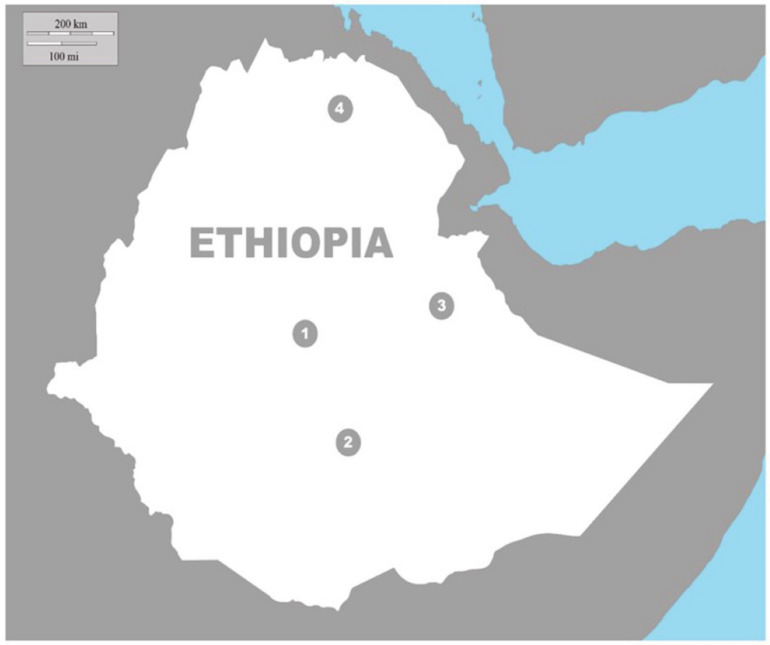
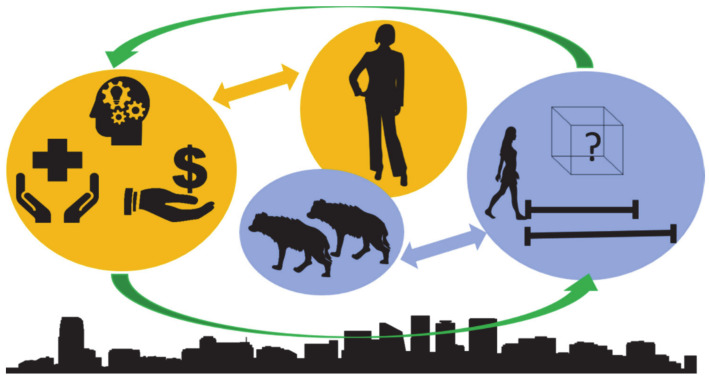
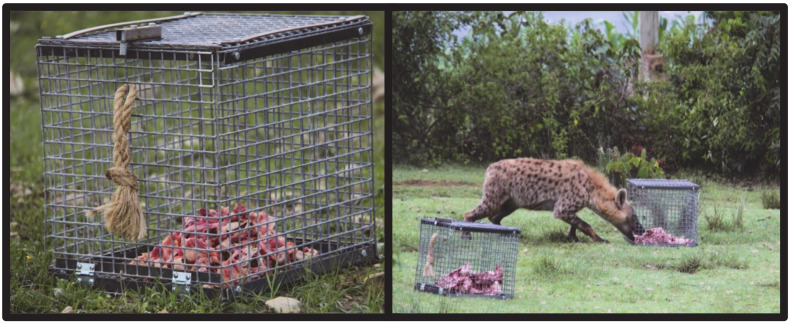
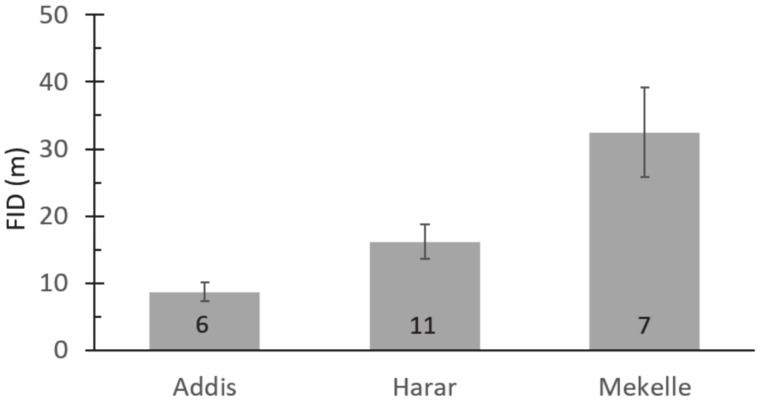
Humans have shaped carnivore behavior since at least the Middle Paleolithic period, about 42,000 years ago. In more recent times, spotted hyenas () in Ethiopia have adapted to living in urban areas, while humans have adapted to living with hyenas. Yet, relationships between coexisting humans and carnivores are rarely addressed beyond mitigating conflicts. We provided a case study for how to broadly think about coexistence and how to study it when measuring if humans and carnivores affect one another. We collected data in four Ethiopian cities: Mekelle, Harar, Addis Ababa, and Arba Minch. We held focus groups and key informant interviews that incorporated feedback from 163 people, representing a wide array of religious, economic, and educational backgrounds. We also determined how many hyenas resided in these cities, hyena behavioral responses to humans using a flight initiation test, and problem-solving abilities via puzzle box trials. We found that in three of the cities, hyenas and humans coexist at high densities and frequently encounter each other. While all participants recognized the importance of hyenas as scavengers to maintain a clean environment, there was pronounced variation in cultural perspectives across cities. For example, while the people of Harar revere hyenas in spiritual terms, in Arba Minch hyenas were regarded as nuisance animals. Hyenas were universally respected as a formidable predator across cities but reports of attacks on livestock and humans were few. Flight initiation tests revealed hyenas fled at significantly closer distances in Harar and Addis Ababa than in Mekelle. Hyenas succeeded at solving a puzzle box in Harar but not in Mekelle. These variable behavior in hyenas correlated to different human perceptions. Our case study results suggest that the hyena-human dynamic is highly variable across these locations. We conclude by exploring the implications of these findings for how humans and hyenas can shape one another's behavior. Developing studies to link human perceptions and animal behavior could advance wildlife conservation, especially in urban areas.
至少从约42000年前的旧石器时代中期起,人类就一直在塑造食肉动物的行为。近代以来,埃塞俄比亚的斑鬣狗已经适应了城市生活,而人类也适应了与鬣狗共同生活。然而,除了缓解冲突之外,人类与食肉动物共存的关系很少被提及。我们提供了一个案例研究,说明如何从更广泛的角度思考共存问题,以及在衡量人类和食肉动物是否相互影响时如何进行研究。我们在埃塞俄比亚的四个城市收集了数据:默克莱、哈勒尔、亚的斯亚贝巴和阿尔巴门奇。我们组织了焦点小组和关键信息人访谈,收集了163人的反馈,这些人代表了广泛的宗教、经济和教育背景。我们还确定了这些城市中有多少鬣狗,通过飞行起始测试确定鬣狗对人类的行为反应,以及通过拼图盒试验确定其解决问题的能力。我们发现,在其中三个城市,鬣狗和人类高密度共存且频繁相遇。虽然所有参与者都认识到鬣狗作为食腐动物对维持环境清洁的重要性,但不同城市的文化观念存在明显差异。例如,哈勒尔的人们在精神层面崇敬鬣狗,而在阿尔巴门奇,鬣狗被视为讨厌的动物。在所有城市中,鬣狗都被普遍视为强大的捕食者,但关于其袭击牲畜和人类的报告很少。飞行起始测试显示,与默克莱相比,哈勒尔和亚的斯亚贝巴的鬣狗在明显更近的距离就会逃跑。哈勒尔的鬣狗成功解开了拼图盒,但默克莱的鬣狗则没有。鬣狗的这些不同行为与人类的不同认知相关。我们的案例研究结果表明,鬣狗与人类的动态关系在这些地点差异很大。我们通过探讨这些发现对人类和鬣狗如何相互塑造行为的影响来得出结论。开展研究以将人类认知与动物行为联系起来,可能会推动野生动物保护工作,尤其是在城市地区。