Department of Physiology, Anatomy and Genetics, University of Oxford, Oxford, United Kingdom
Department of Physiology, Anatomy and Genetics, University of Oxford, Oxford, United Kingdom.
Pharmacol Rev. 2021 Jan;73(1):278-309. doi: 10.1124/pharmrev.120.000086.
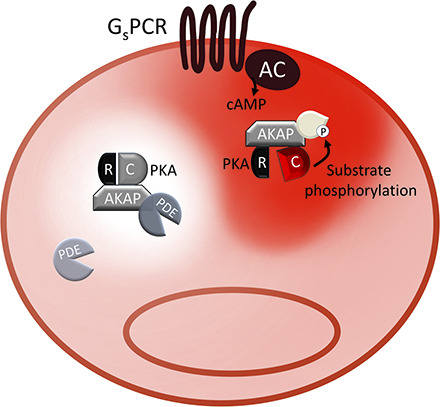
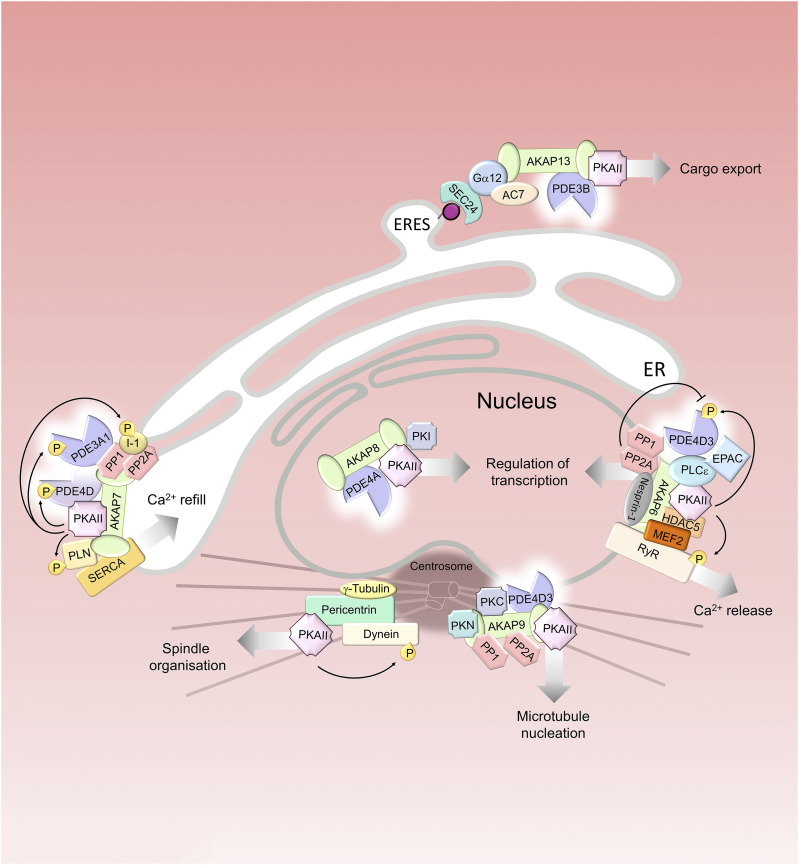
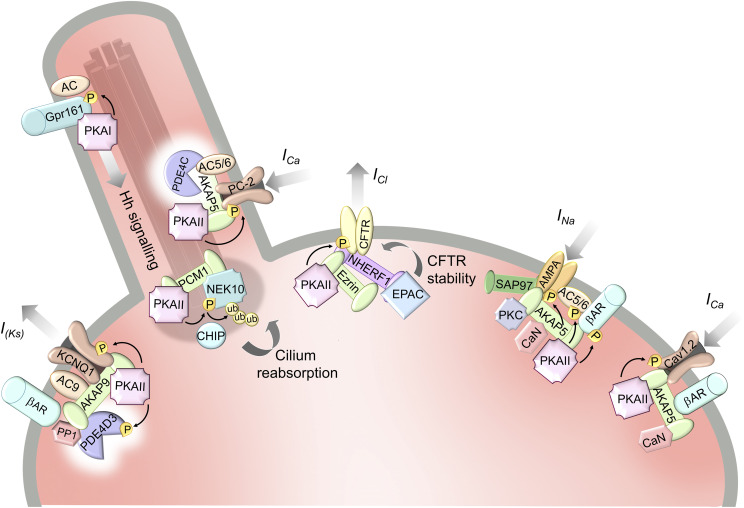
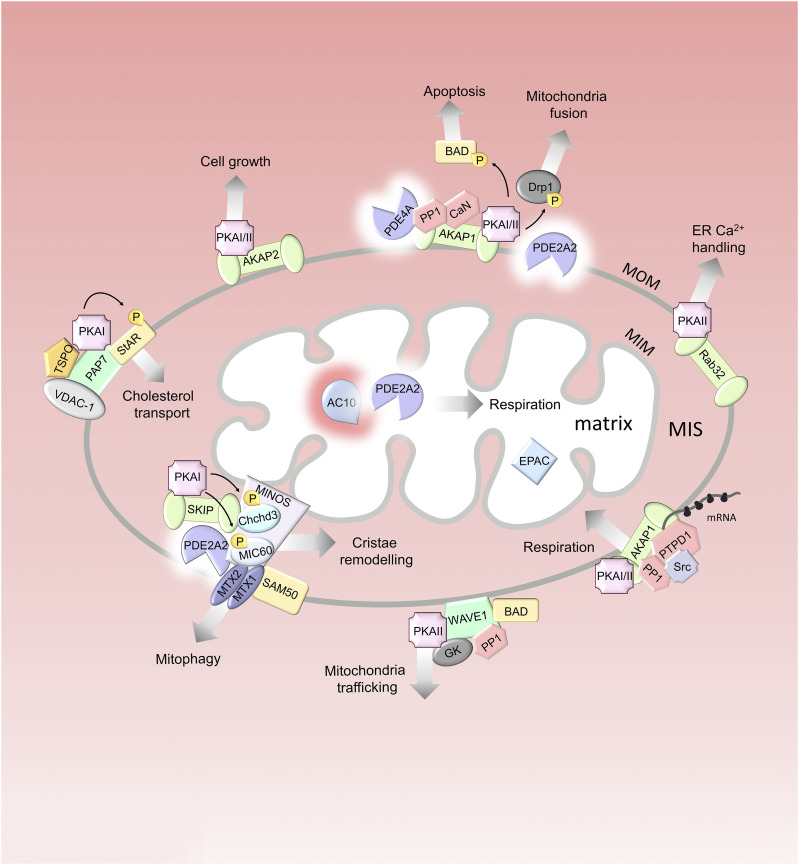
The field of cAMP signaling is witnessing exciting developments with the recognition that cAMP is compartmentalized and that spatial regulation of cAMP is critical for faithful signal coding. This realization has changed our understanding of cAMP signaling from a model in which cAMP connects a receptor at the plasma membrane to an intracellular effector in a linear pathway to a model in which cAMP signals propagate within a complex network of alternative branches and the specific functional outcome strictly depends on local regulation of cAMP levels and on selective activation of a limited number of branches within the network. In this review, we cover some of the early studies and summarize more recent evidence supporting the model of compartmentalized cAMP signaling, and we discuss how this knowledge is starting to provide original mechanistic insight into cell physiology and a novel framework for the identification of disease mechanisms that potentially opens new avenues for therapeutic interventions. SIGNIFICANCE STATEMENT: cAMP mediates the intracellular response to multiple hormones and neurotransmitters. Signal fidelity and accurate coordination of a plethora of different cellular functions is achieved via organization of multiprotein signalosomes and cAMP compartmentalization in subcellular nanodomains. Defining the organization and regulation of subcellular cAMP nanocompartments is necessary if we want to understand the complex functional ramifications of pharmacological treatments that target G protein-coupled receptors and for generating a blueprint that can be used to develop precision medicine interventions.
cAMP 信号领域正见证着令人兴奋的发展,人们认识到 cAMP 是分隔的,cAMP 的空间调节对于忠实的信号编码至关重要。这一认识改变了我们对 cAMP 信号的理解,从一个模型转变为 cAMP 将质膜上的受体与线性途径中的细胞内效应器连接起来,到 cAMP 信号在替代分支的复杂网络内传播的模型,特定的功能结果严格取决于 cAMP 水平的局部调节以及网络内有限数量分支的选择性激活。在这篇综述中,我们涵盖了一些早期的研究,并总结了最近更多支持分隔的 cAMP 信号模型的证据,我们讨论了这些知识如何开始为细胞生理学提供原始的机制见解,并为识别疾病机制提供了新的框架,这可能为治疗干预开辟新的途径。意义陈述:cAMP 介导了多种激素和神经递质的细胞内反应。通过多蛋白信号小体的组织和细胞内亚细胞器中 cAMP 的分隔,实现了信号保真度和多种不同细胞功能的精确协调。如果我们要理解针对 G 蛋白偶联受体的药物治疗的复杂功能后果,并生成可用于开发精准医学干预措施的蓝图,那么定义细胞内亚细胞器中 cAMP 纳米区室的组织和调节是必要的。